
You’ll find the Sunshine Coast at its best in shoulder seasons, when warm, dry weather meets thinner crowds and lower prices. Think late September to early November or late February to early March for pleasant seas, easier bookings and a good balance of activities. Whether you’re chasing surf, hikes or whale-watching, timing matters — and a few simple tweaks to dates and times can make a big difference to comfort and cost.
Compare our seasonal guides to Queensland, Australia and Southern Great Barrier Reef, Queensland when choosing other stops in Queensland.
Key Takeaways
- Spring (Sept–Nov) offers warm, low‑humidity weather, fewer crowds, and good value — ideal for families and outdoor markets.
- Winter (Jun–Aug) is mild, sunny, low‑humidity, perfect for whale‑watching, but expect higher demand for tours.
- Summer (Dec–Feb) brings hot, humid weather, afternoon storms and jellyfish warnings; great for surfing but busier and pricier.
- Shoulder months (Feb–Mar, Sep–early Nov) balance lower costs, quieter beaches, and consistent activities for budget travelers and surfers.
- Shift travel by a few days, book midweek, and use fare alerts and refundable options to reduce accommodation and flight costs.
Quick Answer: Best Time to Visit the Sunshine Coast
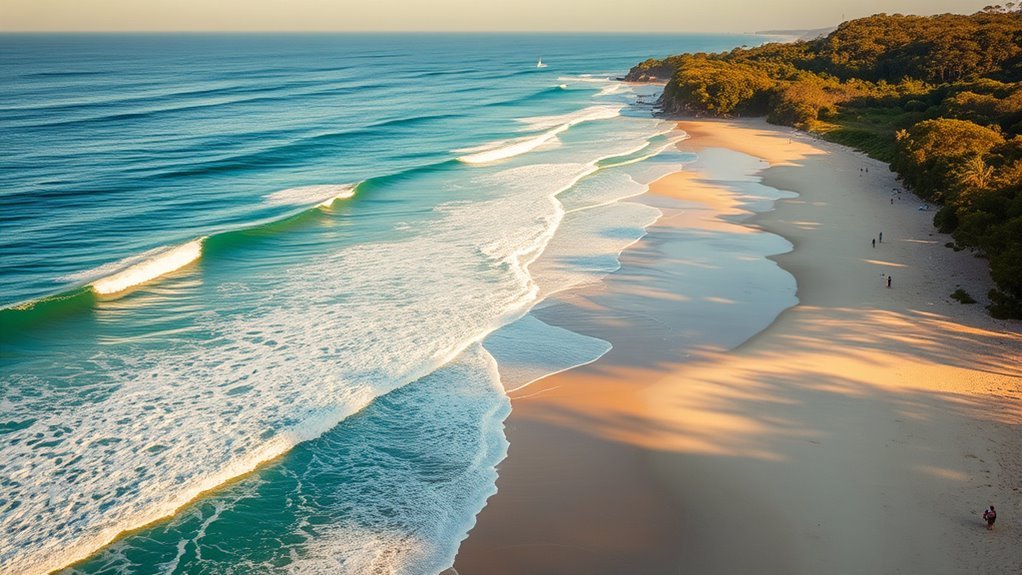
Plan your trip for spring (September–November) if you want the best balance of warm weather, low humidity, and fewer crowds; that’s when beaches, hiking trails, and outdoor markets are at their most enjoyable.
You’ll find clear skies that invite swimming and coastal walks, while local cultural festivals pop up, offering music, food, and art that feel liberating and communal.
Local markets brim with fresh produce, handmade goods, and chances to support independent vendors—perfect if you want to travel with purpose and autonomy.
You’ll avoid peak summer crushes and stinger season, so you can move freely between surf and rainforest without battling big crowds.
Costs tend to be moderate compared with holiday highs, so you can stretch your budget into experiences rather than splurges.
Pack light layers for cool mornings and warmer afternoons, bring sturdy shoes for trails, and come ready to connect with local life—spring on the Sunshine Coast rewards travelers seeking ease, discovery, and vibrant local culture.
Sunshine Coast Weather by Season (Summer, Autumn, Winter, Spring)
While the Sunshine Coast shines year-round, each season brings distinct weather and activities you’ll want to match to your plans: summer (December–February) is hot, humid and ideal for surfing and long beach days but can include afternoon storms and jellyfish warnings; autumn (March–May) cools gradually with fewer visitors, calmer seas and pleasant mornings for hiking; winter (June–August) stays mild and sunny, offering crisp mornings, low humidity and excellent whale-watching opportunities; and spring (September–November) delivers warming temperatures, blooming hinterland trails and clear ocean conditions that make swimming and markets especially enjoyable.
You’ll find freedom in timing: chase surf in summer, savor solitary coastal hikes in autumn, or relax under winter sun with whales passing offshore during peak marine life migrations. Spring’s festivals and coastal festivals light up towns, while quieter months let you explore hinterland creeks and national parks without crowds. Pack layers, expect variable sea conditions, and pick the season that best fits the pace you want—adventurous, reflective, or festival-driven.
Warmest Months & Humidity on the Sunshine Coast
You’ll feel the peak summer heat from December to February, when daytime temperatures often climb into the high 20s and low 30s Celsius.
Humidity also rises in those months, making afternoons muggy and increasing the chance of late afternoon thunderstorms.
Knowing the seasonal humidity patterns helps you plan beach time, outdoor activities, and when to seek cooler, shaded spots.
Peak Summer Heat
Because summer on the Sunshine Coast runs from December to February, you’ll encounter the region’s highest temperatures and humidity during these months, with daytime highs often nudging into the cool 20s to low 30s°C (mid-80s to low 90s°F).
You’ll feel warm, but the ocean breezes off the Coral Sea can deliver invigorating relief, especially along beaches and headlands.
Plan your outdoor freedom for mornings and late afternoons to avoid peak heat, and seek shade during midday.
Remember that hot, dry spells combined with winds can raise coastal fire hazards, so follow local warnings and avoid open flames.
Pack light, breathable clothing, a wide-brim hat, sunscreen, and a refillable water bottle to stay cool and empowered.
Humidity Patterns
Although the warmest months from December to February bring the highest temperatures, it’s the humidity that really shapes how the heat feels on the Sunshine Coast; you’ll notice mornings and evenings often feel muggy as moisture-laden air drifts in from the Coral Sea. You’ll learn to read coastal microclimates — sea breezes can cut humidity quickly, while sheltered valleys trap it. That shift changes comfort, activities, and even seasonal pollen levels for those seeking relief or renewal. Embrace dawn swims when humidity’s lower, and plan shaded hikes later. Below’s a simple guide to help you breathe freer and choose your timing.
| Condition | Tip |
|---|---|
| High morning humidity | Swim early |
| Evening mug | Seek sea breeze |
| Valley trap | Shade hikes |
| Pollen peak | Check forecasts |
Sunshine Coast Whale-Watching Months
If you’re hoping to see humpbacks, plan your trip between May and November when whales pass the Sunshine Coast en route to and from their breeding grounds.
The peak migration usually occurs in June–August, offering the best chance of sightings from shore or on a boat.
Book tours early during peak months, since guided spots fill fast.
Best Whale-Watching Months
When should you plan your trip to catch the best whale action on the Sunshine Coast? You’ll want to arrive between May and November when migrating whales pass close to shore, and marine festivals celebrate the sea. You’ll feel free watching breaches, and you can pair boat tours with dolphin migrations viewing for fuller encounters.
| Month range | What to expect | Tip |
|---|---|---|
| May–Jun | Early arrivals, quieter crowds | Book open-deck trips |
| Jul–Sep | Peak sightings, large pods | Join marine festivals |
| Oct–Nov | Southbound journey, playful calves | Choose morning watches |
Go with guides who respect wildlife; they’ll help you witness powerful moments while protecting ocean life and your sense of liberation.
Peak Migration Times
Now that you know the best months to plan a whale-watching trip, let’s look closer at peak migration patterns so you can pick dates that maximize sightings.
You’ll see the greatest activity from June through August, when humpbacks move north along established migration corridors toward warmer breeding grounds.
Expect a seasonal influx starting in late May and tapering by September; July often delivers the most consistent numbers and surface displays.
Choose morning or late-afternoon departures to align with calmer seas and better light for photos.
Operators know local chokepoints where whales pause—opt for guided tours that respect their path and your desire for meaningful encounters.
You’ll leave feeling liberated by wild, deliberate movement across open water.
Best Months for Hiking and Other Outdoor Activities
Although coastal breezes make the heat feel milder, the best months for hiking and outdoor activities on the Sunshine Coast are generally April through October — you’ll enjoy cooler temperatures, lower humidity, and clearer skies that make trails, national parks, and beaches more pleasant and safer.
During these months you can pick routes that match your tempo: short coastal walks for light days or longer hinterland treks when you want a true escape.
Check trail difficulty ratings before you go so you can push limits without risking injury.
Morning sunrises are crisp; afternoons stay forgiving, and nights cool down for restorative sleep under open skies.
Seasonal wildlife diversity peaks in different pockets, so you’ll spot migratory birds, wallabies, and colourful orchids at varying times — welcome reminders that freedom often comes with patience.
Pack layers, good boots, water, and a simple map; they’ll keep your outings liberating, focused, and pleasantly uncomplicated.
Sunshine Coast Crowd Peaks & School-Holiday Spikes to Avoid
Because the Sunshine Coast draws families, surfers, and event-goers year-round, you’ll want to plan around predictable crowd peaks and school-holiday spikes to make the most of your trip.
Winter school holidays (July) and summer break (late December–January) swell beaches, markets, and coastal drives; car parks fill early and prime surf breaks get busy.
Easter and the June-July mid-year break also push demand, especially around kid-friendly attractions and family restaurants.
If you crave freedom and quiet, aim for shoulder seasons—late February to March or September to early November—when beaches are livelier but not congested.
Check calendars for local culture events and local festivals that draw crowds: music, food, and arts weekends can transform peaceful towns into vibrant hubs.
Booking midweek stays and early starts help you beat the rush.
Embrace spontaneity, but respect patterns: choose timing that aligns with your desire to explore without crowds, and you’ll reclaim the coast on your terms.
Monthly Price Trends: Stays, Flights, and Tours
Curious when you’ll get the best deal? You’ll notice seasonality patterns shaping monthly price trends: winter shoulder months often lower budget cost for stays as accommodation availability improves and crowds thin.
Track flight discount cycles—mid-week sales and post-holiday dips give you room to snag cheaper fares.
Tour price fluctuations follow demand spikes; book early for peak-season activities or wait for last-minute operator deals if you can pivot.
For liberated travelers, budget planning becomes empowering: compare weekly snapshots, factor in travelInsurance into totals, and exploit off-peak windows to stretch your funds.
Watch price elasticity—small date shifts can drop costs considerably without sacrificing experience.
Use flexible search tools, set fare alerts, and prioritize refundable options if your plans change.
Best Time to Visit, by Traveler Type (Families, Couples, Budget Travelers, Surfers)
Wondering when the Sunshine Coast will feel just right for your group?
If you’re traveling with kids, aim for spring (Sept–Nov) when mild weather, lower crowding, and family friendly festivals create easy days at beaches and wildlife parks.
Couples seeking escape will love late autumn (Apr–May): warm seas, fewer tourists, and those long romantic sunsets along Noosa or Mooloolaba.
If you’re budget-minded, visit in shoulder seasons (Feb–Mar or Sep): you’ll find cheaper stays and flights, quieter tours, and flexible itineraries that free you from peak prices.
Surfers should target winter to early spring (Jun–Sep) when consistent swell and offshore winds punch up breaks like Noosa Heads and Caloundra; pack wet suits and local knowledge.
No matter your type, pick timing that matches your rhythm—festival energy, solitude, or surf intensity—so you control costs, crowds, and experiences.
That way you’ll leave feeling liberated, rested, and ready to return.
Frequently Asked Questions
Are There Any Local Festivals or Events Not Tied to Seasons?
Yes — you’ll find year-round local festivals and cultural parades celebrating art, food, music and Indigenous culture; you’ll feel liberated joining vibrant street parties, intimate community fairs, and bold performance nights that welcome free-spirited visitors.
What Wildlife Safety Tips Apply Beyond Whale Season?
You should stay vigilant: avoid tall grass, keep food sealed, use mosquito control measures, wear long sleeves and boots for snakebite prevention, respect wildlife distances, carry a first-aid kit, and report injured animals to local rescue.
How Reliable Is Public Transport to Major Sunshine Coast Attractions?
It’s fairly reliable: transit reliability’s good to major attractions, though you’ll want to check schedule frequency for weekends and holidays. You’ll feel free exploring; buses and trains run predictably, keeping you spontaneous and in control.
Are There Medical Facilities and Emergency Services Nearby?
Yes — you’ll find medical clinics throughout the Sunshine Coast and reliable emergency response services; you can access hospitals, urgent care, and ambulance support quickly, empowering you to travel freely and confidently without unnecessary worry.
Is Tap Water Safe to Drink Across the Sunshine Coast?
Yes — you can drink tap water across the Sunshine Coast; tap quality’s generally high and local councils run regular water testing. You’ll feel empowered knowing supplies meet standards, though bottled options remain available if you prefer.
Conclusion
You’ll get the best blend of weather, crowds, and value by visiting the Sunshine Coast in the shoulder months—late September to early November or late February to early March—when warm, dry days and pleasant sea temperatures make swimming, surfing and hikes a joy. Prices and crowds drop, tours are easier to book, and mid‑week or early‑morning outings keep things smooth sailing. Pick dates off peak school holidays and you’ll hit the sweet spot.