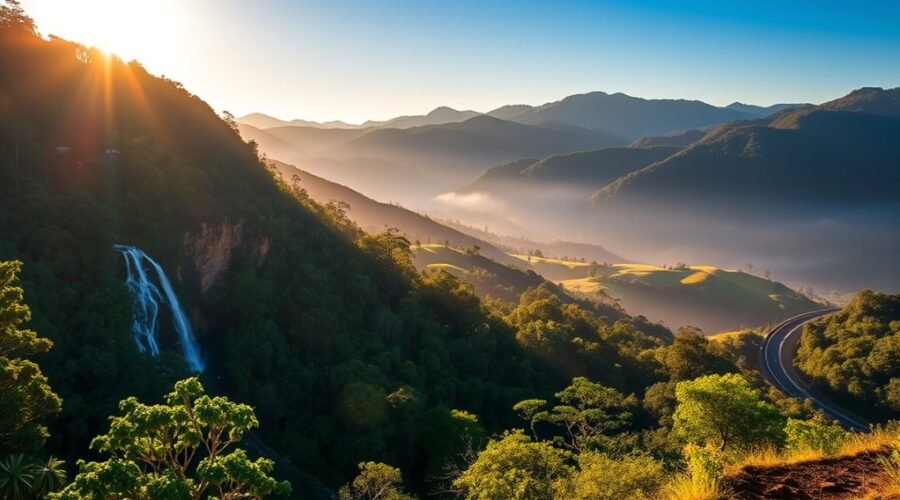
If you’re planning a trip to the Atherton Tablelands, choosing when to go makes a big difference for weather, wildlife and your wallet. Visit in April–May or September–October and you’ll get mild days, clearer skies and fewer crowds, plus lower accommodation rates than peak summer. Avoid the wet season’s heavy rains if you want safer trails and reliable waterfall views—keep scrolling to see how each season shapes your options.
Compare our seasonal guides to Queensland, Australia and Southern Great Barrier Reef, Queensland when choosing other stops in Queensland.
Key Takeaways
- April–May and September–October are ideal: mild weather, peak wildflowers and waterfalls, and fewer tourists than summer.
- Wet season (Nov–Apr) brings lush rainforest, dramatic falls, but heavier rains and slippery trails.
- Dry season (May–Oct) offers crisp mornings, clear views of crater lakes, and easier walking conditions.
- Weekends, school holidays, and local festivals increase crowds and accommodation prices.
- Midweek shoulder-season stays deliver lower costs, quieter lookouts, and better wildlife-spotting at dawn.
Best Months for Atherton Tablelands (By Weather, Crowds, Budget)
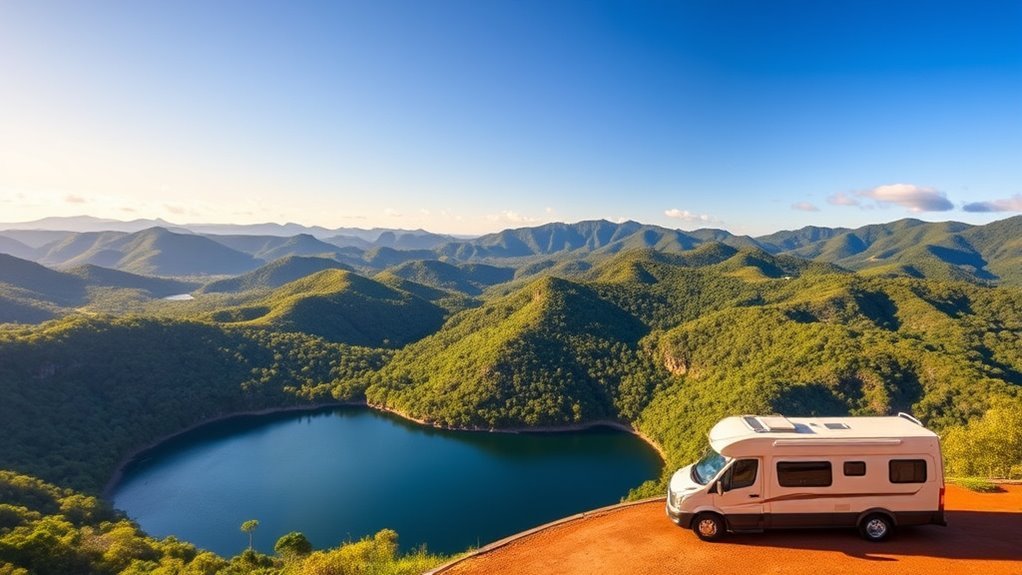
If you want the best mix of mild weather, smaller crowds and reasonable prices, aim for the shoulder months of April–May and September–October.
During these periods the Tablelands is comfortably warm, wildflower and waterfall displays are great, and you’ll avoid both peak-season rates and the heaviest tourist flows.
Comfortably warm Tablelands, with spectacular wildflowers and waterfalls—enjoy lower rates and fewer tourists.
You’ll find freedom to wander quiet crater lakes, chase cascades and join local cultural festivals without the crush.
Daytime temps suit hikes and picnics; nights stay crisp enough to sleep soundly.
Peak summer brings heavy rain and humidity, while winter can drop temperatures and draw some visitors seeking cool relief—both valid, but busier or wetter.
If you want to stretch your budget and time, book in shoulder windows for lower accommodation costs and easier reservations.
You’ll boost chances for uninterrupted wildlife spotting along rainforest trails and at dawn by wetlands.
Travel then and you’ll move through the Tablelands with space, choice and an adventurous calm that feels like liberation.
Atherton Tablelands Seasonal Weather & Landscapes
Because the Atherton Tablelands’ climate shifts dramatically through the year, you’ll see very different landscapes and activities from season to season.
In the wet months (roughly November–April) the highlands swell with emerald rainforest, tumbling waterfalls, and a riot of wildfall flora that rebounds after heavy rains; trails can be slick but the air feels cleansed and electric.
During the dry season (May–October) mornings are crisp, mists lift to reveal patchwork paddocks and crater lakes fed by volcanic soil, and visibility makes hikes and viewpoints liberating.
You can plan birdwatching, waterfall swims, or cycling depending on whether you want lush abundance or clear, sunlit expanses.
Keep in mind microclimates: elevations and rainforest gullies stay cooler and moister than nearby plains.
Pack layering clothes, waterproof footwear for the wet season, and sunscreen for bright, dry days.
Embrace the Tablelands’ seasonal drama—each phase rewards you with different colors, scents, and freedoms to explore.
Crowds, Events & Busy Periods in the Tablelands
When planning your visit, think about when locals and day‑trippers flock to the Tablelands: weekends, school holidays, and major regional events can turn quiet trails and cafés into lively hubs.
You’ll want to time your escape if you crave solitude—midweek visits outside peak holiday weeks usually deliver emptier lookouts, easier parking, and unhurried walks.
Time your escape: midweek outside peak holidays brings emptier lookouts, easier parking and unhurried walks.
Conversely, join in during local festivals if you hunger for community energy: markets, music nights, and food fairs showcase regional produce and warm social pulses.
Keep an eye on event calendars; long weekends amplify crowds at iconic waterfalls and popular birding spots, boosting wildlife sightings but reducing privacy.
Dawn and dusk still offer the best chances to witness shy animals before crowds swell.
If liberation means moving freely, plan loops and lesser‑known tracks, arrive early, and embrace spontaneous detours.
That way you get both the Tablelands’ communal celebrations and its quieter, restorative moments.
Atherton Tablelands Costs, Accommodation & Transport
Although prices vary with season and location, you’ll generally find the Atherton Tablelands offers good value for accommodation, food, and activities compared with coastal tourist hubs.
You can choose from rustic cabins, boutique B&Bs, farm stays and basic motels—lodging options suit anyone chasing freedom from crowded resorts.
Meals at local cafes are affordable, and markets let you taste fresh produce while supporting locals.
Getting around is straightforward: hire a car for flexibility, use local transport for short hops, or join budget tours to reach waterfalls and crater lakes without stress.
Guided options often include gear and knowledge, saving time and money.
- Feel the thrill of a dawn hike that costs less than a guided beach trip.
- Revel in quiet nights at a countryside B&B, reclaimed from bustle.
- Embrace spontaneous side trips thanks to reliable local transport.
- Taste liberation on budget tours that open hidden landscapes.
Plan smart, book selectively, and the Tablelands reward you with soulful, cost-effective travel.
Seasonal Itineraries and What to Pack
Now that you’ve got a feel for costs, lodging and getting around, it helps to match your timing and packing to the Tablelands’ seasonal rhythms so you get the most from each day.
Visit in dry winter months for crisp hikes, waterfalls framed by clear skies and calmer crowds—pack layered clothing, sturdy boots, a windproof jacket and a daypack for picnic freedom.
In wet summer, expect lush rainforest, dramatic falls and fewer tourists; bring quick-dry clothes, a lightweight rain jacket, waterproof bags and insect repellent so rain won’t cage your plans.
Time visits to coincide with local festivals to taste regional produce and feel liberated by communal joy; bring a small folding chair and cash for stalls.
For wildlife spotting, pack binoculars, a headlamp for nocturnal walks and a camera with a zoom lens.
Always include sunscreen, reusable water bottle and a compact first-aid kit—essentials that let you roam boldly and responsibly across the Tablelands.
Frequently Asked Questions
Are There Guided Wildlife Night Tours on the Tablelands?
Yes—you can join guided night tours across the Tablelands; Night safari operators lead Moonlit wildlife walks and drives, freeing you to encounter possums, platypus and owls while their expert guides share vivid, empowering nocturnal stories and safety tips.
What Are the Best Waterfalls for Swimming Safety?
Want a safe plunge into clear pools? You’ll favor Millaa Millaa, Zillie and Ellinjaa for gentle Waterfall depth and reliable Swimming safety. You’ll check signage, avoid wet rocks, and respect currents to stay free.
Can I Bring Pets to National Parks or Accommodation?
Yes — you can bring pets to some national parks and pet friendly lodging, but you’ll need to follow leash regulations, respect wildlife, clean up, and choose designated areas so your companion’s freedom meets responsible, liberating exploration.
Are There Accessible Trails for Wheelchairs or Strollers?
About 70% of popular sites offer accessible paths; you’ll find stroller friendly routes at several waterfalls and picnic areas, with firm boardwalks, gentle gradients, clear signage, and inclusive facilities so you can explore freely and confidently.
Where Can I Sample Local Produce and Farmers’ Markets?
You’ll find local markets across Atherton Tablelands—Yungaburra and Atherton host vibrant Saturday markets where artisan stalls brim with seasonal fruit, preserves, cheeses and crafts, so you can freely taste, support growers and celebrate regional abundance.
Conclusion
Visit the Atherton Tablelands in shoulder months for milder days, clearer skies, and easier walks; avoid the wet season for safer trails and fewer cancellations; expect fewer crowds and lower prices in April–May and September–October, and more rain, humidity, and lush growth in summer; pack layers for cool mornings, reef-safe sunscreen for sunny afternoons, and sturdy shoes for slippery paths. Plan smart, travel light, and enjoy waterfalls, wildlife, and wide, tranquil horizons.