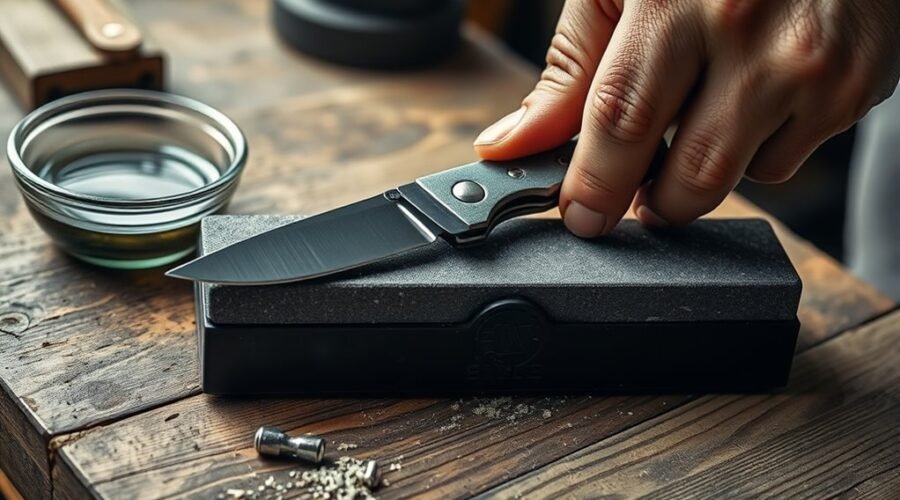
Sharpening a pocket knife in 2027 is less about speed and more about control, angle, and finish. Four tools stand out, each suited to a different level of skill and edge quality. The real question is not which one is best in isolation, but which one fits the task, the blade, and the user’s habits. The next steps reveal why that choice matters more than most expect.
Lanksy Blademedic 4-in-1 Knife Sharpener – PS-MED01
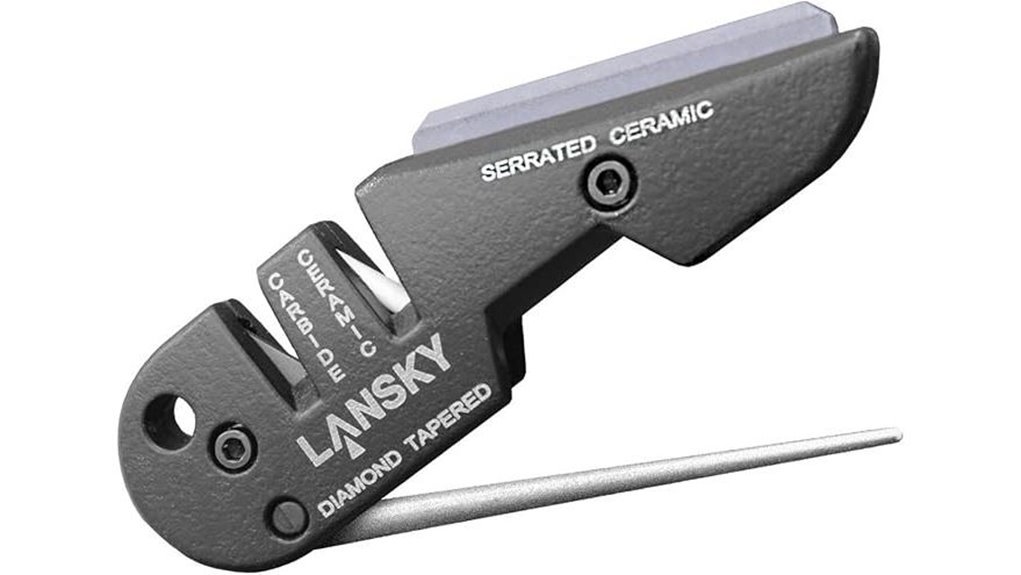
The Lansky Blademedic 4-in-1 Knife Sharpener – PS-MED01 is a strong choice for anyone who wants a fast, portable way to sharpen a pocket knife without relying on stones or honing rods. Its four sharpening options include tungsten carbide, ceramic, ceramic serrations, and a tapered diamond grid for serrations. The tool can restore edge sharpness in three to four strokes. A compact metal body and magnetic closure improve durability and transport. It suits kitchen knives, bushcraft fixed blades, and EDC knives, while keeping Lansky’s practical reputation intact.
Best For: Anyone who wants a fast, portable, no-fuss knife sharpener for pocket knives, EDC gear, bushcraft blades, and even kitchen knives.
Pros:
- 4-in-1 design covers straight edges and serrated blades.
- Compact metal body with magnetic closure makes it durable and easy to carry.
- Sharpens quickly, often restoring an edge in just three to four strokes.
Cons:
- Not ideal for users who prefer full manual sharpening control with stones.
- Draw-through design offers less precision than more advanced sharpening systems.
- Best suited for touch-ups and maintenance rather than major blade repair.
SHARPAL 208H Polishing Compound Fine Green Buffing Compound 2-Pack
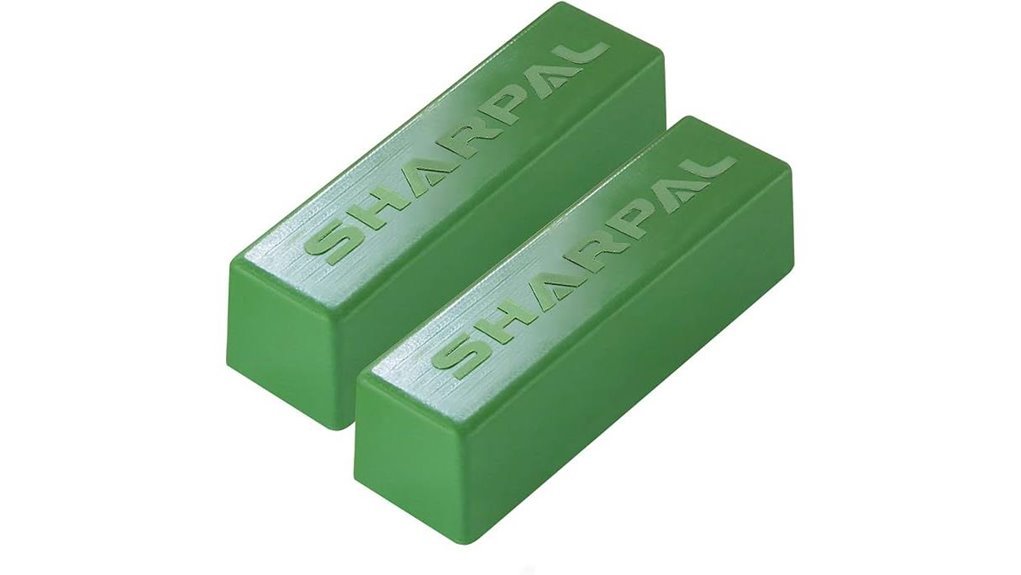
SHARPAL 208H suits users who want a razor-fine final polish on pocket knife edges. This ultrafine honing compound blends micro-fine aluminum oxide and chromium oxide, with 1 to 2 micron abrasive particles, roughly equal to 10,000 to 14,000 grit. It serves as the final sharpening step, stripping away leftover burrs and leaving a keen, refined edge. The smooth bar applies easily to a strop for even coverage. It also produces a mirror-like, factory-style shine and works on stainless steel, common steel, brass, cast iron, copper, and more.
Best For: Users who want an ultrafine final polishing compound for achieving a razor-sharp, mirror-finish edge on knives and other metal tools.
Pros:
- Ultrafine 1 to 2 micron abrasive blend delivers a very refined final edge.
- Easy to apply evenly on a strop for quick, consistent polishing.
- Versatile for use on many metals and tools, including knives, chisels, and axes.
Cons:
- Best suited for final polishing, not for repairing heavily damaged or dull edges.
- May be too fine for users who need faster, more aggressive material removal.
- Results depend on proper strop application and technique.
Smith’s Pocket Pal Knife Sharpener with Carbide/Ceramic Stones
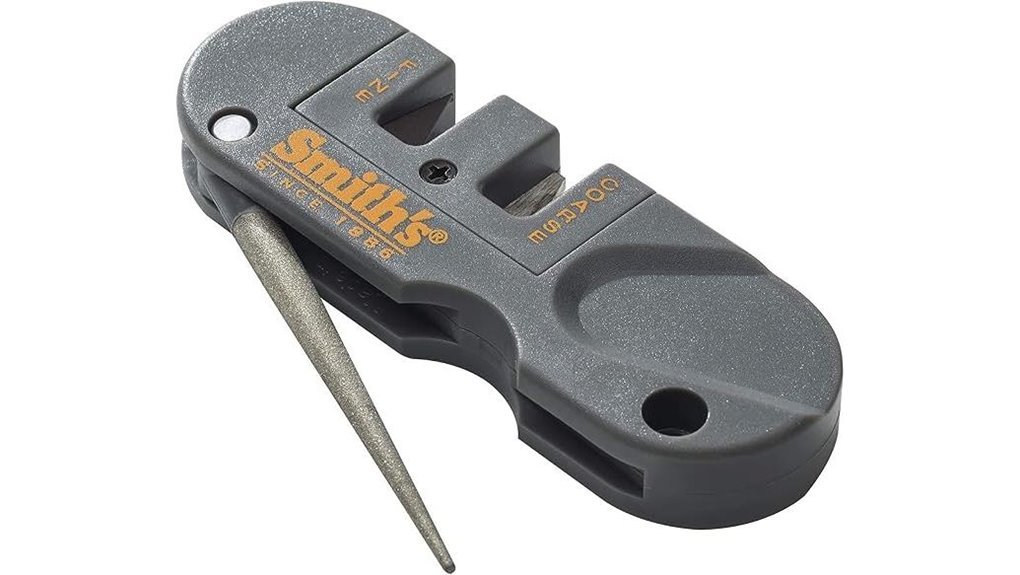
Smith’s Pocket Pal PP1 suits outdoor users who need fast, compact sharpening on the go. The 3.5-inch, 1-ounce tool uses preset crossed blades and a fold-out diamond-coated rod for convenient field maintenance. Its two-stage system includes a coarse carbide slot for quickly restoring dull straight blades, followed by fine ceramic stones for smoothing and polishing. The ceramic side also works on serrated edges. A tapered diamond rod handles serrations, gut hooks, and fish hooks. Reversible, replaceable stones and a lanyard hole improve durability and portability for camping, hiking, and fishing tasks.
Best For: Outdoor enthusiasts, campers, hikers, and anglers who want a compact, portable sharpener for quick field maintenance of knives and hooks.
Pros:
- Very compact and lightweight, making it easy to carry on a keychain, backpack, or in a pocket
- Two-stage sharpening system offers fast edge repair and a smoother finish
- Diamond rod and ceramic stone add versatility for serrations, gut hooks, and fish hooks
Cons:
- Coarse carbide slot is only suitable for straight-edge blades
- Manual pull-through design may not give the precision of larger sharpening systems
- Small size can make it less comfortable for frequent or heavy-duty sharpening tasks
Spyderco Tri-Angle Premium Sharpmaker Set (204MF)
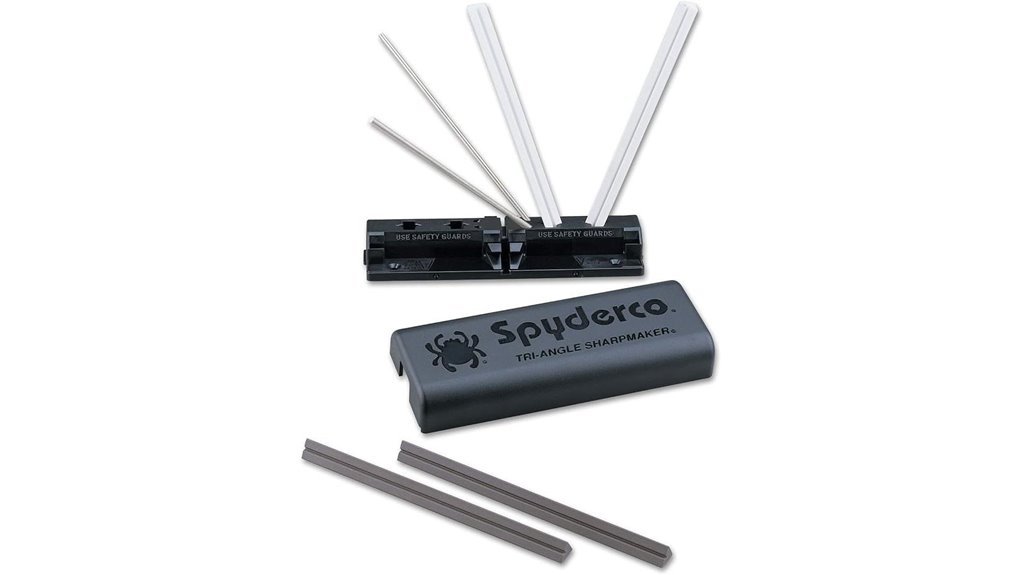
Spyderco’s Tri-Angle Premium Sharpmaker Set (204MF) suits users who want precise, repeatable knife maintenance. The complete system includes an instructional DVD and two sets of alumina ceramic stones, giving the user both guidance and durable sharpening surfaces. Its design supports consistent angles for edge maintenance and finishing, helping produce razor-sharp results on pocket knives and other tools. The kit is versatile enough for varied sharpening tasks, making it useful for hobbyists and professionals alike. As a thorough sharpening solution, it emphasizes control, accuracy, and reliable performance rather than speed alone.
Best For: Knife owners, hobbyists, and professionals who want a precise, repeatable sharpening system for reliable edge maintenance and finishing.
Pros:
- Includes an instructional DVD that helps users learn proper sharpening techniques.
- Comes with two sets of alumina ceramic stones for durable, effective sharpening.
- Supports consistent angles for controlled, accurate results on a variety of tools.
Cons:
- More focused on precision than fast sharpening, so it may feel slower than other options.
- Requires some learning and technique to get the best results.
- May be more system than casual users need for occasional sharpening.
Factors to Consider When Choosing How to Sharpen a Pocket Knife in 8 Steps
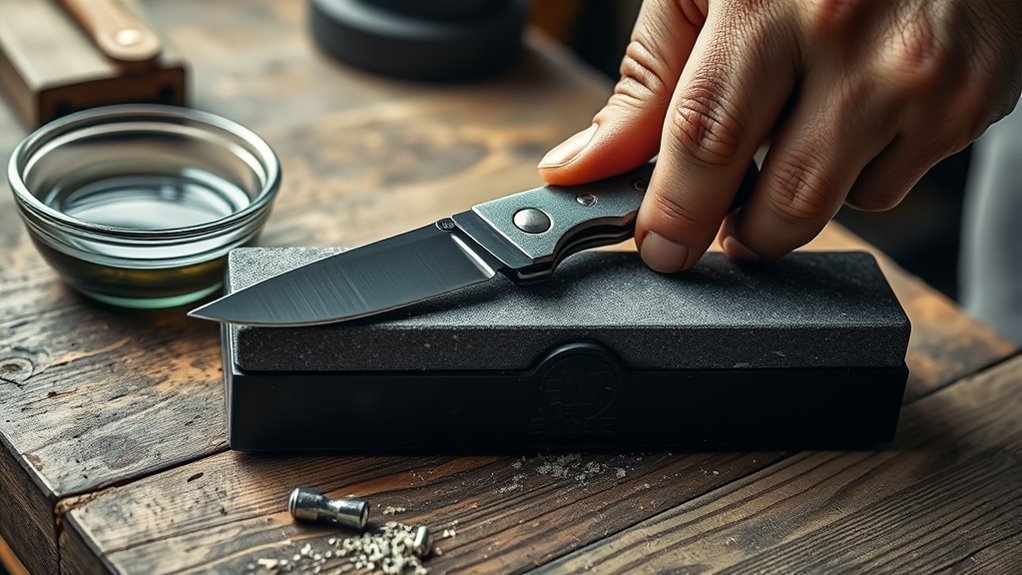
Several factors shape the choice of how to sharpen a pocket knife, starting with blade type and the sharpening method that best suits it. Portability also matters, along with the desired edge finish quality and overall ease of use. Each of these points influences how effectively the knife can be maintained in eight simple steps.
Blade Type Matters
Blade type sets the sharpening approach from the start, because a straight edge and a serrated edge do not respond to the same tools or technique. Straight-edged pocket knives usually respond best to a two-stage process, first removing wear with a coarse abrasive, then refining the edge with a finer one. Serrated blades need a different touch, often with tapered or round rods that fit each gulley without flattening the teeth. Blade material also matters: stainless steel may sharpen differently from high-carbon steel, and each can vary in how often touchups are needed. Intended use should guide the choice as well, since an EDC blade, kitchen knife, or outdoor tool faces different cutting demands and maintenance schedules.
Sharpening Method Choice
Choosing the right sharpening method for a pocket knife depends on the blade, the tool, and the setting. Straight edges often respond well to manual stones, pull-through sharpeners, or guided systems, while serrated blades usually need specialized rods or narrow profiles that reach each tooth. The sharpening mechanism also shapes results: simple pull-through tools offer speed, whereas guided setups help maintain a precise angle and produce more consistent edges. Grit selection matters as well. Coarser grits remove damage and rebuild a dull edge, while finer grits refine and polish it. User-friendly features, such as angle guides and clear instructions, can reduce mistakes for less experienced users. The best choice balances blade type, desired edge quality, and ease of use without unnecessary complexity.
Portability Needs
Portability matters when selecting a pocket knife sharpener, especially for camping, fishing, and other outdoor use. A compact, pocket-sized design is easier to pack in a day bag, jacket pocket, or on a keychain, so it is more likely to be carried consistently. Lightweight construction also reduces burden during travel and field use, which helps keep the tool accessible when dull blades need attention. Secure features such as magnetic closures or fold-out mechanisms support safe storage by limiting accidental opening inside a pack. Multi-function models can further improve practicality by handling several blade types, reducing the need to carry extra sharpening tools. For users who move often, the best option is one that stays unobtrusive while remaining ready whenever sharpening becomes necessary.
Edge Finish Quality
Edge finish quality plays a major role in how well a pocket knife cuts, since a smoother edge glides through material with less resistance. A refined finish improves slicing performance and helps produce cleaner cuts through rope, cardboard, and food. Polishing with ultrafine grit compounds can create a mirror-like edge that lowers friction and sharpens the blade’s bite. Ceramic stones and honing compounds also influence the result, because finer abrasives generally leave a keener, longer-lasting edge than coarse ones. Burr removal is equally important; any leftover burr can create uneven cutting and weaken the blade over time. Proper finishing and routine maintenance help preserve sharpness, reducing how often resharpening becomes necessary.
Ease Of Use
Ease of use is often what separates a sharpening tool that gets used regularly from one that sits unused. A practical choice should simplify sharpening through draw-through mechanisms or similar designs that restore an edge with only a few controlled strokes. Portability also matters, since compact tools let a pocket knife be sharpened on the go without complicated setup. Clear instructions, or included instructional support, help beginners follow the process confidently and achieve consistent results. Versatility adds convenience when one sharpener works across several knife styles, reducing the need for multiple tools. Safety should not be overlooked; protective closures and durable construction can lower the risk of damage while making handling more secure. Together, these traits make sharpening more efficient, approachable, and dependable.
Frequently Asked Questions
What Grit Should I Use for a Chipped Blade?
For a chipped blade, a coarse grit around 200 to 400 is best to remove damage efficiently. Then a medium grit can refine the edge before finishing on a finer stone for sharpness.
How Often Should I Sharpen a Pocket Knife?
How often should a pocket knife be sharpened? It depends on use: light users may sharpen monthly, heavy users weekly. A quick touch-up whenever cutting feels dull keeps the edge reliable and efficient.
Can I Sharpen Serrated Pocket Knives Safely?
Yes, serrated pocket knives can be sharpened safely with care. A tapered rod or specialty tool should follow each serration individually, keeping angles consistent and fingers clear to avoid slips, damage, or injury.
What Angle Is Best for Different Blade Steels?
Most blade steels perform best at 15 to 20 degrees per side; harder steels can hold 12 to 15, while softer steels often need 20 to 25. A steeper edge may dull faster, yet improves durability.
How Do I Maintain a Pocket Knife After Sharpening?
It should be cleaned, dried, and lightly oiled after sharpening. Blade edges benefit from regular wiping, occasional touch-ups, and careful storage. Pivot screws, locks, and scales should be checked for debris, looseness, and corrosion.
Conclusion
To summarize, the best way to sharpen a pocket knife in 2027 is to pair the right tool with steady technique and careful finishing. Whether using the Lansky Blademedic, Sharpmaker, Smith’s Pocket Pal, or SHARPAL compound, consistency matters most. When the angle is kept true and the pressure stays even, the edge improves quickly. The process may seem simple, but it is clear that a little care goes a long way.