If you want comfortable sightseeing weather in Canberra and the Australian Capital Territory, focus first on autumn from March to May and spring from September to November. Autumn brings crisp days and colourful foliage, while spring adds blossoms, wildflowers and major events such as Floriade. Summer is better for long evenings and water activities, while winter suits museums, quiet walks and cold-weather escapes.
Quick Answer
For the best balance of comfortable weather and sightseeing, visit Canberra and the ACT in autumn from March to May or spring from September to November. Spring is best for flowers but Floriade can increase crowds; autumn offers colourful parks and mild days. Summer suits lake activities, while winter favours museums and quieter trips.
Key Takeaways
- March to May: one of the best periods for mild daytime weather, autumn colour, galleries, walking and nearby winery visits.
- September to November: excellent for blossoms, wildflowers and outdoor activities, but Floriade can make some spring weekends busy.
- December to February: long evenings and outdoor events are appealing, but hot days can exceed 35°C.
- June to August: expect cold mornings, frequent frost and short days, with good conditions for museums, cafés and winter experiences.
- For lower accommodation demand: look first at non-event weekdays rather than assuming one whole season will always be cheaper.
Best Months to Visit the ACT
For most visitors, March to April and October to November give the easiest mix of comfortable daytime temperatures, outdoor time and city sightseeing. May and September are also attractive, although mornings and evenings can be noticeably colder.
Spring brings flowering parks, wattles, garden displays and longer days. It is an excellent time for walking tracks, markets and wildlife watching, but it is not automatically a low-crowd season. Floriade takes place in spring and can increase visitor numbers around Commonwealth Park and central Canberra.
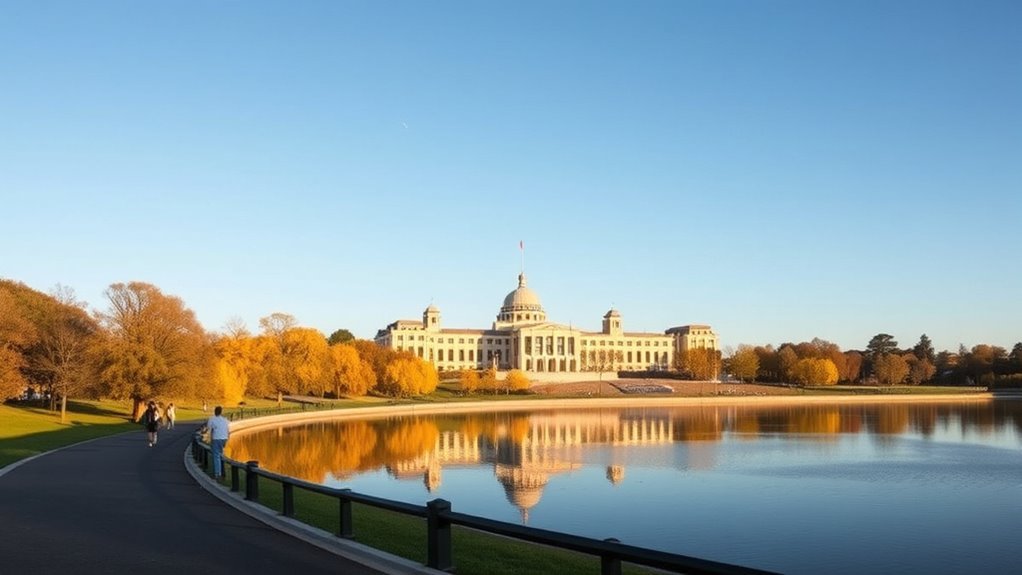
Autumn has a different appeal. March can still feel warm, while April and May bring cooler conditions and strong autumn colour along Canberra’s tree-lined streets and parks. It is an easy season for combining galleries, lakeside walks, lookouts and trips into the Canberra District wine region.
Summer gives you the longest evenings for outdoor dining, cycling and events, but January in particular can be hot. Winter brings cold nights and regular frost, yet clear days can still work well for city walks, museums, galleries and nearby winter activities.
Note: Canberra is the main urban base for an ACT trip, but conditions change with elevation. Namadgi National Park and the Brindabella ranges can be colder, windier and more changeable than central Canberra, so check the local forecast before longer walks.
Canberra Weather by Month
Canberra has four distinct seasons. Bureau of Meteorology observations from Canberra Airport show a large swing between summer and winter: the mean maximum is about 30.0°C in January but only 12.8°C in July. Winter nights are much colder, with July averaging around 0.1°C.
The figures below are climate averages rather than a forecast for your travel dates. Conditions can vary from year to year, and the mountains west and south of the city are generally cooler than Canberra Airport.
| Month | Avg. High | Avg. Low | Avg. Rainfall | Travel Feel |
|---|---|---|---|---|
| January | 30.0°C | 14.2°C | 54.4 mm | Hot afternoons, long evenings |
| February | 28.0°C | 13.4°C | 64.1 mm | Warm, good for evening activities |
| March | 25.3°C | 11.3°C | 62.1 mm | Warm days, active event calendar |
| April | 21.0°C | 6.8°C | 42.1 mm | Excellent walking weather and autumn colour |
| May | 16.6°C | 2.5°C | 33.8 mm | Cool, calm and increasingly frosty |
| June | 13.2°C | 0.9°C | 46.8 mm | Cold mornings and short days |
| July | 12.8°C | 0.1°C | 32.1 mm | Coldest month; frequent frost |
| August | 14.4°C | 1.2°C | 46.3 mm | Cold but daylight starts increasing |
| September | 18.0°C | 3.1°C | 50.5 mm | Flowers, cool mornings and Floriade season |
| October | 21.4°C | 6.2°C | 52.1 mm | Mild days and strong spring colour |
| November | 24.9°C | 9.8°C | 73.6 mm | Warmer spring days; storms can occur |
| December | 27.4°C | 11.9°C | 75.2 mm | Warm start to summer and long daylight |
Source: Bureau of Meteorology climate statistics for Canberra Airport. The current station began observations in 2008, so these figures should be treated as climate averages rather than guaranteed conditions for any particular trip.
Monthly Temperature Trends
The biggest planning issue in Canberra is the difference between daytime and nighttime temperatures. Even when afternoons are comfortable, mornings can be much colder. That is especially noticeable in autumn and spring.
Summer is warm to hot, with January averaging a 30.0°C maximum. Winter is much colder: July averages a 12.8°C maximum and a 0.1°C minimum. Frost is common, and temperatures below freezing occur regularly during the colder part of the year.
- Summer: plan exposed walks for the cooler morning or evening when possible.
- Autumn: carry a light layer even when the afternoon forecast looks mild.
- Winter: pack an insulated layer, especially for early starts and lookout visits.
- Spring: dress in layers because cool mornings can turn into mild afternoons.
Rainfall and Storm Patterns
Rain falls throughout the year, so there is no completely dry season. Winter often has a relatively high number of rain days, but that does not mean it always has the highest monthly rainfall totals. Bureau of Meteorology averages show that November and December receive more total rainfall than a typical June, July or August.
Warm-season showers and thunderstorms can also interrupt spring and summer plans. They may be brief, but conditions can change quickly, particularly when you are walking, cycling or visiting exposed lookouts.
Warning: Canberra can experience very hot summer days as well as severe weather and elevated fire danger. Check the Bureau of Meteorology forecast and current ACT emergency or park advice before long bushwalks, especially in Namadgi or other exposed areas.
Best Months to Visit
If your priority is comfortable outdoor sightseeing, April, October and November are strong choices. March is warmer and lively, while May and September give you cooler conditions that can suit hiking and sightseeing if you pack for chilly mornings.
- March–May: mild to cool conditions, autumn foliage, galleries, festivals and winery trips
- September–November: blossoms, wildflowers, outdoor markets, Floriade and active walking conditions
- December–February: long evenings, cycling, outdoor events and suitable swimming days when water-quality conditions allow
- June–August: museums, galleries, cafés, truffle-season experiences and winter excursions
When Canberra Gets Busy: Crowds & Events
Canberra does not have one simple tourist high season. Visitor demand changes around major festivals, school holidays, parliamentary sittings, conferences and long weekends.
Spring is particularly important because Floriade draws visitors to Commonwealth Park. For 2026, Floriade runs from September 12 to October 11. Dates change each year, so check the official Floriade information before booking future trips.
Late summer and early autumn can also be lively because events such as Enlighten and the Canberra Balloon Spectacular fall around this period. School-holiday periods can increase family travel, while large conferences or parliamentary activity can affect accommodation availability even when the city does not feel crowded at every attraction.
For a quieter Canberra trip, target non-event weekdays rather than relying on a particular season to be uncrowded.
Popular museums, lakefront areas and the Parliamentary Triangle are usually easier to enjoy early in the day. Walking and cycling can also help you avoid traffic around major event precincts.
Pro Tip: If you want spring flowers without the busiest festival atmosphere, compare weekday accommodation during Floriade with dates just before or after the main event period. A one- or two-day shift can make room availability much better.
Seasonal Costs in Canberra
Canberra prices are influenced more by specific high-demand dates than by a rigid tourist season. Accommodation can become more expensive or harder to find during major festivals, conferences, school holidays and long weekends. Outside those periods, midweek stays often give you a wider choice of rooms.
Public-transport pricing is not seasonal. Under the current MyWay+ system, fares vary by factors such as peak/off-peak travel and daily caps. From January 10, 2026, the adult daily cap is $10.16 on weekdays and $6.22 on weekends and public holidays. Check Transport Canberra’s current fares because prices can change.
Peak-Season and Event-Weekend Rates
During Floriade, major sporting events, conferences and other busy weekends, hotel availability can tighten. That does not mean every spring or summer date will be expensive, but booking earlier gives you more control over location and room type.
- Compare the same hotel across weekday and weekend dates.
- Check accommodation outside the immediate city centre if central rooms are expensive.
- Look at the event calendar before assuming a seemingly random high rate is normal.
- Factor parking and transport into the total price rather than comparing room rates alone.
Off-Season Savings
Winter and non-event weekdays can provide better accommodation availability, but discounts are never guaranteed. Canberra can also deliver good value because many nationally important attractions have free general admission throughout the year.
| What to save on | What actually helps |
|---|---|
| Hotels | Compare non-event weekdays and locations outside the central business district. |
| Tours | Compare inclusions rather than assuming winter automatically means a discount. |
| Dining | Lunch specials, markets and picnics can reduce costs more reliably than season alone. |
| Transport | Use MyWay+ correctly and take advantage of applicable off-peak fares and daily caps. |
| Attractions | Many major museums, galleries and national institutions have free general admission year-round, although special exhibitions may charge. |
You can therefore build a relatively inexpensive Canberra itinerary in any season by combining free national attractions with walking, public spaces and carefully chosen accommodation dates.
Seasonal Attractions and Outdoor Activities in the ACT
The ACT changes noticeably through the year. Spring brings flowers and comfortable hiking days, summer offers long evenings and water-based recreation, autumn transforms many city streets with red and gold foliage, and winter combines frosty mornings with museums, galleries and nearby cold-weather activities.
Match the season to the activity: spring for flowers, summer for long evenings, autumn for foliage and walking, and winter for cultural attractions and cold-weather experiences.
In spring, explore gardens, reserves and walking tracks around Canberra or head toward Namadgi for a more natural landscape. Summer works well for cycling around Lake Burley Griffin, sailing, paddling and picnics when the weather is suitable.
If you plan to swim, use a recognised swimming area and check current recreational-water advice first. ACT authorities monitor water for bacteria and algae during the warmer recreation season, and an area can be unsuitable even when another nearby site is open. See the ACT Government’s recreational water-quality guidance before entering the water.
Autumn is excellent for tree-lined walks, Mount Ainslie viewpoints, galleries and winery trips. Winter brings crisp mornings, truffle-season activities and indoor attractions. Snow is not a dependable feature of central Canberra, so dedicated snow trips usually involve higher or colder areas outside the city.
- Dawn or early-morning wildlife watching
- Lake cycling and walking loops
- Paddling, sailing and swimming at suitable open sites
- Seasonal festivals and markets
- Namadgi and other bushwalking areas
- Museums, galleries and national institutions
Who Should Visit When: Match Seasons to Priorities
Your ideal month depends less on a single “best season” and more on what you want to do.
| Priority | Best Period | Why |
|---|---|---|
| Wildflowers and gardens | September–November | Spring blooms, Floriade and improving temperatures |
| Autumn colour | April–May | Cooler days and colourful deciduous trees |
| Hiking and walking | March–May; September–November | Avoids the hottest part of summer and coldest winter conditions |
| Long evenings and cycling | December–February | More daylight, but plan around hot afternoons |
| Museums and galleries | Year-round | Especially useful in cold, wet or very hot weather |
| Quieter trip | Non-event weekdays | Crowds are often driven by events rather than season alone |
| Winery escapes | Autumn and spring | Comfortable touring weather in the Canberra District wine region |
Families can enjoy Canberra throughout the year because many museums and national attractions have indoor exhibits and family programs. Spring and autumn make it easier to mix those attractions with playgrounds, parks and outdoor sightseeing.
Choose summer if you value long daylight and a busy social calendar. Choose autumn for slower city wandering, galleries and vineyard trips. Winter works well if you prefer cool-weather travel, indoor attractions and quieter outdoor spaces.
Save Money and Avoid Crowds in the ACT
Once you choose your season, a few timing decisions can reduce both costs and crowds.
Start by checking Canberra’s major-event calendar before booking accommodation. If your dates are flexible, compare a Tuesday-to-Thursday stay with the surrounding weekend. For popular attractions, early mornings can be quieter than the middle of the day.
Public transport can help you avoid parking costs in central areas, while walking and cycling work well between several lakefront and Parliamentary Triangle attractions when the weather is comfortable.
- Book midweek when your itinerary allows it.
- Avoid major event weekends if the event itself is not part of your trip.
- Use free museums, galleries, lookouts, gardens and public spaces.
- Buy picnic supplies for some meals instead of eating out every time.
- Check MyWay+ fare rules and use the same payment method consistently when applicable.
- Reserve limited-capacity tours or special exhibitions early rather than assuming they will be cheaper at the last minute.
These choices usually matter more than simply labelling one season “cheap” and another “expensive.”
What to Pack for Canberra by Season
Canberra’s large day-to-night temperature range makes layers useful in almost every season.
- Spring: light layers, a warmer morning layer, comfortable walking shoes, sunscreen and a compact rain layer.
- Summer: breathable clothing, hat, sunscreen, refillable water bottle and a light evening layer.
- Autumn: layers, closed walking shoes and a warmer jacket for early morning or evening.
- Winter: insulated jacket, warm base layers, closed shoes, gloves for early starts and rain protection.
If you plan to hike outside central Canberra, bring appropriate footwear, water and weather protection even when the city forecast looks mild. Conditions in higher parts of the ACT can change faster than they do around the lake and city centre.
Frequently Asked Questions
Are there guided day trips from Canberra to nearby wine regions?
Yes. Guided tours operate from Canberra to wineries in the Canberra District wine region. The region has dozens of wineries within easy driving distance of the city. Tour schedules and inclusions vary, so compare transport, tastings, meals and pickup arrangements before booking.
What public transport passes cover the ACT and surrounding areas?
Transport Canberra uses the MyWay+ fare system for ACT buses and light rail. It has individual fares plus daily and monthly caps rather than a general tourist pass covering Canberra and surrounding NSW. Travel beyond the Transport Canberra network may require a separate regional service or fare.
Is tap water safe to drink throughout the ACT?
Canberra’s treated tap water is supplied and monitored under Australian Drinking Water Guidelines and ACT requirements. Icon Water describes the supply as safe, clean drinking water. If water at a property is unusually discoloured or has an objectionable smell or taste, follow current Icon Water advice rather than drinking it until the issue is checked.
Are there child-friendly museums with changing exhibits in Canberra?
Yes. Questacon is designed around hands-on science experiences, while the National Museum of Australia offers family spaces, permanent galleries, temporary exhibitions and school-holiday activities. Programs change, so check the attraction’s current calendar before your visit.
Can I use credit cards at outdoor markets and small vendors?
Card and contactless payments are common, but payment options depend on the individual stallholder. Carrying a small amount of backup cash can still be useful at temporary markets, community events or if a vendor’s payment terminal is unavailable.
What is the best month to visit Canberra?
April is one of the easiest all-round choices because daytime temperatures are mild and autumn colour is developing. October is another strong option for spring flowers and comfortable sightseeing, although Floriade can make some dates busier. Your best month ultimately depends on whether you prioritise weather, events, crowds or seasonal scenery.
Does it snow in Canberra in winter?
Frost and freezing mornings are much more dependable than snow in central Canberra. Snow can occur in colder and higher areas around the region, while travellers seeking more reliable snow recreation generally head toward higher-elevation destinations outside the city.
Is Canberra crowded during Floriade?
Floriade increases activity around Commonwealth Park and can raise accommodation demand, particularly on weekends and around other major events. If you want to attend while avoiding the busiest periods, consider a weekday visit and book accommodation earlier than you would for a normal non-event week.
Conclusion
The best time to visit the ACT depends on what matters most to you. Choose autumn from March to May for mild conditions, colourful parks and relaxed sightseeing. Choose spring from September to November for flowers, outdoor activities and Floriade, remembering that festival weekends can be busy.
Summer gives you long evenings, cycling and water activities but can bring very hot days. Winter is cold and frosty, yet it works well for museums, galleries, cafés and quieter sightseeing. Rather than choosing by season alone, check the weather forecast and major-event calendar, then match your dates to the experience you want.
Sources
- Bureau of Meteorology — Canberra Airport Climate Statistics — monthly temperature, rainfall and frost-related climate data.
- VisitCanberra — Seasons and Weather — Canberra’s seasonal climate overview.
- Floriade — Official FAQs — current Floriade dates and visitor information.
- Transport Canberra — MyWay+ Fares — current fares, off-peak rules and daily caps.
- Icon Water — Water Quality — Canberra drinking-water treatment and monitoring.
- ACT Government — Recreational Water Quality Monitoring — swimming-water monitoring and safety guidance.