
About 80% of visitors head north between May and September, when Cape York’s roads firm up and the weather’s most reliable. You’ll find clear days, working ferries and great fishing, but also higher prices and busier campsites—especially on school holidays and weekends. If you want quieter tracks or cheaper travel, there are trade‑offs with timing and access. Keep going to match the month you pick with the trip you actually want.
Key Takeaways
- May–October (dry season) offers the most reliable roads, clear weather, and highest access for 4WD and boat trips.
- June–August maximizes marine sightings (manta rays, whale sharks, turtles) and calmer seas for snorkeling and fishing.
- November–December build‑up brings heat, softer tracks, dramatic skies, and increasing wildlife but risk of sudden closures.
- January–April wet season yields lowest prices and lush scenery but frequent road closures, erratic ferries, and limited access.
- Travel shoulder months (late April, early October) balance moderate rates, mixed conditions, and fewer crowds than peak season.
Quick Answer: When to Visit Cape York
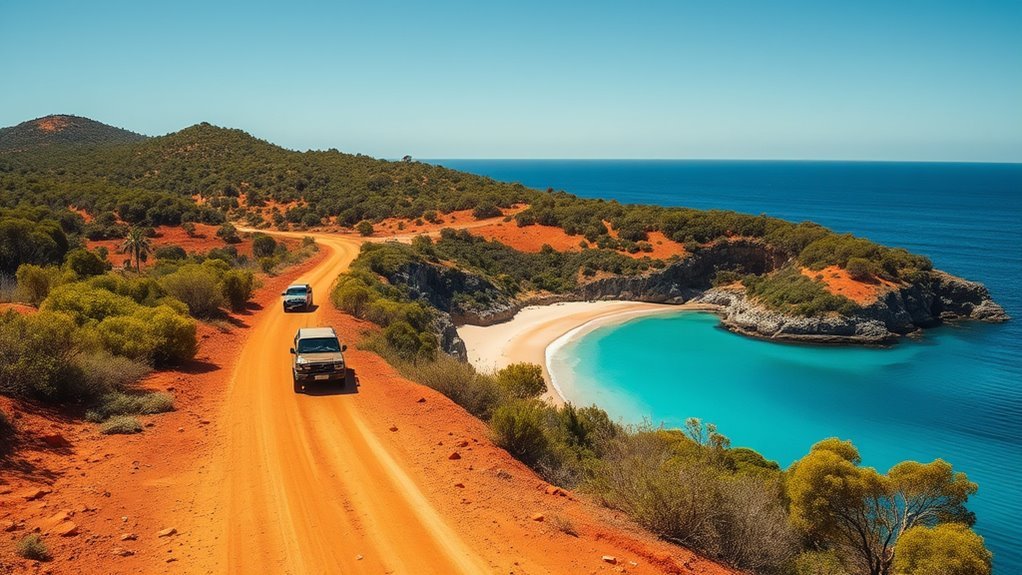
Wondering when to go? You’ll find Cape York most accessible in months that balance clear roads and open skies, when you can chase both solitude and shared celebrations.
Plan so you catch Indigenous festivals without getting bogged down by unpassable tracks; these gatherings reveal deep cultural rhythms and invite you into stories tied to place.
Aim for the window when campsites are quiet enough to breathe, yet lively enough to connect—when historical landmarks sit sharp against cobalt horizons and walking feels like reclaiming space.
You’ll want reliable conditions for 4WD routes and boat trips, but you’ll also want the freedom to linger at galleries, meet custodians, and stand where history resists erasure.
Travel light, book selectively, and let timing free you to follow curiosity rather than the clock.
In short: choose months that open access while honoring community calendars, so your visit feels both adventurous and respectful.
Cape York Seasons Explained: Dry, Build‑Up, Wet
When you time your trip to Cape York, you’ll notice the land moves through three distinct moods—the dry, the build‑up and the wet—each shaping access, wildlife and the feel of the place.
In the dry (May–October) you’ll find hard tracks, clear skies and long, sunlit days that invite exploration and solitary freedom; birdlife concentrates around permanent waterholes, and small towns buzz with cultural festivals where communities celebrate connection and craft.
The build‑up (November–December) softens the air: heat and humidity rise, dramatic clouds gather, and the landscape breathes anticipation as insects and reptiles become more active. You’ll sense indigenous heritage in stories shared at community events and in the rhythm of land preparing to release.
The wet (January–April) overwhelms with monsoon rains: rivers swell, roads close, and the world becomes lush and raw. That season offers intense solitude and renewal, but you’ll need to yield to nature’s timing and local guidance.
Cape York 4WD & Track Access: Best Months
The seasons set the stage, but access to Cape York’s legendary tracks is what ultimately shapes your trip plans. You’ll find the clearest, most reliable 4WD months run from May through September: firm tracks, low river crossings, and predictable roadside services. These months free you to push farther, tackling Bramwell, Telegraph, and the Old Coen roads with confidence.
Aim for June–August if you want the driest conditions and the greatest chance to reach remote peninsulas without detours. Travel then also syncs with several cultural festivals and community events—timed windows where you can witness Indigenous heritage celebrations and connect with traditional owners.
Late April and early October can be tempting phases, but be prepared for soft spots and sudden closures.
You’ll travel lighter, faster, and with more options in the heart of the dry. Respect local guidance, check track reports daily, and let the land—and its people—guide your route.
Wildlife, Fishing & Snorkeling: Peak Months
If you time your visit for the dry season’s heart—June through August—you’ll see Cape York’s wildlife at its most visible and the fishing and snorkeling at their sharpest, with clearer seas, calmer tides, and concentrated marine life around reef edges and estuaries.
You’ll watch baitfish clouds draw reef predators close to snorkelers and see migratory birds ride thermals above the mangroves.
Peak marine migration brings manta rays, whale sharks at the fringes, and seasonal schools that make fishing feel elemental and honest.
Nighttime walks on sandy beaches reveal turtle nesting activity—respect distances, light rules, and let the females claim their ritual.
Estuary flats offer bonefish and barramundi runs at dawn; reefs pulse with color mid-morning.
You’ll want a guide who reads tides and species patterns, freeing you to experience abundance without harming it.
Travel light, move thoughtfully, and surrender to rhythms that remind you nature’s timing is liberating and exact.
Crowds in Cape York: Where and When to Expect Company
Although Cape York feels vast and wild, you’ll notice clear patterns in where and when people gather: peak visitor numbers cluster around accessible hubs like Bamaga, Seisia and the Jardine River crossing during the dry months, plus popular campsites, mission towns and key fishing spots draw steady traffic at dawn and dusk.
You’ll find solitude on long beach stretches and remote tracks, but shared moments at sunrise fishing lines or communal fire pits make the region feel alive.
Indigenous festivals and local art markets concentrate crowds into short, electric bursts — plan to arrive early or linger a day to soak in ceremony and stall life without feeling rushed.
Expect weekends and school holidays to thicken numbers, while midweek travel rewards you with quieter bays and roadspace.
If you want freedom, choose shoulder days and less-trodden tracks; if you crave connection, time your visit to festivals and markets and trade solitude for cultural richness.
Cost Calendar: Cheapest Months for Travel, Campsites & Ferries
You’ll find the cheapest months for Cape York travel usually fall in the wet season, when flights, ferries and campsites drop prices and bookings thin out.
Watch campsite rates closely—powered sites and ranger-run grounds often cut nightly fees outside peak season, while private parks may offer midweek bargains.
Ferry fares also shift with demand and maintenance schedules, so checking timetables and promos can save you a surprising amount.
Cheapest Months Overview
Because the **low season brings fewer tourists and softer prices, you’ll find the cheapest windows for travel, campsites and ferries are from late January through April — the wet season’s tail** when operators discount trips and many campgrounds cut rates.
You’ll travel lighter, move freer, and meet locals reshaping routines between showers. Take advantage of cultural tips and scout small local festivals that keep communities alive while crowds ebb.
- Plan midweek ferry crossings and flexible arrival dates to catch lower fares.
- Book campsites with pragmatic cancellation policies; negotiation works off-peak.
- Bundle guided tours and transfers for deeper discounts and insider access.
These months let you reclaim space and cost control, turning savings into more time to explore Cape York on your own terms.
Campsite Price Trends
Curious when campsite prices plunge and peak across Cape York? You’ll notice rates drop in the wet season when campsite demand collapses and the land reclaims quiet.
In contrast, the dry season sparks a surge — explorers arrive seeking open tracks and clear skies, pushing prices higher.
Watch transitional months for sweet spots: fewer crowds but improving conditions mean moderate rates and greater flexibility.
Think like a liberated traveler: book late-season stays to catch softened prices, or lock peak campsites early if you crave certainty.
Observe price elasticity — some remote sites barely budge, while popular campgrounds swing dramatically with demand.
Track weather forecasts, calendar trends and booking windows to time your escape without paying for panic.
Ferry Fare Variations
When you plan timing as carefully as routes, ferry fares shape a trip to Cape York as much as weather or road conditions do: ticket prices slide and spike with seasonality, operator schedules, and the ebb of tourist demand.
You can stretch freedom further by choosing months when operators offer ferry discounts or when seasonal surcharges drop away.
Watch low-season windows for quieter docks, bargain combos, and midweek sailings that reward flexibility.
Conversely, school holidays and peak touring months trigger steep surcharges and sold-out crossings.
- Travel in shoulder months for the best ferry discounts and fewer crowds.
- Book midweek departures to avoid seasonal surcharges and snag lower fares.
- Combine routes and campsites early to lock reduced bundled prices.
Choose Your Month: Trip Style & Risk Checklist
Pick a month that matches how you want to travel and how much risk you’ll accept: dry-season months (May–October) are perfect for off-road adventures, reliable roads and fewer mosquitoes, while the wet season (November–April) brings dramatic green landscapes, fewer tourists and the real possibility of flooded tracks, closed access and erratic ferry schedules.
Decide whether you crave freedom or challenge. If you want unfettered access, choose May–September; if you want solitude and wild drama, accept closures and detours in the wet months.
Make a concise risk checklist: check road closures, ferry timetables, and local warnings; pack satellite comms and a robust first-aid kit.
Prioritize Travel insurance that covers recovery and weather-related cancellations.
Refine your Gear selection for mud, water and heat—tyres, recovery gear, waterproof bags, mosquito protection.
Embrace choices that expand your range without courting danger: plan alternates, leave flexible time, and let liberation meet responsibility.
Frequently Asked Questions
What Vaccinations Are Recommended Before Traveling to Cape York?
You should get routine vaccines (MMR, tetanus), update your vaccaccine schedule, consider hepatitis A, influenza and tetanus boosters, and discuss malaria advice and travel health risks with a clinician so you’ll roam Cape York confidently free.
Are Mobile Phone and Internet Services Available Throughout Cape York?
Sparse signals, shifting skies: you won’t get consistent network coverage across Cape York. You’ll find pockets of service near towns, but rural connectivity is limited, cellular connectivity varies, and cellular costs can climb for unreliable access.
Can I Drive a Standard 2WD to the Tip of Cape York?
No, you can’t reliably drive a standard 2WD to the tip; you’ll need 4WD. Use off road tips, plan fuel stations, book campsite reservations, expect intense wildlife sightings, and embrace rugged freedom as you navigate remote, raw landscapes.
Are There Guided Tours Suitable for Families With Young Children?
Yes — guided tours suitable for families with young children exist; you’ll find family friendly guides offering child safe itineraries, adventurous yet gentle routes, freeing your plans while keeping safety, learning, and fun front and center.
What Emergency Medical Facilities Exist in Remote Cape York Communities?
You’ll find small remote clinics, occasional nurse-led centers and limited ambulance coverage; medevac services bridge gaps. You’ll rely on local knowledge, prepare evacuations, and trust community resilience while insisting on safer, freer travel choices.
Conclusion
Think of Cape York as a choice between certainty and adventure: visit May–September for dry, firm tracks, reliable ferries and peak marine life, or opt for the shoulders (late April, early October) for fewer people and better deals. Want the cheapest, most solitary experience? Try late January–April, but expect closures and surprises. Which kind of trip will you remember—the smooth, planned journey or the wild, improvised one? Pack for mud or sunshine and go.