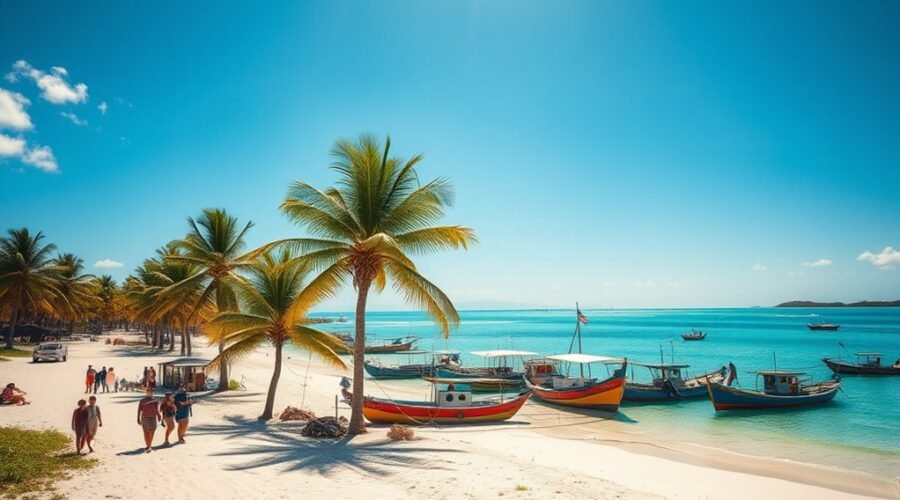
If you’re planning a trip to Thursday Island, aim for the shoulder months—April–May or September–October—when warm, mostly dry weather, calmer seas and clearer snorkel visibility meet thinner crowds and lower prices. Mid‑week stays and flexible ferry or flight bookings often lock in the best value, while peak dry season brings crowds and higher rates. Keep going for quick, practical timing tips and activity windows to make the most of your visit.
Key Takeaways
- Visit during the dry season (May–Oct) for clear skies, calm seas, and best snorkeling and diving visibility.
- Travel shoulder months (Apr–May, Sep–Oct) to avoid crowds while still enjoying good weather and lower accommodation prices.
- Book 6–8 weeks ahead for dry‑season travel; 2–4 weeks is usually fine for shoulder months to secure deals.
- Expect higher costs and peak crowds in June–August; midweek stays and package deals cut expenses.
- In wet season (Nov–Apr) expect heavy rains, disrupted ferries, and higher travel risks—carry waterproof gear and check daily forecasts.
Best Time to Visit Thursday Island (Quick Answer)
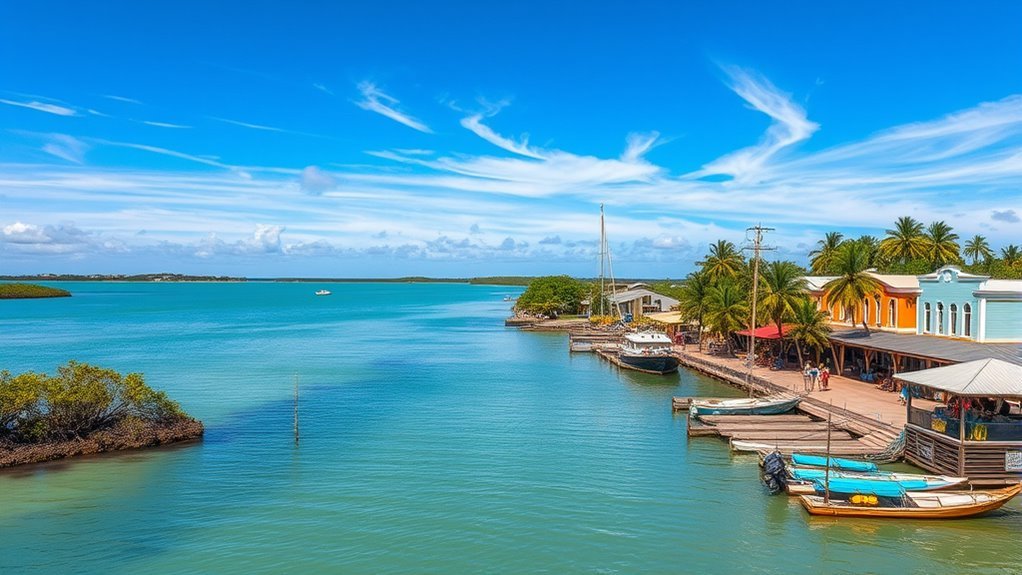
If you want the sun, calm seas, and easiest travel, visit Thursday Island between April and October—the dry season brings clear skies, lower humidity, and comfortable daytime temps ideal for snorkeling, walking historic streets, and island hopping.
Visit Thursday Island April–October for dry, sunny days, calm seas, and perfect snorkeling, walking, and island-hopping weather.
For a quick answer: choose shoulder months—April–May or September–October—if you want fewer crowds, better deals, and still-excellent conditions.
You’ll see abundant marine wildlife in shallows and reef edges without the peak-season crush, and ferries run more reliably for spontaneous escapes.
Plan midweek stays to dodge weekend visitors and secure the most affordable accommodations.
Balance your time between freeing swims and quiet cultural encounters: visit local galleries to connect with Indigenous art that anchors the island’s story, and let small-group tours deepen that bond.
Pack light, expect warm nights, and keep flexibility in your itinerary—doing so lets you claim moments of solitude, joyful discovery, and a travel rhythm that feels like liberation rather than a checklist.
Dry Season on Thursday Island (May–Oct): Sunshine, Calm Seas, Best Activities
Lean into Thursday Island’s dry season (May–October) when skies clear, humidity drops, and the sea flattens into glassy bays that make snorkeling, reef excursions, and island-hopping effortless.
You’ll feel liberated as warm sun and steady trade winds open days for exploration; visibility improves, so marine wildlife reveals itself in sharp color and motion while you glide over reefs.
Coral health is easier to assess now — calmer seas reduce sediment, letting reefs breathe and you witness recovery or resilience.
Plan early-morning dives or late-afternoon swims to catch the quiet light and active fish.
- Book a local guide: they’ll point out nesting birds, turtles, and subtle coral health signs that maps miss.
- Take a multi-island day trip: island-hopping feels like escape, each beach offering different marine wildlife encounters.
- Pack reef-safe sunscreen and a lightweight reef guide: protect the ecosystem while you claim your freedom.
You’ll return restored, knowing you left lighter footprints on these fragile seas.
Wet Season on Thursday Island (Nov–Apr): Rains, Monsoon Risks & What to Avoid
From November to April you’ll face heavy rains and occasional flooding that can wash out roads and disrupt ferries.
Take monsoon safety precautions: check weather warnings, avoid low-lying areas, and have alternate plans if transport is cancelled.
Don’t underestimate sudden storms—stay informed and prioritize shelter and safe travel routes.
Heavy Rain & Flooding
When the wet season hits Thursday Island between November and April, torrential downpours and sudden flash floods can reshape roads and cut off services within hours, so you’ll need to plan around unpredictable weather and respect local warnings.
You’ll face flooded roadways, rising tides and sudden loss of power; that can feel claustrophobic but also galvanize your resolve to travel smarter.
Protect your freedom by knowing local evacuation points, confirming insurance coverage, and keeping essentials dry.
- Fear — the shock of seeing familiar streets vanish.
- Anger — the frustration when plans drown out.
- Resolve — the calm empowerment to adapt and move on.
Stay alert, travel light, and accept nature’s force without surrendering your plans.
Monsoon Safety Precautions
Although the monsoon can arrive suddenly, you can stay safe by preparing for **heavy rain, gusting winds and rapid water rises: check forecasts daily, keep emergency contacts and evacuation routes** handy, waterproof your gear, and avoid driving or walking through floodwater.
Embrace stormrise preparedness by identifying high ground and marking nearby emergency shelters before you travel; know local warning signals and practice quick exits so fear doesn’t freeze you.
Secure loose objects, charge power banks, and store essential documents in plastic — small acts that free you from panic.
If authorities order evacuation, move immediately; if trapped, stay put in a sturdy room, keep communication lines open, and conserve water.
Your vigilance turns monsoon threat into manageable risk.
Local Festivals & Cultural Events: When to Time Your Visit
Plan your trip around the island’s calendar and you’ll catch Thursday Island at its liveliest — vibrant powwows, Torres Strait dance festivals, and multicultural food events punctuate the year and reveal local traditions.
You’ll witness Indigenous dance that’s both ancestral memory and living rebellion, and you’ll roam Artisan markets where makers reclaim space through craft and story.
Time your visit for connection: ceremonies, drumming, and communal feasts open access to culture if you’re respectful and curious.
- Attend a Torres Strait dance festival to feel collective rhythm and resilience.
- Visit Artisan markets on market days to support local makers and exchange stories.
- Join public powwows and food events to taste resistance and joy.
You’ll leave changed — more free, informed, and accountable.
Festivals aren’t just spectacles; they’re invitations to participate in a living culture.
Plan deliberately, listen deeply, and let the island’s calendar guide a visit that honors people and place.
Crowds, Deals & When to Book Flights and Accommodation
When you visit Thursday Island during peak season you’ll notice the island fills quickly and prices rise, so plan accordingly.
Book flights and accommodation several months ahead for busy school holidays and festival dates to lock in the best options.
If your dates are flexible, you can sometimes snag last-minute deals, but that’s riskier—set alerts and have backup plans.
Peak Season Crowding
Because Thursday Island draws most visitors between April and October for its dry, sunny weather, you’ll find the town noticeably busier then — especially around school holidays and public events like the Torres Strait Islander cultural festivals.
You’ll feel the eco peak energy: small streets hum with boats, markets sell bold local cuisine, and humble nightlife options stay alive later than you’d expect.
Crowding is intimate, not overwhelming, but it reshapes choices.
- Joy: you’ll join communal celebrations and feel liberated among spirited locals.
- Tension: popular sites and ferries fill fast, testing patience.
- Reward: shared moments make experiences richer.
Plan logistics tightly, arrive curious, and embrace the collective pulse without losing your freedom.
Booking Lead Times
If you want the best balance of choice and price, book flights and accommodation for Thursday Island at least 6–8 weeks ahead during the dry season and 2–4 weeks in the shoulder months.
That timing frees you to pick rooms with character, snag better flight times, and avoid crowds without sacrificing spontaneity.
Lock in refundable rates or flexible tickets, and add travel insurance to protect that freedom if plans shift.
Check visa requirements early — nothing kills a liberating trip like last‑minute paperwork.
If you’re visiting during festivals or public holidays, extend lead times to secure the few boutique stays.
Finally, set fare alerts, compare multi‑leg routes, and schedule deposits so your trip remains manageable, affordable, and open to joyful discovery.
Finding Last-Minute Deals
Looking for a last-minute escape to Thursday Island? You can still snag freedom: hunt for last‑minute discounts and flash sales on flights and small hotels, and act fast. Use comparison apps, follow airlines and inns on social, and set alerts for price drops. Be ready to pivot—weekday departures and midday ferries often cost less.
- Book immediately when you see a flash sale—seats vanish.
- Choose flexible fares and refundable rooms to stay unshackled.
- Consider package deals that bundle ferry, stay, and tours for deeper savings.
Trust your impulse: short-notice travel can be liberating and affordable if you monitor deals, stay flexible, and move quickly when discounts appear.
Best Months for Snorkeling, Fishing & Day Trips From Thursday Island
When you plan snorkeling, fishing or day trips from Thursday Island, aim for the dry season (May–October) when calm seas, clearer water and lower humidity make marine visibility and boat access much better; early mornings are often the best for flat water and active fish, while late dry-season months offer warmer water and peak coral color.
You’ll find snorkeling hotspots around nearby reefs and uninhabited cays where schools of reef fish, turtles and soft corals glow in shallow, sunlit water.
Join local fishing charters for targeted reef or offshore trips—captains know tides, seasonal migrations and where barra, coral trout and Spanish mackerel concentrate.
Day trips are liberating: short hops to pristine sandbanks, bird-filled islets and WWII relics free you from crowds and schedules.
Expect fewer boats and more personal space in May–July; August–October brings the warmest water and best coral vibrancy.
Pack light, trust local operators, and let the sea set your rhythm for wholehearted exploration.
Practical Timing Tips: What to Pack, Booking Windows & 48‑Hour Itineraries
Although Thursday Island feels relaxed, a little planning makes the most of every hour: pack lightweight, sun-protective clothing, reef-safe sunscreen, a wide-brim hat and sturdy sandals for rocky jetties, and bring a compact rain jacket for sudden tropical showers.
You’ll want travel insurance that covers remote medical evacuation and check currency exchange options before you arrive—ATMs can be limited.
Book ferries and accommodation 4–8 weeks ahead in high season; snag last-minute midweek bargains in shoulder months.
- Choose freedom: rise with the tide and snorkel before crowds reclaim the reef.
- Choose ease: pack a dry bag, water purifier, and a small first-aid kit to stay self-reliant.
- Choose spontaneity: reserve only core nights, leave a day for island-hopping.
For 48-hour stays, spend day one exploring cultural sites and the jetty; day two snorkel, fish, and relax at a sunset viewpoint.
Travel light, stay insured, and trade schedules for real liberation.
Frequently Asked Questions
Are There Medical Facilities or Emergency Services on Thursday Island?
Yes — you’ll find local facilities including a hospital clinic and ambulance service, and an emergency response system linked to mainland Queensland; you’re supported in crises, so you can travel boldly while relying on essential care and evacuation options.
Is Thursday Island Family‑ and Child‑Friendly Year‑Round?
Yes — you’ll find Thursday Island family‑ and child‑friendly year‑round; you can enjoy family activities, beaches, safe walks and cultural tours, and seasonal events add color and liberation‑focused experiences that inspire curiosity and joyful exploration.
What Cellphone and Internet Coverage Can Visitors Expect?
Coincidentally, you’ll find patchy cellular signal across Thursday Island, but main spots and accommodations usually work—so grab local data plans for roaming, download maps, and relax; you’ll reclaim freedom while staying connected when needed.
Are There Accommodation Options for Budget Travelers or Camping?
Yes — you’ll find budget lodgings like hostels and cheap motels, and nearby islands offer basic campsites with modest campsite fees; you’ll embrace freedom, stretch savings, meet locals, and wake to island winds and wide horizons.
Can I Bring and Use a Rental Car or Motorbike on the Island?
Can you imagine riding freely along island roads? Yes — you can rent and use a car or motorbike, but you’ll need rental insurance, factor higher fuel costs, obey local rules, and respect narrow streets and residents.
Conclusion
You’ll want to aim for April–May or September–October: warm, mostly dry, fewer crowds and better prices, with calm seas for early‑morning snorkeling and reef trips. Book mid‑week stays and flexible flights to snag deals. Skip the wet season unless you love dramatic storms. Pack light layers, reef shoes and sunscreen, and plan a 48‑hour sampler of culture, snorkeling and fishing. Ready to go? Thursday Island’s quiet magic waits—don’t miss the right window.