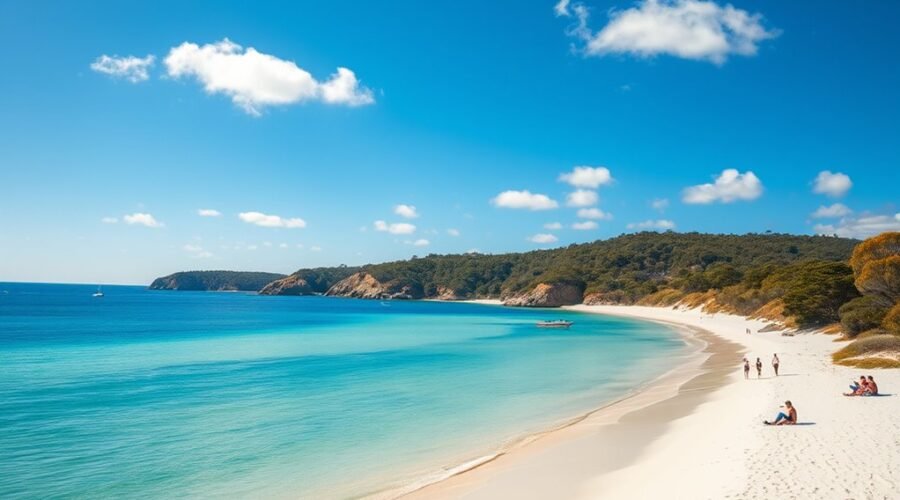
Plan for warm days, calm waters, and fewer crowds — or for peak sunshine, busy beaches, and higher prices. You’ll find Jervis Bay’s shoulder months (late Feb–Mar and Sept) give the best balance: low‑mid 20s°C, comfortable swims, cheaper stays and quieter mornings for kayaking and wildlife watching. Below I’ll cover month‑by‑month timing, seasonal weather, peak weekends to avoid, wildlife windows, and cost‑saving booking tips to help you pick your ideal dates.
Key Takeaways
- Summer (Dec–Feb) offers warm, calm beach days but highest crowds and accommodation prices.
- Shoulder seasons (Mar–May, Sep–Nov) balance pleasant weather, fewer tourists, and lower tour and hotel rates.
- Winter (Jun–Aug) gives lowest prices and empty beaches, though water is cooler and some tours scale back.
- Whale migration peaks May–Jun and Sep–Nov, ideal for wildlife viewing with calmer seas in migration windows.
- Midweek visits and late Feb–Mar or Sep bring the best combination of mild weather, reduced crowds, and savings.
When to Go to Jervis Bay : Month-by-Month Quick Guide
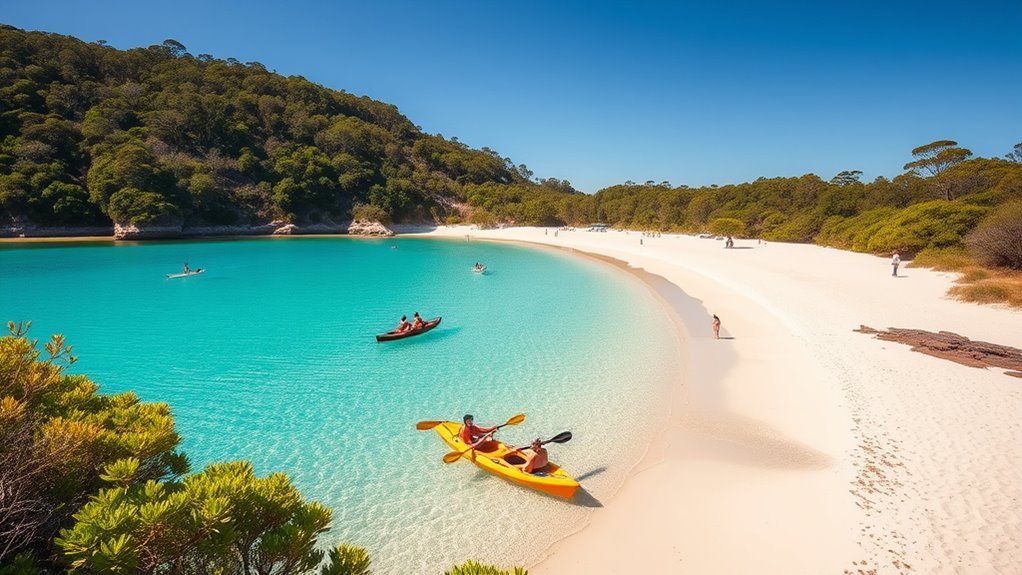
If you want to time your trip to Jervis Bay for ideal weather, wildlife or quieter beaches, a month-by-month snapshot helps you choose quickly—each month brings distinct conditions, from peak summer sun and warm waters to cooler, calmer months perfect for whale watching and peaceful walks.
In January–February you’ll find long days, lively beaches and sunset swims; surf’s up and cafés serve fresh local cuisine, so plunge into freedom and flavor.
March–April cool slightly, crowds thin, and you’ll catch local cultural festivals celebrating sea life and arts.
May–June brings calmer seas and quieter bays for reflective walks and affordable stays.
July–August are prime for whale migrations; you’ll witness giants and feel unbound.
September–October flowers and warmer westerlies invite kayaking and picnic escapes.
November–December warms, spring blooms and weekend crowds return; plan weekdays for solitude.
Choose months that match your hunger for adventure, stillness, or cultural connection, and you’ll craft a trip that frees you.
Weather in Jervis Bay by Season (What to Expect at the Beach)
In summer you’ll find warm, sunny beach days with calm, turquoise waters that make swimming and snorkeling irresistible.
In winter the air stays mild but the water cools noticeably, so you’ll likely need a wetsuit for extended swims.
I’ll outline typical temperatures, sea conditions, and what gear to bring for each season.
Summer Beach Conditions
When summer arrives in Jervis Bay, you’ll find warm, sunny days and crystal-clear water that make the beaches ideal for swimming, snorkeling, and sunbathing; daytime temperatures typically sit in the low to mid 20s°C (mid-70s°F), while water temps climb into the high teens to low 20s°C, offering comfortable conditions for most visitors.
You’ll enjoy calm mornings perfect for snorkeling among vibrant reefs and bold dolphins that sometimes cruise the bay.
Afternoons bring gentle sea breezes that refresh without chilling, letting you stay on the sand for long sunset picnics or leisurely reads.
Rocky headlands invite tidepool exploration at low tide, revealing starfish and anemones.
Expect more crowds on popular shores—arrive early to claim a peaceful spot and savor freedom by the sea.
Winter Water Temperatures
Though the air cools to the mid‑teens°C (high 50s°F), Jervis Bay’s water drops more noticeably—usually hovering between about 14–17°C (57–63°F) during winter—so you’ll feel a brisk chill on first immersion.
That sharp cold wakes you; it’s liberating if you lean into it, but it demands respect. Expect short swims, rapid heat loss, and numb fingers unless you plan ahead.
Prioritise cold‑water safety: enter slowly, avoid solo ventures, and watch for changing weather and currents.
Use thermal layering—neoprene tops, booties, or a wetsuit—to extend time in the surf without risking hypothermia.
Even if you don’t swim, the clear, crisp water makes for dramatic views and invigorating shoreline walks that reinforce freedom and calm.
Whale, Dolphin & Migratory-Wildlife Seasons in Jervis Bay
Because Jervis Bay sits on major coastal migration routes, you’ll often spot large marine visitors from late winter through spring; humpback whales pass northward around May–June and return south between September and November, while dolphins can be seen year-round close to shore. You’ll want to time trips for phale migration windows and peak Dolphin sightings if you crave wild encounters. Boats, cliffs and beaches all offer vantage points; listen for blows, watch for tails, and respect protected zones so these creatures stay free.
| Season | What to expect |
|---|---|
| May–June | Northbound humpbacks, breaching displays |
| Sep–Nov | Southbound return, calves nearby |
| Year-round | Bottlenose and common dolphins close to shore |
| Migratory birds | Spring arrivals, shorebird flocks |
Plan with ethical operators who prioritize habitat protection. Bring binoculars, a low-impact mindset and patience — liberation here means witnessing nature on its terms, not forcing it.
Crowd Levels and Peak Weekends to Avoid
If you want quieter beaches and easier parking, aim for midweek visits outside school holidays and long weekends, since Jervis Bay swells with day‑trippers from Sydney and Canberra on peak weekends.
You’ll find the busiest times are summer weekends, school holiday fortnights (December–January and April breaks), and public holiday long weekends — expect crowded carparks, full cafés, and busy boat ramps.
To feel unshackled, choose shoulder months like late February–March or September when crowds thin but weather stays pleasant.
Keep an eye on dates tied to local cultural festivals and regional events; these draw extra visitors and lift demand for dining and tours, so book ahead or avoid those weekends if you want solitude.
Weeknight dining gives you calmer evenings to savor local cuisine without queues.
If you crave liberation from crowds, rise early for sunrise walks at Hyams Beach or explore quieter headlands — you’ll reclaim space and still enjoy Jervis Bay’s white sand and clear water in peace.
Monthly Cost Trends: Accommodation, Tours & Transport
Expect prices to fluctuate noticeably through the year, so plan when to book to get the best value for accommodation, tours and transport.
Expect seasonal price swings—time your booking wisely to secure the best value for stays, tours and transport.
You’ll find summer (Dec–Feb) is highest: beachfront rooms and ferry runs spike, and popular culinary tours fill quickly around holiday crowds.
Shoulder seasons (Mar–May, Sep–Nov) give you freedom—reduced rates on self-contained stays, discounts on wildlife boat trips, and easier access to local festivals that still animate towns without premium prices.
Winter (Jun–Aug) often offers the lowest nightly rates and cheaper car hire, though some tour operators scale back schedules.
Book early for any dates that overlap major events; local festivals can lift prices for short windows, so target less busy weeks.
Use flexible transport options—rentals with free cancellation or off-peak buses—to lock bargains.
If you want both savings and meaningful experiences, stagger bookings: secure accommodation first, reserve high-demand tours like culinary tours only once your dates are set.
Best Times in Jervis Bay by Travel Style (Relaxing, Active, Family)
If you want gentle beach days, aim for late spring and early autumn when waters are warm and crowds are thinner.
For active water adventures like snorkeling, kayaking and whale-watching, plan around summer and the migration season for calmer seas and better visibility.
Families will find school holidays and mid-summer offer the most services and activities, though expect bigger crowds and higher prices.
Gentle Beach Days
When you want slow, sun-soaked days on soft sand, Jervis Bay shines from late spring through early autumn—roughly October to April—when water temps warm, skies clear more often, and winds stay gentler for lounging, swimming, and easy paddle sessions.
You’ll wake early for sunrise picnics on Hyams Beach, feel clean air fill your lungs, and watch pastel light stretch across nearly white sand.
Midday is ideal for gentle swims and lounging with a book; services and cafés are open but crowds thin on weekdays.
Late afternoon invites tide‑pool exploration—discover small marine life without straying far from shore.
Pack sunscreen, a light windbreaker, and a picnic rug; you’ll leave feeling unhurried, free, and grounded.
Active Water Adventures
After savoring lazy beach days, you might crave a bit more motion—Jervis Bay answers with clear water and steady swell that suit a range of active water adventures.
You can launch into freedom: hire kayak rentals and slip between bays, nose into hidden coves, and feel wind and spray wake you.
If you prefer balance, book paddleboarding lessons to learn strokes, turns, and confident entry from calm mornings when winds are light.
Seasonally, late spring and early autumn offer warm water, fewer crowds, and reliable conditions for longer outings.
Pack reef shoes, sun protection, and a dry bag; follow local briefings on currents and marine life.
Go prepared, move deliberately, and let the bay’s clarity revive your sense of escape.
Family-Friendly Peak Times
Because Jervis Bay balances calm, shallow beaches with sheltered bays, families find their best windows in school holidays and shoulder seasons when amenities stay open but crowds thin out.
You’ll enjoy warm water and safe swimming in summer school breaks, plus family festivals that animate towns without overwhelming the coastline.
Late spring and early autumn give milder weather, easier parking, and open cafes so you can roam freely between beaches and bushwalks.
Choose pet friendly rentals if you want to bring a dog; many spots welcome pets and provide enclosed yards and proximity to off-leash beaches.
Book ahead for peak holiday weeks, but plan some weekday outings to feel liberated from crowds. That rhythm keeps kids happy and adults relaxed.
How to Pick Dates & Book Smart for Jervis Bay (Deals, Cancellations, Timing)
If you want the best combination of weather, crowd levels, and value, plan your Jervis Bay trip for shoulder seasons (late February–April or September–early November), when water is warm enough to swim, whale- and dolphin-watching ramps up, and accommodation rates dip from peak-summer prices.
Pick midweek stays to dodge weekend crowds and score lower rates; book 6–10 weeks out for shoulder-season bargains, and 3–6 months ahead for summer or holidays.
Lock flexible fares and use budget insurance to protect deposits without cancelling your freedom. Choose accommodations with fair cancellation policies and follow refundable-rate prompts when booking.
For activities, reserve spots on eco friendly tours early—popular operators fill fast during migration windows. Monitor price drops with alerts and rebook if a better refundable rate appears.
Bring a compact travel plan, but leave room to roam: you’ll enjoy lower stress, fewer people, and the freedom to chase clear skies, calm bays, or an ocean encounter on your terms.
Frequently Asked Questions
Are There Any Local Festivals or Events in Jervis Bay Year-Round?
Yes — you’ll find events year-round: check the festival calendar for seasonal music, seafood and cultural festivals, plus lively local markets on weekends; you’ll discover community gatherings that celebrate freedom, nature and creative local expression.
What Health or Safety Services Are Available in Jervis Bay?
You’ll find emergency services via the Emergency hotline (000), local medical clinics in Huskisson and Vinny, Lifeguard patrols on popular beaches, and community health centers—so you can stay safe and free while exploring.
Can I Use Public Transport to Reach Jervis Bay From Sydney?
Yes — you can reach Jervis Bay from Sydney by public transport; catch trains and buses, check train options and schedule, compare ticket prices, and expect travel time around three hours, depending on connections and traffic.
Are There Pet-Friendly Beaches and Accommodations in Jervis Bay?
Yes — you’ll find pet friendly rentals and some dog-friendly beaches in Jervis Bay; check beach leash rules since many reserves require dogs on leash or prohibit them seasonally, and book ahead to secure liberated, welcoming stays.
What Are Recommended Sustainable or Eco-Friendly Activities Locally?
Quiet paddles, loud whales: you’ll join eco tours, volunteer for marine conservation, kayak seagrass beds, track dolphins at dawn, support reef-safe operators, and choose low-impact stays — you’ll travel lightly and claim freedom responsibly.
Conclusion
Picture yourself on Jervis Bay’s white sand at sunrise, sea glass blue spreading to the horizon as a calm breeze carries the cry of seabirds. Visit in late Feb–Mar or September for warm days, fewer crowds and cheaper stays; paddle glassy waters at dawn, spot whales on migration, then relax with a picnic as the sky blushes. Pick shoulder months to save money, enjoy wildlife and still feel like you’ve found a private slice of paradise.