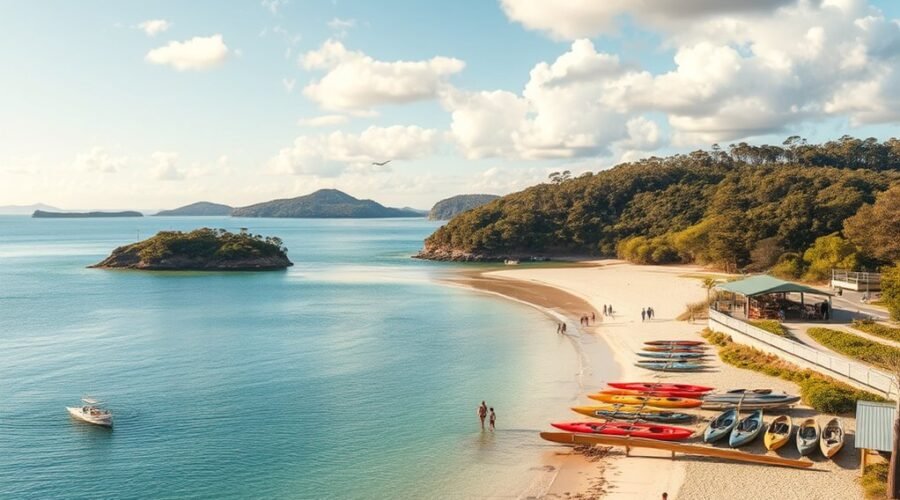
The best time to visit Nelson Bay depends on whether you want warm beach weather, migrating whales, quieter accommodation, or a family summer holiday. This coastal town in Port Stephens offers different experiences throughout the year. Knowing the seasonal temperatures, wildlife calendar, and busiest holiday dates will help you choose the right travel window.
Quick Answer
The best time to visit Nelson Bay is October–November or March–April for comfortable weather and a balance of activities and value. Visit December–February for swimming, or May–November for migrating whales. Avoid major school holidays if you prefer quieter beaches and better accommodation choices. Dolphins can be spotted throughout the year.
Last checked: 25 September 2026. Dates and figures were verified against official sources.
Key Takeaways
- Spring offers coastal wildflowers, pleasant walking weather, and southbound humpback whales.
- Summer is the warmest season, with excellent swimming conditions but greater holiday demand.
- March and April combine warm days with a quieter atmosphere outside school holidays and Easter.
- Winter is ideal for coastal walks, quieter beaches, and northbound whale migration.
- May and June are historically the wettest months, so winter does not guarantee clear skies.
- Accommodation prices depend on exact dates, property type, local events, and school holidays rather than season alone.
Best Time Overall to Visit Nelson Bay: Weather, Crowds, and Value
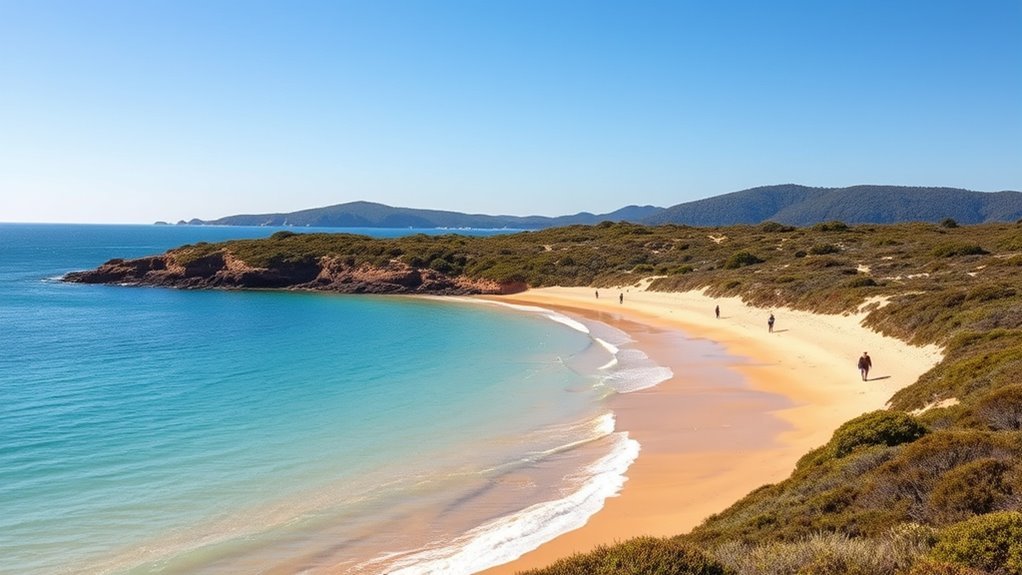
For most visitors, October–November and March–April offer the most useful balance of warm weather, outdoor activities, and accommodation choice. These months generally avoid the hottest part of summer, although school holidays and Easter can still make particular weeks busy.
October and November are especially appealing if you want to combine coastal walking with whale watching. March and April suit visitors who prefer beach days, seafood restaurants, and time around the marina without planning every activity around the summer crowds.
Nelson Bay also has a useful advantage: its resident bottlenose dolphins can be seen throughout the year. You do not need to travel during summer to enjoy a dolphin-watching cruise.
Calm conditions can make wildlife easier to spot, but whale sightings depend on migration season, and no wild-animal encounter is guaranteed.
Nelson Bay Weather and Seasons at a Glance
The following figures come from the Australian Bureau of Meteorology’s Nelson Bay (Nelson Head) climate statistics, station 061054. They represent historical monthly averages, not forecasts. The station closed in December 2023.
| Season | Average daily high | Average daily low | Best for |
|---|---|---|---|
| Spring (Sep–Nov) | 21.4–24.7°C | 12.2–16.1°C | Walking, wildflowers, whales |
| Summer (Dec–Feb) | 26.0–27.3°C | 17.8–19.1°C | Swimming, kayaking, family holidays |
| Autumn (Mar–May) | 20.8–25.9°C | 12.5–18.0°C | Mild beach days, sightseeing, early whale season |
| Winter (Jun–Aug) | 17.6–18.9°C | 9.2–10.3°C | Whale watching, quiet beaches, coastal walks |
These averages also help with packing. Bring light clothing for warm afternoons, but carry a jacket for cooler mornings, evening cruises, and exposed headlands.
For a practical sightseeing day, combine the Nelson Bay waterfront with Shoal Bay, Little Beach, or a coastal walk. You can enjoy fresh seafood, waterfront cafés, and local produce without booking a paid activity for every hour.
Spring in Nelson Bay: Wildflowers, Whales, and Pleasant Weather
Spring runs from September through November and is one of Nelson Bay’s most versatile travel seasons. Temperatures gradually rise, coastal vegetation flowers, and migrating humpback whales travel south along the coast.
September is cooler, while October and November become increasingly suitable for beach visits and longer outdoor days.
Tomaree National Park is particularly attractive during spring. Native flowers bring colour to coastal heathland, while birds and other wildlife provide opportunities for photography.
The Tomaree Head Summit walk is 2.2 kilometres return and takes approximately 1.5–2 hours. It reaches a lookout 161 metres above the entrance to Port Stephens.
The walk is graded 5 because of its steep sections and many steps. Wear sturdy shoes, carry water, and avoid exposed sections during dangerous weather.
Whale watching is another spring highlight. From September through November, humpbacks return south, and some travel with calves.
The official Port Stephens whale-watching guide identifies May–July as the northbound migration period and September–November as the return migration, when mothers and calves may be seen.
Spring also brings local markets, art exhibitions, community events, guided nature walks, and fresh seafood.
For example, the Port Stephens Community Arts Centre’s Annual Bonsai Exhibition is scheduled for 3–5 October 2026. This falls during the spring school holiday period, so visitors should expect more activity around the region.
If you want warm walking weather with whale-watching opportunities, October or November is a practical choice. For quieter conditions, choose dates after the school holiday period.
Summer in Nelson Bay: Hot Days, Peak Crowds, and Top Activities
Summer lasts from December through February and provides Nelson Bay’s warmest beach weather. It is especially suitable for swimming, snorkelling, kayaking, dolphin cruises, and waterfront dining.
However, the Christmas and January school holiday period brings substantial demand for accommodation and popular activities.
Summer is also the time to distinguish between resident and migrating wildlife. Dolphins remain present, but the main humpback whale migration takes place from May to November.
Hot Weather Tips
Nelson Bay’s historical average summer daytime highs are around 26–27°C. Individual hot days can be considerably warmer, especially away from the immediate waterfront.
Pack a broad-spectrum sunscreen, a wide-brimmed hat, breathable clothing, and a reusable water bottle. Take shaded breaks during longer outdoor activities.
Plan demanding walks for cooler periods. Morning snorkelling, kayaking, and late-afternoon waterfront walks can be more comfortable than spending several hours in direct midday sun.
Summer evenings are well suited to relaxed café visits, waterfront meals, and sunset cruises.
For beach safety, choose patrolled beaches and swim between the red and yellow flags. Sheltered bay beaches can appear calm, but conditions and currents can still change.
Peak Crowd Times
Nelson Bay generally feels busiest during summer school holidays, public holidays, and popular weekends. Families and day-trippers concentrate around the waterfront, beaches, cafés, marina, and parking areas.
Late mornings and early afternoons can be particularly busy at popular attractions.
To reduce waiting time, visit beaches earlier in the day and reserve major activities before arriving. Weekday visits and quieter coastal areas may provide more space.
Local festivals, markets, and special events can increase visitor numbers even outside the main holiday period.
If you enjoy a lively holiday atmosphere, the summer waterfront is attractive. If your priority is quiet beaches and flexible accommodation, the shoulder seasons will generally suit you better.
Best Summer Activities
Summer is the main season for visitors who want to spend much of their holiday in or around the water.
- Snorkelling: Explore suitable sheltered areas around Nelson Bay, including the Fly Point area, when visibility and sea conditions allow.
- Dolphin cruises: Depart from Nelson Bay Marina to look for resident bottlenose dolphins.
- Kayaking: Explore sheltered parts of the bay in suitable weather and tidal conditions.
- Beach yoga: Enjoy gentle exercise during the cooler early morning hours.
- Fishing: Consider suitable shore locations or a guided charter, while following local fishing and marine park rules.
- Waterfront dining: Finish the day with seafood, local produce, and a relaxed meal overlooking the harbour.
Warning: Rock fishing can be dangerous, particularly at night or in heavy swell. Never fish from exposed rocks without checking the conditions. Approved lifejackets are compulsory when rock fishing in declared high-risk areas of Port Stephens.
For a relaxed summer itinerary, combine one major water activity with time on the beach and a quieter evening. This gives you more flexibility if the heat or sea conditions change.
Autumn in Nelson Bay: Milder Weather, Fewer People, and Better Deals
Autumn runs from March through May and offers a gradual transition from warm beach days to cooler walking weather. March and April are particularly appealing for visitors who want outdoor activities without the busiest summer conditions.
Accommodation demand can ease outside school holidays and Easter, creating opportunities for better-value stays.
Milder Temperatures Daily
Autumn weather changes noticeably across the three months. March remains warm, April becomes milder, and May brings cooler mornings and evenings.
The Bureau of Meteorology’s historical monthly averages provide the following temperature ranges:
| March | 18.0–25.9°C |
|---|---|
| April | 15.4–23.6°C |
| May | 12.5–20.8°C |
Each range shows the historical average daily minimum and maximum, rather than temperatures for a particular day.
These conditions suit harbour walks, coastal trails, café visits, and wildlife photography. Pack layered clothing and comfortable shoes for varied terrain.
Rain remains possible throughout autumn. May is historically one of the wetter months, so avoid assuming the entire season will be dry.
Smaller Tourist Crowds
Outside Easter and school holidays, autumn can offer a quieter experience around Nelson Bay’s waterfront, beaches, cafés, and walking tracks.
You may find it easier to enjoy a harbour lookout, explore a sheltered beach, or take a spontaneous detour without the pressure of summer crowds.
Wildlife activities remain available. Resident dolphins can be seen throughout the year, while the northbound humpback migration begins in May.
Seals and other marine wildlife may also be encountered on suitable offshore trips, although sightings are not guaranteed.
Local markets, art exhibitions, and community events provide alternatives when the weather is unsuitable for swimming.
Cheaper Accommodation Rates
Autumn can offer better accommodation value than the busiest summer dates, especially for flexible travellers. The strongest opportunities are generally outside school holidays, Easter, and major events.
Compare weekday and weekend rates for the same property. Boutique hotels, beachfront apartments, motels, and B&Bs can have different pricing patterns.
Look at the total booking cost, including parking, cleaning fees, cancellation conditions, and other charges. A cheaper advertised nightly rate does not always produce the cheapest stay.
If you have flexible dates, compare several nearby check-in options before deciding. Self-catering accommodation can also reduce food costs during a longer visit.
Travel insurance may be useful when you have non-refundable accommodation or several prepaid activities.
Winter in Nelson Bay: Cooler Weather, Quiet Beaches, and Budget Advantages
Winter runs from June through August and suits visitors who prefer whale watching, coastal scenery, and a slower holiday pace. Swimming is less comfortable without suitable protection, but many land-based attractions remain enjoyable.
Winter also provides opportunities to find accommodation outside the busiest holiday periods.
Winter offers quieter coastal walks and migrating whales, but cooler water and changeable weather make flexible planning worthwhile.
Historical average daytime temperatures range from about 17.6°C in July to 18.9°C in August. Nights and early mornings are considerably cooler.
June is historically Nelson Bay’s wettest month, with average monthly rainfall of approximately 157 mm at the Nelson Head station. July averages around 137 mm, while August averages about 102 mm.
That makes a waterproof jacket useful even when the forecast looks promising.
The major winter attraction is the northbound humpback migration. Tomaree Head, Fishermans Bay, and Boat Harbour provide opportunities to scan the ocean from land.
The NSW National Parks visitor guide for Tomaree Head identifies May–November as the whale-watching period and provides walking and safety information.
Bring binoculars and allow time to watch the water. Whale activity may be distant, and sightings depend on visibility and the animals’ movements.
Other winter activities include:
- Quiet walks along the waterfront and suitable coastal trails.
- Photography around the marina, beaches, and headlands.
- Visiting cafés, galleries, markets, and local exhibitions.
- Enjoying fresh seafood and relaxed evening dining.
- Taking a dolphin cruise or a suitable guided wildlife tour.
Wildlife may also be active around estuaries and coastal bushland. If exploring after dark, carry a torch, remain on suitable paths, and avoid disturbing animals.
Some tours operate with smaller groups outside peak holiday periods, although availability and pricing vary between operators.
Winter is particularly suitable if you value scenic walks and wildlife more than warm-water activities.
How School Holidays and Long Weekends Affect Nelson Bay
School holidays and public holiday weekends are among the most important dates to consider when planning accommodation in Nelson Bay. They can increase demand for waterfront properties, family apartments, tours, restaurants, and parking.
For the remainder of 2026, the NSW Department of Education lists the following relevant holiday periods.
- Spring school holidays: 28 September–9 October 2026.
- Summer school holidays: 18 December 2026–27 January 2027 for the Eastern Division.
- Western Division summer holidays: Continue until 3 February 2027.
These dates are published in the NSW Department of Education’s 2026 calendar.
The October long weekend also overlaps the spring holiday period. Labour Day falls on Monday, 5 October 2026.
Other major NSW public holiday dates affecting travel demand include Christmas Day on 25 December and the additional Boxing Day holiday on Monday, 28 December 2026.
The NSW Government’s public holiday calendar provides the confirmed dates for 2026 and 2027.
For autumn 2027, Good Friday falls on 26 March and Easter Monday on 29 March. The NSW autumn school holidays run from 12–23 April 2027.
These dates matter because a supposedly quiet shoulder-season visit can become a busy holiday trip.
Local festivals also influence particular weekends. The Port Stephens October 2026 event calendar includes the Annual Bonsai Exhibition and the Karuah Oyster & Timber Festival on 17 October.
If your preferred dates overlap a major event, compare accommodation availability before committing to transport or paid activities.
Accommodation and Activity Costs by Season: Typical Prices and Money-Saving Tips
Nelson Bay accommodation prices vary with demand, property type, location, and booking conditions. The busiest summer and holiday dates can cost more, while selected autumn, winter, and spring weekdays may offer better value.
The original guide’s indicative accommodation estimates are AUD 80–120 per night for basic motels or camping-style accommodation, AUD 150–300 for midrange hotels, and AUD 300 or more for premium beachfront stays.
These are broad planning estimates rather than verified live rates. Actual quotes may fall outside these ranges.
Day tours also vary. A broad planning allowance of AUD 50–150 per person can cover many guided activities, while scuba diving and private charters may cost more.
For a more useful comparison, the following published operator prices were checked in September 2026:
| Activity | Published adult price | Duration |
|---|---|---|
| Moonshadow-TQC Dolphin Discovery Cruise | AUD 46 | 1.5 hours |
| Moonshadow-TQC Whale Watching Cruise | AUD 85 | 2.5 hours |
| Original Tea Gardens Ferry, Nelson Bay departure | AUD 24.50 one way, excluding booking fees | Approximately 1 hour |
Moonshadow-TQC publishes its Dolphin Discovery Cruise details and 2026 whale-watching prices and dates. Its listed 2026 whale season runs from 23 May to 8 November.
The Original Tea Gardens Ferry publishes the one-way fare and departure information for its Nelson Bay service.
These figures are examples from named operators, not average market prices. Prices, availability, booking fees, and departure arrangements may change.
To reduce travel costs, consider the following:
- Compare the same property across several weekday and weekend dates.
- Choose self-catering accommodation when staying for several nights.
- Set a daily spending limit covering food, transport, and activities.
- Compare refundable and non-refundable booking conditions.
- Join operator mailing lists if you want to receive advertised special offers.
- Use free beaches, public lookouts, picnic areas, and suitable walking tracks between paid tours.
Accommodation savings are not guaranteed by any particular season. A popular holiday weekend can cost more than an ordinary summer weekday.
Pick the Best Time to Visit Nelson Bay by Weather, Budget, or Crowd Level
Your ideal travel dates depend on the experience you value most. Use the following choices to match your priorities with Nelson Bay’s seasonal conditions.
- For swimming and family beach holidays: Choose December–February, allowing for higher demand during school holidays.
- For comfortable sightseeing: Choose October–November or March–April, outside major holiday periods.
- For migrating whales: Choose May–November, with the strongest seasonal opportunities depending on migration direction and conditions.
- For quieter coastal walks: Consider autumn or winter weekdays outside school breaks.
- For budget flexibility: Compare late-autumn, winter, and spring accommodation dates rather than relying on a fixed seasonal discount.
- For flowers and outdoor photography: Choose spring, especially around Tomaree National Park.
If wildlife is your main reason for visiting, choose a tour suited to the animal you want to see. Dolphin cruises operate throughout the year, but dedicated whale-watching cruises follow the migration season.
For a balanced holiday, reserve one major wildlife activity, allow time for coastal walks, and leave room for changes caused by the weather.
Frequently Asked Questions
What Wildlife Can I Expect to See Year-Round in Nelson Bay?
Resident bottlenose dolphins and coastal birds can be seen throughout the year. Pelicans, cormorants, terns, and shorebirds are among the birds you may encounter. Humpback whales migrate past the coastline mainly from May to November, while seals and marine turtles are occasional sightings rather than guaranteed year-round attractions.
Are There Accessible Facilities and Beaches for Travelers With Mobility Issues?
Yes. Little Beach has accessible toilets, parking, picnic facilities, and a disability access ramp designed for water wheelchair use. Beach access and assistance vary by location and operator. Confirm equipment availability and access requirements before travelling, particularly if you plan to join a cruise or enter the water.
What Are the Best Family-Friendly Activities Beyond Beach Time?
Dolphin cruises, kayaking, sandboarding on the Stockton dunes, island excursions, and guided snorkelling are popular family options. You can also enjoy waterfront picnics, galleries, and suitable coastal walks. Taronga Zoo is in Sydney rather than Nelson Bay, so treat it as a separate longer excursion instead of a nearby attraction.
Is Nelson Bay Suitable for Solo Travelers, and What About Safety?
Yes. Nelson Bay offers organised cruises, cafés, walking routes, and accommodation suitable for solo visitors. Budget-conscious travellers can compare hostels or shared accommodation, prepare some meals, and join group activities. Use normal travel precautions, avoid isolated coastal routes after dark, and choose safe swimming areas.
Can I Combine Nelson Bay With Nearby Day Trips or Wineries?
Yes. You can visit Tea Gardens by ferry, explore Shoal Bay and the nearby coastal trails, or plan a drive to the Hunter Valley wineries. The region offers cellar doors, scenic routes, and local food experiences. Allow extra travel time for winery excursions and arrange suitable transport if you plan to drink alcohol.
Can You See Whales in Nelson Bay During Summer?
Summer is outside the main humpback migration season. Dedicated whale-watching tours generally operate from May to November, although individual wildlife movements can vary. If whale watching is your priority, choose dates during the migration rather than relying on a summer sighting. Resident dolphins remain available for year-round wildlife experiences.
What Is the Rainiest Time of Year in Nelson Bay?
May and June are historically the wettest months. Bureau of Meteorology records for Nelson Head show average rainfall of approximately 150 mm in May and 157 mm in June. Rain can occur in every season, so allow flexibility for outdoor activities and boat tours.
Conclusion
October–November and March–April offer a comfortable balance of weather, activities, and travel flexibility in Nelson Bay. Choose summer for swimming or the May–November migration season for whale watching. Compare your preferred dates with school holidays, reserve important experiences, and leave time to enjoy the beaches, coastal scenery, and waterfront at your own pace.
Sources
- Australian Bureau of Meteorology: Nelson Bay (Nelson Head) historical temperature and rainfall statistics.
- Destination Port Stephens: Whale-watching season and migration information.
- NSW National Parks and Wildlife Service: Tomaree Head Summit walk distance, difficulty, and whale-watching information.
- NSW Department of Education: Official 2026 school holiday dates.
- NSW Government: Public holiday dates for 2026 and 2027.
- Destination Port Stephens Events: October 2026 community events and festival dates.
- Moonshadow-TQC Cruises: Dolphin cruise duration, availability, and published fares.
- Moonshadow-TQC Whale Watching: Published 2026 whale season, departure information, and fares.
- The Original Tea Gardens Ferry: Nelson Bay departure information and one-way fares.
- Port Stephens Council: Little Beach facilities and accessibility information.
- NSW Government Rock Fishing Safety: Lifejacket requirements and declared high-risk areas.