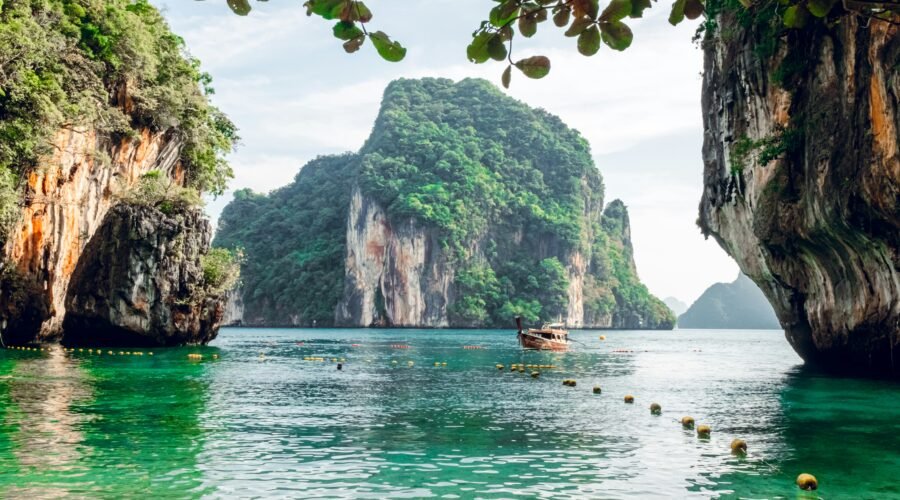
So, you’re dreaming of Krabi, Thailand—the limestone cliffs, turquoise water, tropical beaches, and longtail-boat trips between islands. The best time to visit depends on how much you value reliable beach weather versus lower prices and fewer people. Krabi stays warm all year, but rainfall, humidity, wind, and sea conditions change enough to make the month you choose important.
Quick Answer
For the most reliable beach and island-hopping weather, visit Krabi from December through February. February is climatologically the driest month. March and April remain good but get hotter. For lower prices and fewer crowds, consider May through October, but expect more rain, humidity, rougher seas, and possible boat or park restrictions.
Key Takeaways
- Best overall weather: December to February, with February normally receiving the least rain.
- Good balance of weather and crowds: November, March, and April can work well, but November is wetter and April is hotter.
- Lowest-demand period: May to October usually brings more accommodation deals and fewer visitors, along with much wetter weather.
- For island hopping: Sea conditions matter as much as rainfall. Check the forecast before every boat trip, especially in the wetter months.
Krabi Weather and Seasons: What the Climate Data Shows
Krabi sits on Thailand’s Andaman coast and has a tropical climate with warm temperatures throughout the year. The biggest seasonal differences are rainfall, humidity, cloud cover, wind, and sea conditions rather than dramatic changes in temperature.
Official Thai Meteorological Department climate normals for the Krabi station show monthly mean temperatures of roughly 26.8°C to 28.8°C (80°F to 84°F). Average monthly daytime maximum temperatures are higher, at roughly 31.3°C to 34.7°C (88°F to 94°F).
Note: Climate normals describe long-term averages, not the forecast for your exact trip. Krabi can still have rainy days in the dry season and sunny periods during the wet season.
The Dry and Core High Season: December to February
For most first-time visitors, December through February is the easiest period to recommend. Rainfall is lower, humidity is generally less oppressive, and the Andaman Sea is more likely to cooperate with swimming, snorkeling, diving, and island-hopping plans.
December to February: The Sweet Spot
- Weather: December and January are relatively dry, while February is normally the driest month in the Krabi climate record. Daytime temperatures remain hot, so you still need sun protection and plenty of water.
- Sea conditions: This is generally the most dependable period for boat-based sightseeing, although no month guarantees perfectly calm water.
- Crowds: Expect the busiest beaches, tours, restaurants, and resorts around Christmas, New Year, January, and February.
- Activities: This is the strongest period for island hopping, snorkeling, beach days, Railay rock climbing, kayaking, and outdoor sightseeing.
- Costs: Hotels and flights are typically more expensive when demand is highest, especially around major holiday dates.
The Hot and Transitional Season: March to May
March through May becomes hotter and gradually wetter. March and much of April can still offer very good beach conditions, while May is a transition into the wetter southwest-monsoon pattern.
March to April: Hot, Often Good for the Beach
- Weather: March and April are among Krabi’s hottest months. Thai Meteorological Department normals put the mean daily maximum above 34°C (93°F) in both months.
- Rain: Rainfall increases compared with February, so brief showers and thunderstorms become more likely as the season progresses.
- Crowds: Demand normally eases from the Christmas-New Year peak, although Easter, school holidays, and Songkran can create busy periods.
- Activities: Island trips, swimming, snorkeling, and beach days are still attractive, but schedule demanding outdoor activities for the morning if you struggle with heat.
- Costs: Prices can begin to soften outside holiday periods, but rates remain highly dependent on the property and booking dates.
April also brings Songkran, the Thai New Year celebration. The main traditional dates are around April 13-15, although public events can run for additional days. Expect water celebrations, heavier local travel demand, and occasional changes to normal business or transport routines.
May: The Wet-Season Transition
- Weather: May stays hot, but humidity, cloud cover, and rainfall increase sharply.
- Rain: Krabi’s long-term normal rainfall rises to about 210 mm in May, with rain recorded on an average of about 17.5 days.
- Crowds: Visitor numbers usually fall compared with the dry-season peak.
- Activities: Beach and boat days are still possible, but flexibility becomes much more important.
- Costs: Accommodation deals become easier to find as demand falls, although there is no guaranteed percentage discount.
The Green or Wet Season: May to October
Krabi’s wetter season is often called the green season because frequent rain keeps the landscape lush. It can be a rewarding time for travelers who value quieter resorts, greener scenery, and lower prices, but it carries much more weather risk.
June to October: Wetter Weather and Less Predictable Seas
- Weather: Expect high humidity, frequent cloud cover, showers, thunderstorms, and periods of heavier rain. Some showers are short; others can last much longer.
- Rainfall: Thai Meteorological Department normals show more than 220 mm of rain per month from June through October, with September and October among the wettest months.
- Sea conditions: Stronger southwest-monsoon winds can make Andaman Sea trips rougher and less predictable.
- Crowds: Beaches and tourist centers generally feel quieter than during the dry-season peak.
- Activities: Build your schedule around flexibility. Temples, spas, restaurants, markets, cafés, local communities, and mainland sightseeing give you alternatives when boat trips cannot operate.
- Costs: Lower demand often produces better accommodation value, but prices still vary by hotel, day, and booking platform.
Warning: Never assume a sunny morning means the sea will stay safe all day. Before an island tour, check the Thai Meteorological Department Krabi forecast and follow your licensed boat operator’s decision. If a trip is canceled because of wind, waves, or an official warning, do not pressure the operator to sail.
November: Improving Weather, but Still Transitional
November is one of the trickiest months to summarize. The Tourism Authority of Thailand treats November as the start of the Andaman high season, and conditions usually improve as the month progresses. However, Krabi’s long-term climate normal still records about 199 mm of November rain—much more than December or February.
- Weather: Expect improving conditions, but do not assume November will be fully dry.
- Crowds: Visitor numbers begin to rise as high season approaches.
- Activities: Island trips become more reliable as the monsoon weakens, but day-to-day forecasts still matter.
- Costs: Early November can offer a better balance of room availability and price than the Christmas-New Year period.
Pro Tip: If you want a compromise rather than the absolute driest weather, compare late November, early December, and March. You may find fewer peak-season crowds than around Christmas and January, while still having reasonable odds for beach and boat days.
If you’re comparing how weather, crowds, and pricing affect destinations in very different climates, you can also read this guide to the best time to visit Safranbolu, Turkey.
Krabi Weather Month by Month
The table below uses Thai Meteorological Department climate normals for the Krabi station. The station’s Krabi dataset covers 1994-2020 within Thailand’s official climatological-normal report. Rainfall figures are long-term monthly averages, not a prediction for your visit.
| Month | Mean Temp. | Mean Daily Max. | Rainfall | Rainy Days | Planning Takeaway |
|---|---|---|---|---|---|
| January | 27.4°C | 32.6°C | 96.8 mm | 7.7 | Excellent weather odds; very busy. |
| February | 28.1°C | 34.1°C | 35.9 mm | 4.3 | Driest month in the normal; excellent for beaches. |
| March | 28.7°C | 34.7°C | 108.4 mm | 8.3 | Hotter, but still a strong beach month. |
| April | 28.8°C | 34.3°C | 142.2 mm | 12.7 | Very hot; Songkran; rain risk increasing. |
| May | 28.2°C | 33.0°C | 210.1 mm | 17.5 | Wet-season transition; quieter and less predictable. |
| June | 27.7°C | 31.9°C | 224.8 mm | 17.5 | Green, quiet, and weather-dependent. |
| July | 27.4°C | 31.6°C | 221.5 mm | 17.6 | Frequent rain risk; keep boat plans flexible. |
| August | 27.2°C | 31.5°C | 273.0 mm | 18.2 | Wet and quiet; rough-sea interruptions possible. |
| September | 27.0°C | 31.3°C | 286.2 mm | 19.2 | One of the wettest months; best for flexible travelers. |
| October | 26.8°C | 31.4°C | 292.9 mm | 20.6 | Wettest normal monthly total; substantial weather risk. |
| November | 26.8°C | 31.4°C | 198.6 mm | 17.5 | Improving transition into Andaman high season. |
| December | 26.8°C | 31.5°C | 90.3 mm | 11.1 | Good weather odds; demand rises sharply. |
Peak Season vs. Shoulder Season vs. Low Season: What’s Your Priority?
There is no universal tourism calendar that forces every Krabi hotel or tour company to use identical season dates. The categories below are practical planning labels based on weather patterns and typical visitor demand.
Core Peak Season: December to February
- Pros: Best overall odds for lower rainfall, outdoor sightseeing, beaches, and boat trips.
- Cons: Busiest period, stronger demand for popular hotels and tours, and often higher rates.
- Best for: First-time visitors, families with fixed plans, island hopping, snorkeling, diving, and travelers who want to minimize weather disruption.
Shoulder and Transition Months: March-April and November
- Pros: Can offer a useful balance between weather and visitor numbers.
- Cons: March-April is hotter; November can still be quite wet, particularly early in the month.
- Best for: Flexible travelers who want decent weather odds without centering the trip on the busiest weeks of winter.
Lower-Demand Wet Season: May to October
- Pros: Quieter resorts, lush scenery, and often better accommodation value.
- Cons: More rain, high humidity, rougher seas, canceled excursions, and possible seasonal attraction closures.
- Best for: Budget-conscious travelers who can change plans at short notice and do not need several fixed island-hopping days.
Best Time to Visit Krabi by Travel Style
- For the best overall weather: January or February.
- For island hopping: December through March offers the most dependable planning window.
- For fewer crowds with reasonable weather odds: Consider March or late November, while accepting more heat or rain risk.
- For the lowest-demand atmosphere: May through October.
- For lush scenery and dramatic green landscapes: The wet season can be beautiful if you have flexible plans.
- For Songkran: Visit around April 13-15 and check that year’s local event schedule.
- For travelers who dislike heat: December and January are normally easier than March and April, although Krabi remains tropical and warm.
In Krabi, the best month is not just about how much rain falls. If island hopping is central to your trip, wind and sea conditions can matter even more than the rainfall total.
Krabi’s Regions and Their Nuances

The same broad climate pattern affects the province, but your choice of base changes how much bad weather can disrupt your plans.
Ao Nang: The Main Tourist Hub
- Weather: Follows the general Krabi mainland pattern.
- Crowds: Busy in the dry-season peak and noticeably calmer in wetter months.
- Costs: The wide choice of hotels, restaurants, and tour operators gives you options at many price levels.
- Wet-season advantage: Because Ao Nang has plenty of restaurants, shops, and land-based options, it is easier to fill a rainy day than on a small island.
Railay Beach: Boat Access and Limestone Scenery
- Access: Railay is reached by boat, so wind and wave conditions can directly affect the journey.
- Crowds: Its beaches and climbing areas become particularly popular during good dry-season weather.
- Costs: Accommodation and food prices vary widely; compare actual dates rather than assuming Railay is always more expensive.
- Best time: Dry-season months offer the strongest odds for comfortable boat transfers and outdoor climbing.
Koh Lanta: A More Spread-Out Island Stay
- Weather: Koh Lanta shares the Andaman wet-season pattern, so rain and sea conditions become a bigger consideration from May onward.
- Crowds: The island can feel less concentrated than Ao Nang even when visitor numbers rise.
- Costs: Good-value stays can appear outside peak season, but some tourism businesses reduce hours or pause operations during quieter months.
- Planning tip: If your trip depends on specific restaurants, dive shops, or boat services, confirm their seasonal schedules before booking.
Koh Phi Phi: Beautiful and Frequently Busy
- Weather: Boat access makes the sea forecast especially important.
- Crowds: Phi Phi attracts both overnight visitors and day-trippers, so the main areas can feel crowded during peak season.
- Costs: Accommodation and activities vary substantially by date and property.
- Park access: Rules or temporary closures affecting protected attractions can change. Check official status rather than relying on an old itinerary.
Practical Tips for Planning Your Krabi Visit

Regardless of when you visit, a few planning choices can make Krabi much easier to enjoy.
Booking in Advance
- Peak holidays: Book early if you are traveling around Christmas, New Year, or another fixed holiday and want a particular resort or room type.
- Normal high-season dates: Compare refundable rates early, especially if your itinerary depends on staying in Railay, Phi Phi, or a specific beach resort.
- Wet season: Availability can be easier, but do not assume every hotel, restaurant, ferry, or tour runs exactly the same schedule year-round.
Build Flexibility Into Boat Days
If island hopping is a major reason for your trip, avoid placing every boat excursion on your final day. Leaving one or two flexible days gives you room to reschedule if weather or sea conditions interfere.
Thailand’s Marine Department advises sea passengers to pay attention to daily forecasts and avoid travel when strong-wave or storm warnings are in effect. Weather-related cancellations are a safety decision, not an inconvenience to argue against.
Check National Park and Attraction Status
Some protected areas can close temporarily or seasonally for weather, safety, maintenance, or environmental recovery. Thailand’s Department of National Parks, Wildlife and Plant Conservation advises travelers to check the opening status of individual park attractions before visiting.
This is especially important if your itinerary depends on one specific bay, island, trail, cave, or marine-park attraction.
Packing Wisely for Krabi’s Weather
- Light, breathable clothing: Pack loose, quick-drying clothes suitable for tropical heat and humidity.
- Rain protection: A lightweight rain jacket or poncho is useful year-round and especially valuable from May through November.
- Swimwear: Bring at least one set that dries quickly.
- Sun protection: Pack sunscreen, sunglasses, and a hat for exposed beach and boat days.
- Insect repellent: Useful for evenings, gardens, forested areas, and wetter periods.
- Waterproof pouch or dry bag: Helpful for phones, passports, and small valuables during boat transfers.
- Comfortable footwear: Bring shoes or sandals suited to your mix of beaches, viewpoints, temples, and walking.
Plan for Heat as Well as Rain
March and April can feel particularly hot. Start hikes and viewpoint climbs early, take shade breaks, and carry drinking water. Even in December and January, Krabi is still tropical rather than cool in the usual sense.
Embracing the Local Culture
- Respectful dress: Cover your shoulders and knees when visiting temples or places where modest clothing is expected.
- Learn a few Thai phrases: A simple “hello” or “thank you” is appreciated even if you cannot speak much Thai.
- Tipping: Tipping is not applied in exactly the same way everywhere, but leaving something extra for particularly good service is common in tourist settings.
- Songkran awareness: If you visit in mid-April, protect phones and documents from water and expect celebrations to affect normal routines in busy areas.
If you’re researching several destinations around weather, crowd levels, and seasonal costs, you can also compare this guide with the best time to visit Nevsehir, Turkey.
Final Thoughts: Your “Best” Time is Your Perfect Time
There is no single perfect month for every traveler, but the trade-offs are much clearer once you separate weather reliability from price and crowd levels.
| Priority | Best Planning Window | Main Trade-Off |
|---|---|---|
| Most reliable beach weather | December-February | Higher demand and more crowds |
| Island hopping | December-March | Weather can still change unexpectedly |
| Weather/value compromise | Late November, March | More rain risk in November; more heat in March |
| Songkran | Mid-April | Very hot weather and holiday activity |
| Quieter, greener Krabi | May-October | More rain and less reliable boat conditions |
| Maximum trip flexibility | Any month | You must adapt plans to current forecasts |
If your dream trip is built around several island excursions, snorkeling days, and beaches, December through February is the safest choice. If you care more about quieter surroundings and accommodation value, the wetter months can still be worthwhile—provided you accept that some days may not go according to plan.
Krabi is enjoyable in every season for different reasons. Choose the month that matches your priorities, leave room for changing weather, and treat official sea and park restrictions as part of responsible trip planning rather than something to work around.
Frequently Asked Questions
What is the best time to visit Krabi, Thailand?
December through February is the best overall period for most travelers because rainfall is lower and beach and boat conditions are generally more dependable. February is the driest month in the Thai Meteorological Department’s Krabi climate normals.
What is Krabi’s weather like during peak season?
December through February is hot and tropical but relatively dry. Average daytime maximum temperatures remain above 31°C (88°F), so “cool season” does not mean cold weather. The main advantage is lower rainfall and generally better odds for outdoor and marine activities.
When is the rainy season in Krabi?
For practical trip planning, treat May through October as Krabi’s wetter southwest-monsoon period. May is transitional, while August, September, and October normally receive particularly high rainfall. November generally improves but can still be wet.
Does it rain all day during Krabi’s rainy season?
Not necessarily. Some days bring short showers followed by brighter weather, while other periods can have prolonged rain, thunderstorms, or heavy cloud. You should not plan a wet-season trip on the assumption that every shower will be brief.
Is November a good time to visit Krabi?
Yes, especially if you are flexible. November marks the transition into the Andaman high season, so weather generally improves. However, Krabi’s long-term November rainfall is still much higher than December or February, making late November a safer bet than assuming the entire month will be dry.
When is Krabi least crowded and usually cheaper?
May through October is generally quieter because wetter weather reduces tourism demand. Hotels may offer better rates, but discounts are not fixed and vary by property, booking date, holidays, and availability.
What is the best time for island hopping in Krabi?
December through March is the most dependable planning window for island hopping. Even then, always check the daily marine forecast because wind and waves can change quickly and individual trips can still be delayed or canceled.
Is April a good month to visit Krabi?
April can be excellent for beaches and island trips, but it is one of the hottest months and rainfall is increasing. It is also Songkran season around April 13-15, so expect water celebrations and extra holiday activity.
Sources
- Thai Meteorological Department — Climatological Data of Thailand — official long-term Krabi temperature, humidity, rainfall, and rainy-day normals.
- Tourism Authority of Thailand — Krabi — official tourism guidance noting the start of the Andaman high season from November.
- Tourism Authority of Thailand — Travel FAQs — official Thailand climate and travel-planning information.
- Tourism Authority of Thailand — Thailand in April — April heat, seasonal travel, and Andaman/Phi Phi guidance.
- Thailand Marine Department — Guidance for Passengers — official guidance on checking forecasts and avoiding sea travel during strong-wave or storm warnings.
- Department of National Parks, Wildlife and Plant Conservation — official advice to check individual attraction opening and closure status before visiting protected areas.