
If you time a July visit like the couple who snorkelled the clear waters off Cape Hillsborough at dawn, you’ll see why locals favour the dry season. You’ll get warm, sunny days, low humidity and calmer seas that make reef trips and bushwalks easier. Prices and crowds are also gentler than the summer peak, but there are smarter months depending on your priorities — keep going to pick the best window for your trip.
Key Takeaways
- May–September (dry season) offers clear skies, calm seas, low humidity, and best reef visibility for snorkeling and diving.
- December–March (wet season) brings heavy warm rains, thunderstorms, higher cyclone risk, and fewer tourists with lower prices.
- Shoulder months (April, October–November) balance milder weather, fewer crowds, and sometimes reduced services—good for quieter, flexible trips.
- Expect peak-season price spikes: hotels +30–60% and tours +20–50%; book 3–6 months ahead for summer travel.
- Save money by traveling midweek, bundling tours with accommodation, booking 30–60 days early, and using shoulder/off‑peak windows.
Mackay Wet Season: Months & What to Expect
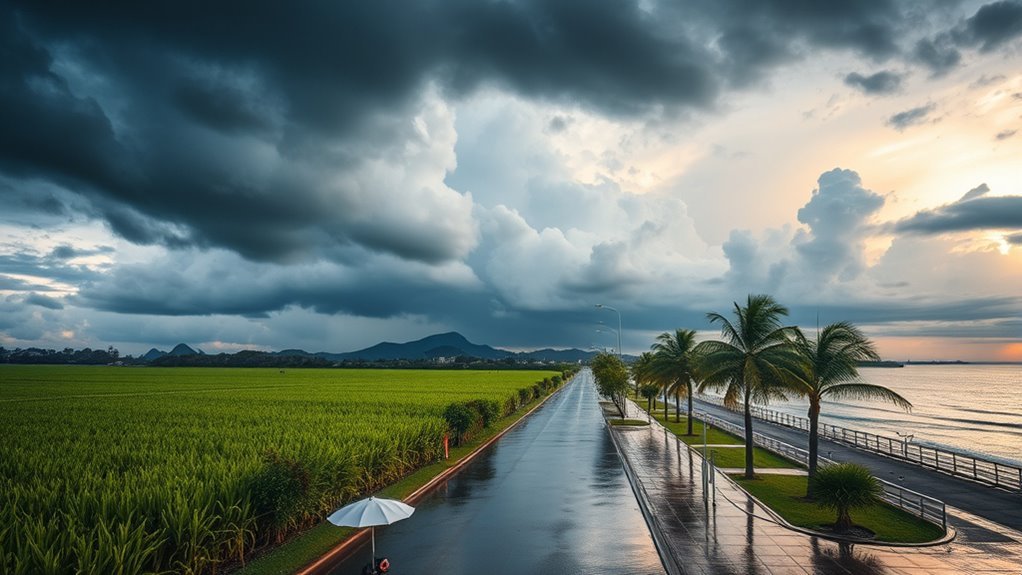
While the wet season usually runs from December through March, you’ll start feeling the shift by late November as humid, tropical air settles over Mackay and builds toward heavy, warm downpours and frequent thunderstorms.
You’ll watch skies pulse with sudden light, smell wet earth, and learn how landscapes loosen under relentless rain. Streets glaze; creeks swell.
You’ll notice coastal wetlands teeming with life — mangroves, waterbirds, and fish moving through sediment-rich channels — a reminder that wetland ecology is dynamic, restorative, and vulnerable.
Yet you’ll also see how agricultural runoff clouds estuaries after storms, pushing nutrients that change algal patterns and test resilience.
Traveling then means embracing intense weather, fewer tourists, and a slower rhythm that invites reflection and freedom from schedules.
You’ll move more intentionally: timing drives between squalls, seeking shelter beneath palms, and watching the land recalibrate.
The wet season strips routine, revealing both the raw power of nature and paths toward stewardship.
Mackay Dry Season: Months & Why It’s Best for Reef Trips
When the rains ease around April and the humidity drops through May to August, Mackay settles into its **dry season** — the clearest, calmest months for reef trips.
You’ll feel instant relief as skies clear and winds soften, giving you steady boat rides to offshore reefs.
Visibility improves, so your reef photography sings with colour and detail; the blue of the water becomes a clean canvas for coral shapes and schooling fish.
Visibility sharpens, turning the ocean into a vivid canvas where coral forms and schooling fish pop with color.
This is when marine life behaves predictably: turtles glide, reef fish feed in plain sight, and pelagic visitors pass by without the churn of stormy seas.
You can plan sunrise dives, long snorkels and patient photo sessions, liberated from the unpredictability of heavy swell.
Operators run regular trips, schedules are reliable, and you get more time on the reef per outing.
If you want crisp images and calm exploration, the dry months deliver the best conditions for both adventure and mindful observation.
Monthly Weather, Rainfall & Cyclone Risk (What to Expect)
You’ll notice Mackay’s rainfall swings through the year — light, clear months in winter and heavy, humid downpours in summer.
Expect the bulk of rain between December and March, when storms can be frequent and visibility for reef trips drops.
That same period is also cyclone season, so you’ll want to watch forecasts and flexible bookings if you’re visiting then.
Monthly Rainfall Patterns
Because Mackay sits between a tropical wet season and a dry season, its monthly rainfall swings dramatically — expect heavy, humid downpours from December through March and long, mostly dry stretches from May to September.
You’ll notice clear rainfall variability: February often tops charts with intense, brief storms, while July can go weeks with almost no rain.
Watch precipitation trends across months — November and April act as phase periods with sporadic showers.
Observing monthly totals helps you plan freedom-filled days: book snorkeling or beach time in dry months, chase waterfalls in wetter ones.
Monthly patterns aren’t random; they shape light, humidity, and road conditions.
Read forecasts, embrace flexibility, and let Mackay’s rhythms guide your liberated itinerary.
Cyclone Season Risk
Shifting from monthly rainfall patterns, consider how those wet-season surges can sometimes escalate into tropical cyclones that impact Mackay between November and April.
You’ll feel that tension in the air: heavy humidity, sudden shifts in wind, swollen seas — signals to act.
Embrace practical cyclone preparedness: secure loose items, plan evacuation routes, stock essentials, and monitor Bureau of Meteorology updates.
Know your local shelters and keep communications charged so you can move freely and safely when needed.
Think of insurance options not as constraints but as tools that free you to explore with confidence; compare policies for storm damage and travel disruption cover.
Quick Decision Guide: Best Months for Different Trip Types
Wondering when to go for the kind of trip you want? If you’re after warm, dry days for beach freedom and island hopping, pick May to September — clear skies let you chase beaches and reef time without sticky humidity.
For a budget-minded escape with fewer tourists and better deals, try late February to April when shoulder-season rates appear and rains thin.
If you crave cultural festivals and want to taste local cuisine, aim for months when community events light up the town (often spring and early autumn) so you can roam markets, plates, and performances.
For nature immersion — birding, waterfalls, and lush trails — visit just after the wet season (March–May) when the landscape’s revived and wildlife is active.
Want solitude and mellow weather? Choose October–November before the peak heat.
Each window offers different freedoms: pick the rhythm you need, pack accordingly, and let Mackay’s seasons shape the trip you’ll remember.
Mackay Crowds: School Holidays, Public Holidays & Events
How will crowds shape your visit to Mackay? You’ll find rhythms tied to school events and public holidays — beaches and parks swell during Queensland school breaks, while public holidays bring day-trippers from nearby towns. If you crave open spaces, avoid peak school events; if you want energy and connection, lean into it.
| Period | Crowd Level | Vibe |
|---|---|---|
| School holidays | High | Family-focused, lively |
| Public holidays | Medium-High | Short bursts, busy hotspots |
| Local festivals | Variable | Cultural, celebratory |
Watch the calendar: signature local festivals draw crowds but also release a rare civic joy — parades, night markets, music. You can time arrivals for quieter mornings, late afternoons, or weekday explorations to reclaim freedom from crowds. Use local event listings to pivot; when you skip the busiest days, you gain empty trails, spontaneous swims, and the liberating feeling of having Mackay almost to yourself.
Seasonal Prices: Accommodation, Tours & When to Book
When you visit Mackay, expect prices to spike during peak season—accommodation and popular tours can jump noticeably around school holidays and major events.
If you’re flexible, off‑peak months offer real savings and quieter experiences on the reef and hinterland.
Book flights and must‑do tours several months ahead for peak times, or wait until a few weeks out for last‑minute deals in the low season.
Peak Season Price Spikes
Because Mackay’s warm, dry months draw both beachgoers and reef explorers, prices for accommodation and popular tours spike noticeably during July–September and around school holidays, so you’ll want to plan bookings well in advance to lock in reasonable rates. You’ll also see upticks during festivalultural events and local festivals when demand tightens; grab refundable rates if you crave freedom. Expect higher nightly costs, earlier sell-outs for reef trips, and surge pricing for charter boats. Book 2–4 months ahead for mid-range stays, and 4–6 months for peak dates. Stay alert to cancellation deals but avoid last-minute reliance.
| Category | Typical Spike | Booking Window |
|---|---|---|
| Hotels | +30–60% | 2–6 months |
| Tours | +20–50% | 1–4 months |
| Charters | +25–70% | 3–6 months |
Off‑Peak Savings Opportunities
Even though peak months push prices up, you can score significant savings by visiting Mackay during the quieter seasons—usually late autumn through spring outside school holidays—when hotels slash rates, tour operators run off-peak deals, and charters offer lower-day fares or group discounts.
You’ll find boutique stays and beachfront motels with flexible rates, and weeknight bargains make longer stays feel liberating.
Book last-minute local festivals packages or weekday slots to catch culture without crowds; operators often trim costs to fill slow dates.
Seek Indigenous tours offered in smaller groups off-peak — they’re more personal and often discounted.
Watch for bundled experiences (accommodation plus tours) and midweek departures to stretch your budget while keeping adventure and authenticity intact.
Advance Booking Windows
If you want the best rates and the widest choice, plan your Mackay trip around known booking windows: secure peak-season hotels and reef charters at least three to six months ahead, aim for two to four months for shoulder-season deals, and book off-peak stays and smaller tours a few weeks out to capitalize on last-minute cuts.
You’ll release freedom by timing reservations—early bookings lock in iconic reef slots and pet friendly accommodations, while shoulder-season timing gives you variety without crowds.
Watch for local cultural events that spike demand; sync bookings if you want to join community festivals or avoid them.
Always factor in travel insurance for cancellations and illness.
Be deliberate: set reminders, compare refundable rates, and claim the options that let you roam without regret.
Best Time for Activities: Reef, Beaches & Bushwalks
When you plan activities around Mackay’s coast and hinterland, timing shapes what you’ll see and how much you’ll enjoy it — calm seas and clear visibility on summer‑autumn mornings make snorkelling the reef and beach swims memorable, while cooler, drier winter days are best for long bushwalks and coastal trails when wildlife is active and mosquitoes are fewer.
You’ll chase freedom on early boat trips to the reef when visibility’s at its peak, then retreat to sun‑drenched beaches for surfing or to watch colourful surf festivals that pulse with local life.
In winter you’ll lace up for ridge walks and coastal tracks, spotting birds and wallabies in crisp light.
Evening choices shift too: warm months invite moonlit swims and short guided night hikes searching for gliders and nocturnal frogs, while cooler nights suit campfire conversations under clear stars.
Warm evenings bring moonlit swims and guided night hikes for gliders and frogs; cooler nights call campfires beneath clear stars.
Plan each outing by tide, wind and park alerts so your chosen adventure feels effortless and wide open.
Who Should Visit in Shoulder Seasons : Pros & Cons
After weighing how summer‑autumn mornings favour reef trips and winter days suit bushwalks, consider the shoulder seasons for a mix of both: you’ll find milder temperatures, fewer crowds, and more flexible booking options that suit travellers who want variety without extremes.
If you crave freedom, shoulder months free you from peak crushes—it’s ideal for Family travel that wants beaches and calm pools without long lines, and for a Solo adventure where spontaneity matters and you can pivot between reef tours and hinterland walks.
Pros: gentler weather, clearer trails, more room at cafes and lookouts, and a relaxed pace that invites exploration.
Cons: some services trim schedules, occasional weather swings can alter plans, and peak‑event timing might miss local festivals.
You’ll weigh trade‑offs: choose shoulder seasons if you value flexibility and discovery over guaranteed sunshine or absolute silence—then travel with curiosity and the liberty to change course.
Money-Saving Tips: Booking Windows, Packages & Transport Hacks
Because timing counts, plan bookings and transport with an eye for off-peak windows and bundled deals to stretch your budget without sacrificing experiences.
You’ll find budget friendly packages if you book mid-week, reserve 30–60 days ahead, or snap up last-minute cancellations—each window frees you from peak-price constraints.
Combine accommodation with tours or car hire to lock lower rates and simplify logistics; packaged itineraries often include island transfers and reef trips at a discount.
Adopt transport hacks that keep freedom in your hands: rent a compact car for flexibility, join shuttle pools to cut airport transfers, or use regional bus passes for coastal hops.
Skip expensive single-ride taxis by pre‑booking shared transfers or timing flights to midday when cheaper services run.
Watch local event calendars—avoiding festival weekends slashes costs and crowds.
With intentional timing and a few smart trade‑offs, you’ll travel lighter financially and feel freer to explore Mackay’s beaches, trails, and markets on your own terms.
Frequently Asked Questions
Are There Luggage Storage Facilities in Mackay for Day Trips?
Yes — you’ll find lockeruggage lockers and Day‑trip storage near the port and CBD; you can stash gear, roam free, and reclaim your day with ease, enjoying liberation from burdens as you explore beaches, markets, and trails.
Is Tap Water Safe to Drink in Mackay?
Yes — you can drink Mackay tap water; authorities monitor tap safety and publish regular water testing results. Trust the system, stay curious, check recent reports, and feel empowered knowing the supply’s monitored, treated, and usually safe for you.
What Wildlife Precautions Should Visitors Take Near Beaches and Bushland?
You should watch for jellyfish, crocodiles and rips at beaches and snakes, ticks and taipans in bushland; practice Beach safety and Bushland vigilance, carry first-aid, wear protective clothing, avoid dusk, and respect wildlife to stay free and safe.
How Reliable Is Mobile and Internet Coverage Around the Reef?
A whisper of connectivity: you’ll find patchy signal strength near the reef, often limited to shore or boats with satellite links. You’ll want robust data plans, backups, and patience to stay free and connected.
Are There Accessible Transport Options for Visitors With Mobility Issues?
Yes — you’ll find accessible transport options, mobility friendly ferries and taxis, accessible parking near terminals, clear wheelchair routes at major piers and visitor centers, and helpful staff who’ll adapt services so you can explore freely.
Conclusion
Visit Mackay in the dry season (May–August) for sun-soaked reef trips, clear skies and far fewer crowds, but don’t dismiss the shoulder months if you want bargains and softer heat. Expect wild wet-season drama if you chase cheaper summer deals, and plan around school holidays for quieter beaches. Book early for the best rates, pack for variable conditions, and you’ll leave feeling like you’ve discovered a hidden paradise that’s almost too good to be true.