The best time to visit Ortaköy, Istanbul is usually April to May or September to October. These shoulder-season months give you comfortable walking weather, a lively waterfront, and fewer heat-related drawbacks than midsummer. Your ideal month still depends on whether you care most about photos, weekend atmosphere, lower travel costs, or avoiding crowds.
Quick Answer
Choose May or September for the strongest overall balance of mild-to-warm weather and an active waterfront. April and October are cooler but often more comfortable for long walks. July and August suit travelers who want maximum summer energy, while November through February is better for lower crowds and generally lower travel demand.
Last checked: October 5, 2026. Dates and figures were verified against official sources.
Key Takeaways
- May and September are the easiest all-round choices for outdoor cafés, Bosphorus views, and comfortable sightseeing.
- Weekday mornings are better than weekend afternoons if you want a calmer square and easier photography.
- July and August have the warmest average conditions and the fewest rainy days, but also the strongest visitor demand.
- October is a strong value month, although rain becomes noticeably more frequent than in September.
- Weekend artists’ markets are part of Ortaköy’s appeal, but official tourism information does not identify Saturday as the only or guaranteed market day.
Best Time to Visit Ortaköy, Istanbul: Month-by-Month Weather
Official Istanbul climate statistics show why late spring and early autumn work so well. The Turkish State Meteorological Service reports average highs of 22.3°C (72°F) in May and 25.9°C (79°F) in September, while rainfall is much lower than in winter.
The climate figures below represent Istanbul rather than a dedicated Ortaköy weather station. Because Ortaköy sits directly on the Bosphorus, a breezy waterfront day can feel cooler than the citywide temperature suggests.
| Month | Avg. High / Low | Avg. Rainy Days | Typical Crowd Level | Best For |
|---|---|---|---|---|
| January | 9.6 / 4.2°C (49 / 40°F) | 16.3 | Low | Quiet visits and indoor cafés |
| February | 10.2 / 4.2°C (50 / 40°F) | 13.9 | Low | Budget-focused trips |
| March | 12.4 / 5.5°C (54 / 42°F) | 12.6 | Low–Medium | Early spring with fewer visitors |
| April | 17.4 / 9.2°C (63 / 49°F) | 10.1 | Medium | Walking and lighter crowds |
| May | 22.3 / 13.6°C (72 / 56°F) | 7.5 | Medium–High | Best overall spring weather |
| June | 27.1 / 18.0°C (81 / 64°F) | 5.4 | High | Long evenings and waterfront dining |
| July | 29.7 / 20.5°C (85 / 69°F) | 3.5 | Very High | Summer atmosphere and evenings |
| August | 29.7 / 20.8°C (85 / 69°F) | 3.6 | Very High | Warm nights and dry weather |
| September | 25.9 / 17.6°C (79 / 64°F) | 5.5 | Medium–High | Best overall autumn weather |
| October | 20.6 / 13.7°C (69 / 57°F) | 9.5 | Medium | Cooler sightseeing and photography |
| November | 16.1 / 9.9°C (61 / 50°F) | 11.3 | Low–Medium | Quieter shoulder-season visits |
| December | 11.8 / 6.5°C (53 / 44°F) | 15.5 | Low | Quiet cafés and winter atmosphere |
1. Spring: April and May Offer the Best Balance
Spring is one of the best periods for Ortaköy because temperatures rise quickly without reaching midsummer heat. You can spend more time walking around the waterfront, cafés, mosque, and nearby streets without planning the entire visit around shade or cold weather.
April: Cooler Weather and Manageable Crowds
April works especially well if sightseeing comfort matters more than warm evenings. Istanbul’s average high is 17.4°C (63°F), the average low is 9.2°C (49°F), and the month averages about 10 rainy days.
- Weather: Bring layers and a light rain jacket. Sunny afternoons can feel mild, but mornings and evenings beside the Bosphorus can be cool.
- Crowds: Visitor activity rises compared with winter, especially on weekends, but April generally feels easier than the summer peak.
- Costs: Flight and hotel demand usually sits below midsummer levels, although holiday periods can raise demand.
- 2026 date to know: April 23 was National Sovereignty and Children’s Day, an official public holiday in Türkiye.
May: The Strongest Spring Choice
May is warmer, drier, and better suited to sitting outside for longer periods. With an average high of 22.3°C (72°F), an average low of 13.6°C (56°F), and about 7.5 rainy days, it is one of the easiest months for a flexible Ortaköy itinerary.
- Weather: Light clothing works well during warmer afternoons, while a light jacket remains useful after sunset.
- Crowds: Expect more visitors than in April, particularly on weekends and around public holidays.
- Costs: Travel demand normally rises as summer approaches, so accommodation can become less flexible than in early spring.
- 2026 busy dates: May 1 and May 19 were public holidays. Kurban Bayramı began May 27 and continued through May 30, with the afternoon of May 26 designated as the holiday eve.
2. Summer: June Through August Brings Heat and Energy
Summer gives Ortaköy its busiest waterfront atmosphere, with warm evenings and relatively little rain. It also brings the strongest heat and visitor pressure, so the best summer visits usually focus on mornings or evenings rather than the hottest part of the afternoon.
June: Warm Weather Before the Hottest Months
June is a useful compromise for travelers who want summer conditions without July and August’s highest average temperatures. Istanbul averages a 27.1°C (81°F) high, an 18°C (64°F) low, and only about 5.4 rainy days.
- Weather: Days are warm and generally suitable for outdoor sightseeing. Evenings are comfortable for waterfront cafés and dining.
- Crowds: Expect a clear increase in visitors, especially later in the month and on weekends.
- Costs: Demand is firmly moving into summer levels, so last-minute accommodation choices can become less attractive.
July and August: Hottest Weather and Highest Demand
July and August are the warmest period in the official Istanbul climate data. Both months average highs of 29.7°C (85°F), with average lows around 21°C (69°F), while the average number of rainy days drops below four.
- Weather: Heat and humidity can make midday walking uncomfortable. Carry water and use shaded streets or indoor stops during the hottest hours.
- Crowds: Ortaköy Square, the waterfront, food stalls, and mosque surroundings can become very busy, particularly in the evening and on weekends.
- Costs: Summer is a high-demand travel period, so flights and hotels often cost more than during winter or the quieter shoulder months.
- 2026 dates: July 15 was Democracy and National Unity Day, while August 30 was Victory Day. Both are official public holidays.
3. Autumn: September and October Bring Comfortable Bosphorus Weather

Autumn is the second major sweet spot for visiting Ortaköy. September keeps much of summer’s warmth, while October brings cooler walking weather and somewhat lower visitor pressure, making both months strong choices for the waterfront and photography.
September: Warm Days Without Peak-Summer Heat
September is arguably the strongest autumn month if you want warm weather. Istanbul averages a high of 25.9°C (79°F), a low of 17.6°C (64°F), and about 5.5 rainy days.
- Weather: Days are usually warm enough for outdoor cafés without the sustained midsummer heat.
- Crowds: Ortaköy remains lively, but the peak summer rush begins to ease.
- Costs: Demand can remain relatively strong, particularly early in the month, so September is not automatically a low-cost period.
October: Cooler Air and More Rain
October is better for travelers who value cooler walking conditions over summer warmth. The average high falls to 20.6°C (69°F), the average low to 13.7°C (57°F), and rainy days rise to about 9.5 for the month.
- Weather: Pack layers and something suitable for rain. Clear days can be excellent for long walks and waterfront photos.
- Crowds: Weekends remain lively, but the overall feel is generally calmer than July or August.
- Costs: October can provide better value than peak summer, although actual hotel and flight prices depend on dates and demand.
- 2026 date to know: Republic Day falls on October 29, with the official holiday beginning on the afternoon of October 28.
4. Winter: Fewer Visitors, More Rain, and Colder Waterfront Days

Winter suits travelers who prefer a quieter neighborhood and do not mind rain, wind, and shorter days. Average low temperatures remain above freezing, although cold spells and occasional snow are possible in Istanbul.
November: A Quieter Transition Into Winter
November is cooler without being as wet as December or January. The average high is 16.1°C (61°F), the average low is 9.9°C (50°F), and there are about 11.3 rainy days.
- Weather: A warm layer and rain protection are useful, particularly near the water.
- Crowds: Visitor numbers tend to be lower than during the main spring, summer, and early-autumn periods.
- Costs: November can offer better travel value if you are comfortable trading warmer weather for quieter streets.
December, January, and February: The Quietest Period
These are the coldest and wettest months in the annual cycle, but they also give you the best chance of seeing Ortaköy without heavy tourist crowds. January averages a high of 9.6°C (49°F), while February averages 10.2°C (50°F).
- Weather: December and January average roughly 15 to 16 rainy days. Snow is possible during cold spells, but average nighttime temperatures remain above freezing.
- Crowds: Ordinary winter weekdays can feel much calmer than summer weekends.
- Costs: Winter commonly brings lower travel demand, although New Year’s periods can behave differently from a normal low-season week.
- Atmosphere: Indoor cafés become more appealing, while gray skies and winter light can create dramatic mosque-and-bridge photographs.
5. Holidays and Dates That Can Change the Ortaköy Experience
Public holidays can matter almost as much as the season because they affect domestic travel, traffic, opening patterns, and weekend-like crowds. Türkiye’s official 2026 holiday calendar confirms several dates that fall inside otherwise attractive travel months.
| 2026 Date | Holiday | Planning Impact |
|---|---|---|
| March 20–22 | Ramazan Bayramı | Expect holiday travel and a livelier city. |
| April 23 | National Sovereignty and Children’s Day | Public-holiday activity may increase. |
| May 1 | Labor and Solidarity Day | Allow extra flexibility for city movement. |
| May 19 | Commemoration of Atatürk, Youth and Sports Day | Another national public holiday. |
| May 27–30 | Kurban Bayramı | A major multi-day holiday period. |
| July 15 | Democracy and National Unity Day | Falls within the busy summer period. |
| August 30 | Victory Day | Expect public-holiday activity. |
| October 28 afternoon–29 | Republic Day holiday | Late-October transport and crowds may differ from an ordinary weekday. |
Ramadan and the Eid Holidays
Religious dates move each year because they follow the Islamic calendar. For 2026, the Presidency of Religious Affairs confirmed February 19 as the first day of Ramadan, with Ramazan Bayramı beginning March 20.
Ortaköy remains an active part of Istanbul during Ramadan, but the daily rhythm can shift around sunset as people gather for iftar. The Eid periods themselves can bring heavier domestic travel, family outings, and changes to normal business hours.
Republic Day and New Year’s Eve
Republic Day on October 29 falls during one of the best weather periods for Ortaköy, so it is worth treating that date differently from a normal October weekday. New Year’s Eve is not listed as a national public holiday, but restaurants, nightlife venues, and Bosphorus areas can still become much busier for celebrations.
6. Best Time for Ortaköy Markets, Cafés, and Photography
The best season is only half the decision. Ortaköy’s atmosphere changes sharply by day and time, so a weekday morning, weekend afternoon, and sunset visit can feel like three different versions of the same neighborhood.
Weekend Artists’ Markets
If browsing stalls is part of your plan, aim for a weekend rather than relying on the old claim that Saturday is the single main market day. The official GoTürkiye Ortaköy guide says artists’ markets are often held on weekends, where local artists display and sell their work.
- Best combination: April, May, September, or October gives you more comfortable browsing weather than midsummer.
- For maximum atmosphere: Weekend afternoons are livelier but also more crowded.
- For space: Visit earlier in the day, before the waterfront reaches its busiest rhythm.
Bosphorus Views and Waterfront Cafés
Spring and early autumn are best if your ideal Ortaköy visit involves sitting outdoors with Bosphorus views. Summer evenings are also attractive, but midday heat makes long outdoor stops less comfortable in July and August.
Winter changes the experience rather than eliminating it. You can still enjoy the waterfront view, but indoor seating becomes much more useful when rain, wind, or cold conditions move in.
Photography and Ortaköy Mosque
For clearer photographs, arrive early on a weekday. For warmer, lower-angle light, visit near sunrise or before sunset, keeping in mind that sunset also attracts more people to the waterfront.
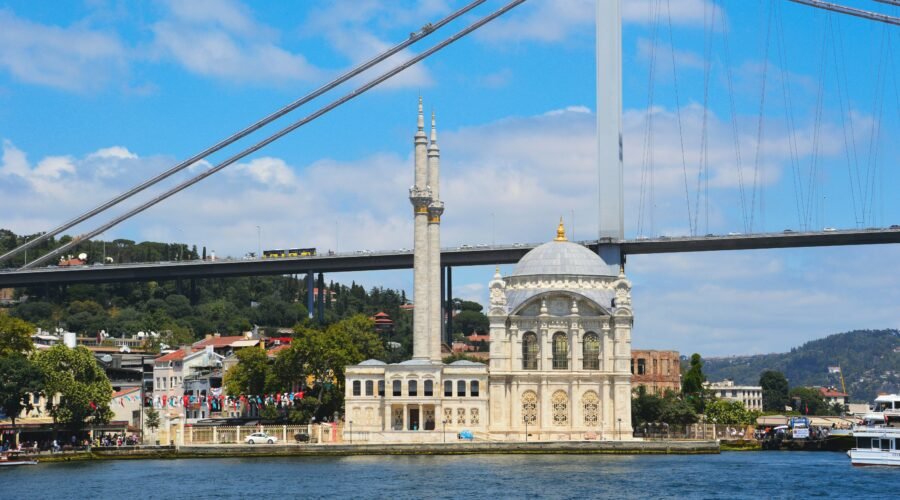
The Büyük Mecidiye Mosque, commonly called Ortaköy Mosque, is an active religious site and one of the defining landmarks of the Bosphorus. The official Visit Istanbul page for Ortaköy Mosque identifies it as a historic Neo-Baroque mosque built during Sultan Abdülmecid’s reign.
The classic composition includes the mosque, Bosphorus, and the bridge now officially known as the 15 July Martyrs Bridge. Winter clouds can create a more dramatic scene, while spring and autumn make it easier to wait outside for the light you want.
When to Use the Ferry
Arriving by water can be part of the Ortaköy experience itself. As of October 5, 2026, the official Şehir Hatları Ortaköy–Beşiktaş–Eminönü timetable lists Ortaköy departures at 11:15, 12:30, 14:45, 16:10, 17:05, 19:55, and 21:15, with an additional 17:25 departure on Saturdays, Sundays, and public holidays.
Those times are especially useful if you want to combine an afternoon in Ortaköy with an evening elsewhere along the Bosphorus. Ferry schedules can change seasonally, so this is one detail worth rechecking close to your travel date.
7. How Season Affects the Cost of an Ortaköy Trip
There is no single fixed Ortaköy seasonal price because most travelers book accommodation elsewhere in Istanbul, and airfares depend on the route and booking date. The useful comparison is relative demand: summer and major holidays are usually harder on the budget, while winter gives you more opportunities for lower-cost travel.
Peak Season: June Through August
Summer generally carries the highest combination of international visitor demand and warm-weather travel. If these are the only months you can visit, arranging flights and accommodation earlier gives you more choice.
- Best for: Warm evenings, long outdoor days, and a busy atmosphere.
- Trade-off: Heat, crowds, and stronger demand for accommodation and transport.
Shoulder Seasons: April–May and September–October
These months offer the best balance rather than the absolute lowest prices. You still benefit from pleasant sightseeing weather, but you avoid some of the drawbacks that make July and August harder for long outdoor visits.
- Best value approach: Choose April or October if lower demand matters more than the warmest possible weather.
- Best weather approach: Choose May or September if outdoor comfort is the priority.
Low Season: November Through February
Winter is the better choice if minimizing crowds and travel demand matters more than sunshine. The trade-off is straightforward: you gain a quieter Ortaköy but face more rain, cooler temperatures, shorter daylight, and less comfortable outdoor café time.
Your best choice therefore depends on the experience you want. Pick May or September for the strongest all-round balance, April or October for cooler sightseeing, summer for maximum energy, or winter for quieter streets and a more local-feeling pace.
Frequently Asked Questions
What is the best time to visit Ortaköy, Istanbul for good weather?
The best time for comfortable weather is usually May or September. May averages a high of 22.3°C (72°F), while September averages 25.9°C (79°F), and both have far fewer rainy days than Istanbul’s winter months.
When is Ortaköy busiest?
Ortaköy is generally busiest during summer, on weekends, and around the afternoon-to-evening waterfront period. July and August combine warm weather, low rainfall, and high tourism demand, while weekend market activity can add more people during other seasons.
When is the quietest time to visit Ortaköy?
The quietest overall period is usually winter, especially ordinary weekdays from November through February. You trade lower crowds for colder weather, more rain, shorter daylight hours, and less comfortable outdoor seating along the Bosphorus.
When is the cheapest time to visit Ortaköy?
November through February generally gives you the best chance of lower travel demand and better-value accommodation than peak summer. Exact prices still depend on your travel dates, flight route, hotel choice, and holiday periods.
Is April or October better for Ortaköy?
Both are good shoulder-season choices, but April is slightly cooler and October is somewhat warmer on average. October also has a similar number of rainy days, so your choice can come down to whether spring scenery or autumn atmosphere fits the rest of your Istanbul trip.
Does it snow in Ortaköy?
Snow is possible in Ortaköy during winter cold spells, but it should not be treated as a normal daily condition. Istanbul’s average winter low temperatures remain above freezing, even though historical temperatures have occasionally fallen well below 0°C.
Is a weekday or weekend better for visiting Ortaköy?
Choose a weekday if you want easier photography and a calmer waterfront. Choose a weekend if you want more atmosphere and a better chance of seeing artists’ market activity, accepting that the square, food stalls, and waterfront can be much busier.
What time of day is best for Ortaköy photos?
Early morning is best if you want fewer people in your photographs, while the period before sunset gives you warmer light and a livelier waterfront. Sunset itself can be beautiful, but it is also one of the times when more visitors gather around the mosque and Bosphorus views.
Sources
- Turkish State Meteorological Service: Istanbul monthly average temperatures, rainy days, and historical climate statistics.
- GoTürkiye — Ortaköy: Official destination information on Ortaköy, its waterfront, mosque, photography, and weekend artists’ markets.
- Presidency of Religious Affairs — 2026 Public Holidays: Official 2026 national and religious holiday dates.
- Presidency of Religious Affairs — 2026 Ramadan: Official confirmation that Ramadan began February 19, 2026.
- Visit Istanbul — Ortaköy Mosque: Official visitor information and historical identification of Büyük Mecidiye Mosque.
- Şehir Hatları — Ortaköy, Beşiktaş and Eminönü Line: Current Ortaköy ferry departure times checked October 5, 2026.