

The best time to visit Idaho Falls, Idaho is June through September, when days are warm and dry and the roads to Yellowstone and Grand Teton are open. For fewer crowds, choose late May, June or September. Winter is cold and snowy, but it is the right season if you plan to ski nearby.
Quick answer
- Warmest, driest weather: July and August, with highs in the mid-80s and under an inch of rain per month.
- Best balance: June and September, with highs in the 70s and lighter crowds than midsummer.
- Yellowstone and Grand Teton day trips: Late spring to early fall. Most Yellowstone park roads close from early November to late April.
- Cheapest and quietest: Late fall and winter, though driving can be icy.
- Skiing: December to March at nearby ski areas.
Best Time to Visit Idaho Falls Month by Month
Temperatures and precipitation below are 1991 to 2020 climate normals for Idaho Falls Regional Airport. Idaho Falls sits at roughly 4,700 feet in a dry, semi-arid climate, so it gets only about 10 inches of precipitation a year, with cool nights even in summer. Crowd and cost levels are general seasonal patterns, not quoted prices.
| Month | Avg high / low (°F) | Avg precipitation | Crowds | Lodging cost |
|---|---|---|---|---|
| January | 29 / 12 (-2 / -11 °C) | 0.7 in | Low | Lower |
| February | 34 / 16 (1 / -9 °C) | 0.6 in | Low | Lower |
| March | 47 / 25 (8 / -4 °C) | 0.8 in | Low | Lower |
| April | 58 / 31 (14 / -1 °C) | 1.0 in | Low to moderate | Lower |
| May | 67 / 38 (19 / 3 °C) | 1.6 in | Moderate | Moderate |
| June | 76 / 45 (24 / 7 °C) | 1.1 in | Moderate to high | Moderate to higher |
| July | 87 / 49 (31 / 9 °C) | 0.5 in | High | Higher |
| August | 86 / 48 (30 / 9 °C) | 0.6 in | High | Higher |
| September | 75 / 41 (24 / 5 °C) | 1.0 in | Moderate | Moderate |
| October | 59 / 31 (15 / -1 °C) | 0.9 in | Low | Lower |
| November | 43 / 22 (6 / -6 °C) | 0.7 in | Low | Lower |
| December | 30 / 13 (-1 / -11 °C) | 0.8 in | Low (holiday weeks busier) | Lower |
Snow typically falls from about November to March, with roughly three feet over a full winter. Check road conditions on Interstate 15 and the highways to Yellowstone and Jackson after storms.
Idaho Falls Weather and Crowds by Season
Spring (March to May)
Spring is cool and changeable. Highs move from the 40s in March to the upper 60s in May, and nights stay near or below freezing into April. Lodging is relatively easy to find, but higher-elevation Yellowstone and Teton roads and trails may still be closed or snowy. Check the National Park Service for opening dates.
Summer (June to August)
Summer is warm, sunny and dry, with July and August highs in the mid-80s. It is also peak season, because many Yellowstone and Grand Teton visitors use Idaho Falls as a base or a stop on Interstate 15. Book hotels and rental cars early, especially for July and August weekends.
Fall (September to October)
September is one of the nicest months, with highs in the 70s, cooler nights and thinner crowds after Labor Day. October turns cool and quiet, with highs near 60 and some early snow possible. Park services start to wind down in the fall.
Winter (November to February)
Winter is cold, with highs near 30 °F and lows in the low teens. Lodging demand is lower outside the holiday weeks, and the city makes a practical base for skiing and snowmobiling trips. Winter storms can make Interstate 15 and mountain highways icy, so allow extra time.
Events and What to Expect in Idaho Falls
Check the city and Visit Idaho Falls event calendars for current dates, since schedules change each year. Popular things to plan around include:
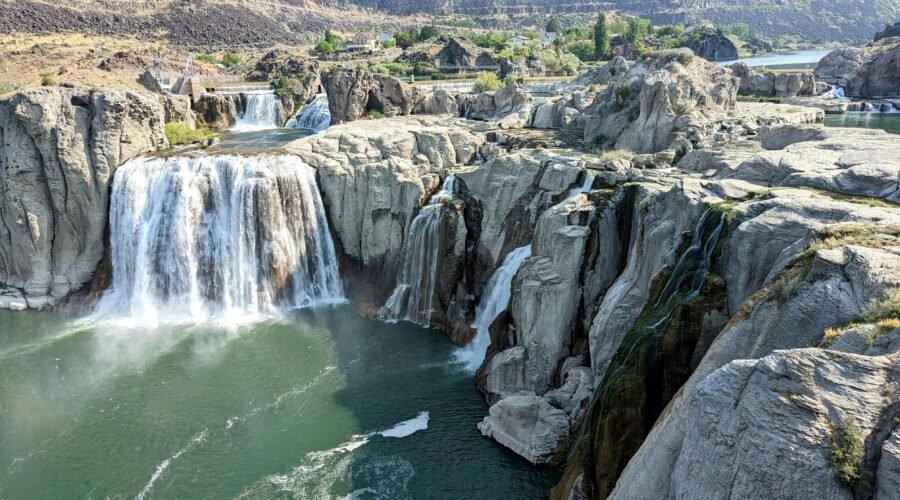
- Riverfront walks: The Snake River Greenbelt and downtown waterfalls are best from late spring through early fall.
- Independence Day: Celebrations in early July draw crowds, so book lodging well ahead.
- Late summer: The Eastern Idaho State Fair in nearby Blackfoot is typically held around the start of September.
- Indoor options: The Museum of Idaho is a good choice on cold or smoky days. Check hours before you go.
Day Trips and Park Access From Idaho Falls
- Yellowstone (West Entrance): Roughly 110 miles and two hours by road. Most park roads typically close to regular vehicles from early November to late April and reopen in stages, with winter access mainly by guided snowmobile or snowcoach. Check NPS road status before driving.
- Grand Teton and Jackson, Wyoming: About 90 miles and 1.5 to 2 hours. Some park roads and facilities are seasonal, and winter travel over mountain passes needs care.
- Mesa Falls Scenic Byway: A scenic drive near Ashton, best from late spring through fall.
- Craters of the Moon National Monument: Roughly 85 miles west, with the best access in summer and fall.
Distances are approximate. Confirm current conditions and hours with the National Park Service and local road reports.
Best Time to Visit Idaho Falls for Your Travel Style
- National park road trips: June to September, with June and September offering fewer crowds.
- Hiking and river walks: June to early October.
- Skiing and snow sports: December to March, using Idaho Falls as a lower-cost base. Check each ski area for opening dates.
- Budget travel: October, November and January to March, when lodging is typically cheapest.
- Photography and quiet drives: Mid-September to early October, when cottonwoods and aspens start to change.
What to Pack and Practical Tips
- Pack layers. Summer days are hot but nights near 50 °F or cooler.
- Bring sunscreen, a hat and water, since the high-desert sun is strong at this elevation.
- In winter, carry warm clothes, a scraper and an emergency kit, and check road reports before long drives.
- Reserve summer lodging and rental cars early. Many travelers book park-area stays months in advance.
Nearby Trips and Related Guides
Browse our best time to visit Idaho guide for statewide planning. For a Wyoming extension, see Jackson, Wyoming. Elsewhere in Idaho, compare Twin Falls for waterfalls and canyon scenery, or Sun Valley for mountain-town skiing and hiking.
Frequently Asked Questions
What is the best month to visit Idaho Falls, Idaho?
June and September are the best balance, with highs in the 70s and lighter crowds. July and August are the warmest and driest, but also the busiest because of Yellowstone and Grand Teton traffic.
When can you visit Yellowstone from Idaho Falls?
Most Yellowstone park roads typically reopen to regular vehicles in stages each spring, starting in mid-April at the earliest, and close in early November. Dates change with weather, so check the National Park Service before you travel.
Does Idaho Falls get a lot of snow?
Winters are snowy, with snow typically falling from about November to March. Yearly precipitation is low, about 10 inches, but cold temperatures keep snow on the ground.
When is Idaho Falls cheapest to visit?
Lodging is typically lowest from October through March outside holiday weeks. Summer is the most expensive season.
How hot does Idaho Falls get in summer?
July highs average around 87 °F with cool nights near 49 °F, and rain is light. Occasional hotter spells are possible.
Is Idaho Falls a good base for Yellowstone and Grand Teton?
Yes, for day trips and for lower-cost lodging than gateway towns. Yellowstone West Entrance is roughly two hours away and Jackson, Wyoming is roughly 1.5 to 2 hours away, depending on season and road conditions.
Sources and Further Reading
- National Park Service: Yellowstone Park Roads
- NOAA National Centers for Environmental Information: U.S. Climate Normals


[…] If you’re planning a trip to Yulara in the Northern Territory, understanding the best time to visit can greatly enhance your experience. For another destination comparison built around weather, crowds, and costs, you can also read Best Time to Visit Idaho Falls: Weather, Crowds, and Costs. […]