If you’re planning a trip to Coffs Harbour, timing makes a big difference for weather, crowds and costs. You’ll get the sunniest, warmest days from October to May, but the sweetest balance of calm seas, fewer people and lower prices comes in the shoulder months. There’s more to think about—seasonal surf, whale migrations and school holidays—that’ll help you pick the right week.
Key Takeaways
- Best overall: late spring to early autumn (September–April) for warm weather, clearer waters, and lower crowd levels.
- Cheapest and quieter: shoulder months (March–May, September–November) with softer prices and calmer roads.
- Peak crowds and prices: December–February and school holidays—book early and expect higher accommodation and rental costs.
- Swimming & safety: November–April offers warm water and patrolled beaches; choose red‑and‑yellow flagged zones for beginners.
- Wildlife highlight: May–November for whale migration—headlands and dawn harbour spots give the best sightings.
Quick Answer: Best Time to Visit Coffs Harbour (By Weather, Crowds, Cost)
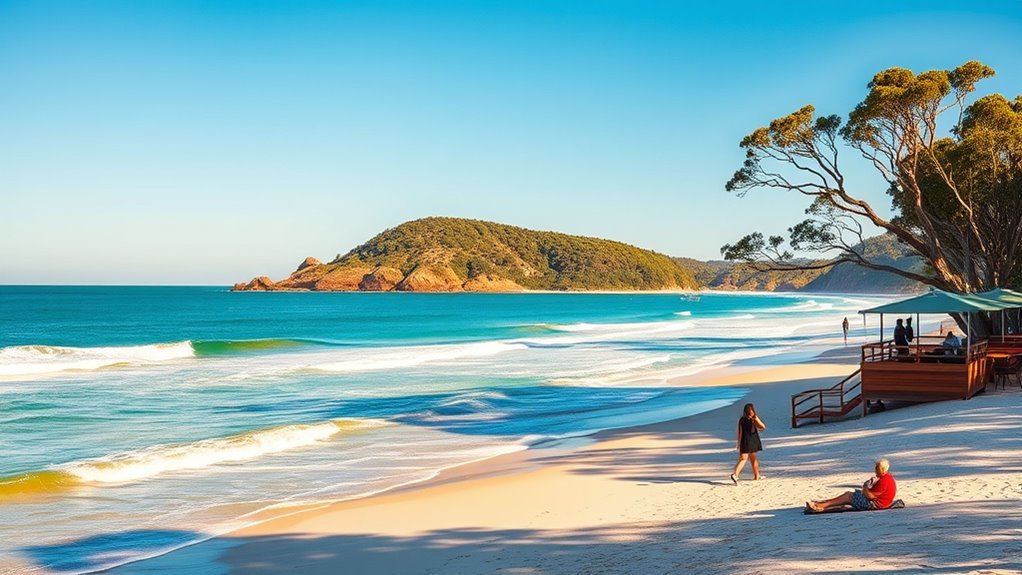
Looking for the best time to visit Coffs Harbour? You’ll find the sweet spot in late spring to early autumn when temperatures invite beach swims and trails without peak-season crowds.
Find your sweet spot in late spring to early autumn—warm days for beaches and trails without peak crowds.
Aim for shoulder months—September–November or March–May—when prices soften, accommodation’s easier, and local cultural events pop up without the crush.
You’ll enjoy clearer waters for spotting marine wildlife and calmer roads for spontaneous drives to viewpoints.
If you crave freedom from schedules, those months let you wander markets, galleries, and coastal walks at your own pace.
Want festivals with room to breathe? Plan around smaller weekend events rather than major holiday weekends.
You’ll save money on midweek stays and still catch warm evenings and lush hinterland.
Pack light layers, a reef-safe sunscreen, and a curiosity for wildlife encounters.
This timing balances weather, costs, and crowd levels so you can explore Coffs Harbour on your terms, feeling unburdened and fully present.
Coffs Harbour Weather by Season
You’ll notice each season in Coffs Harbour brings distinct weather: hot, humid summers with frequent rain, mild autumns with easing showers, and sunny yet cool winters.
Use summer for beach and rainforest warmth, autumn for more settled days and outdoor exploration, and winter when you’ll get crisp mornings and plenty of sunshine.
Knowing these patterns helps you pick the best time for the activities you want.
Summer Temperatures & Rainfall
When summer arrives in Coffs Harbour, you’ll find warm, humid days and a real sense of beach-time energy: daytime temperatures typically sit between 24–29°C (75–84°F), while nights cool to around 18–21°C (64–70°F). Expect a steady marine breeze that keeps the shoreline fresh and helps temper the heat, especially mid-afternoon when surf conditions can shift quickly.
Rainfall increases compared with winter; you’ll see short, intense showers and occasional thunderstorms, but long dry spells happen too. Humidity makes days feel warmer, so plan light clothing and seek shade or ocean dips to stay free.
If you crave liberation, embrace spontaneous swims and sunset walks—just check local forecasts for surf and sudden downpours before heading out.
Autumn Weather Patterns
As the summer humidity eases, autumn in Coffs Harbour brings milder days and crisp, pleasant evenings that make outdoor exploring comfortable and inviting. You’ll feel liberated by clear skies, gentler sun and revitalizing coastal breezes that carry salt and freedom. Rainfall tapers, so you can plan long walks without sticky heat while pockets of autumn foliage add color to hinterland drives.
- Temperatures: daytime highs in the low to mid 20s°C, nights cooling into the mid-teens — perfect for layered outfits.
- Rain & humidity: reduced showers, lower humidity — more predictable days for beach or reef adventures.
- Wind & sea: steady coastal breezes, invigorating but usually mild, keeping the air crisp and travel easy.
Winter Sunshine & Coolness
Though winter brings cooler mornings, Coffs Harbour still serves up plenty of sunshine that lets you enjoy the coast without summer crowds or humidity.
You’ll wake to crisp air and golden light, then spend afternoons strolling beaches, hiking trails, or sipping coffee on a sunlit terrace.
The winter sunshine feels liberating — bright yet gentle — so you can explore with less sweating and more ease.
Nights carry a revitalizing coolness that helps you sleep deeply and appreciate cozy local cafes or a quiet pub.
Bring layers: a light jacket for mornings and an extra for nightfall, but don’t expect bitter cold.
If you crave space, clear skies, and serene days, winter here frees you from peak-season rush.
Peak Crowd Times and When Coffs Harbour Feels Busiest
You’ll notice Coffs Harbour gets noticeably busier during school holidays, when families flock to the beaches and popular attractions.
Events and festivals — from surf competitions to local food fairs — also send visitor numbers spiking, especially on weekends.
If you prefer quieter streets and easier parking, plan around those peak periods.
School Holiday Peaks
When school breaks roll around, Coffs Harbour fills fast—especially during NSW and Queensland holidays—so expect crowded beaches, fuller cafes, and longer waits at popular attractions.
You’ll notice families arriving for holiday school pauses, kids chasing waves, and weekend traffic thickening toward main sights.
If you crave freedom, plan smart: pick quieter mornings or venture to lesser-known coves and hinterland trails.
- Go early — sunrise walks and empty surf give you reclaimed space.
- Visit local markets off-peak — midweek markets feel calmer than weekend hubs.
- Book ahead — accommodation and tours sell out quickly during peak weeks.
These tips help you dodge the crush, breathe easier, and enjoy Coffs Harbour on your own terms.
Event And Festival Surges
Beyond school holiday rushes, specific events and festivals can pack Coffs Harbour even more tightly, so it helps to know the calendar before you plan.
You’ll find the city pulses during signature weekends: local music festivals draw crowds to beachfront stages, buskers, and late-night gatherings, while food and cultural fairs spill into parks.
Local art exhibitions, gallery openings, and performance nights concentrate visitors in the CBD, creating buzz and limited accommodation.
If you want freedom to move and lower prices, avoid major event dates and book well in advance when you must attend.
If you crave connection and electric atmosphere, sync your trip with those surges—expect lively streets, reduced solitude, and a communal, celebratory energy that’s hard to resist.
Accommodation and Travel Costs Through the Year
Because peak season runs from December to February, expect higher prices and fewer bargains then, especially around school holidays and long weekends. You’ll notice hotels and holiday rentals spike as visitors chase sun, local cultural festivals, and coastal events. Flights book early; if you crave freedom, plan months ahead or embrace shoulder seasons for better deals.
- Travel: Fly mid-week in May–June or September to save; red-eye and early-morning flights often cost less.
- Accommodation: Book boutique guesthouses or eco‑tourism stays off-peak for lower rates and richer experiences.
- Transport: Rent cars outside holiday blocks to avoid surge pricing and limited availability.
You can negotiate longer stays in quieter months, trade flexibility for lower nightly rates, and use public transport or bike rentals to cut costs. Budget consciously, but leave room to splurge on unique experiences that free your spirit — think guided walks, farm visits, or small cultural exchanges.
Best Months for Beaches, Swimming and Water Safety in Coffs Harbour
Although the ocean’s warmth peaks in late summer, you’ll find the safest and most enjoyable beach conditions in Coffs Harbour from November through April, when water temperatures rise, surf patrols operate daily, and popular beaches display clear red-and-yellow flags for supervised swimming.
During these months you can swim confidently: Lifeguard staffing is at its strongest, towers are manned, and rescue gear is ready.
Rip currents calm more often in sheltered bays, but exposed breaks still demand respect — check local warnings and swim between the flags.
For a liberated feeling, choose quieter mornings when the light is soft and the sand is yours; afternoons bring more people and active surf clubs.
Pack reef shoes for rocky intertidal zones and sunscreen for long freeswim sessions.
If you want to surf, mid-summer swells are lively but consistent; beginners should opt for patrolled, sandy beaches with explicit surf safety signage.
You’ll leave feeling invigorated and secure, ready to return.
Whale Season and Marine Life Sightings Near Coffs Harbour
If you time your visit between May and November, you’ll catch the peak of whale season as humpbacks migrate along the Coffs Coast, often visible from headlands, beaches and harbour vantage points. You’ll feel small and free watching breaches, tail slaps and calves riding the warm currents—whale migrations here are dramatic and soulful. Keep binoculars handy and stay on marked viewing areas to protect wildlife and yourself.
Time your visit May–November to watch soulful humpback migrations from headlands and beaches—binoculars and marked viewing areas recommended
- Headlands: best for long-range sightings and photography; you’ll share the view with seabirds and distant spouts.
- Beaches & harbour: closer, more intimate encounters at dawn or dusk; you may see dolphin pods playing nearshore.
- Boat tours: for guided approaches and deeper insights into behaviour and conservation.
You’ll want to time outings with calm seas; local guides read conditions and help you witness marine life responsibly. Embrace the liberation of open ocean watching while respecting protected species and seasonal rhythms.
Best Times for Families, Couples and Budget Travellers
When you’re planning a trip to Coffs Harbour, think about who’s coming and what mood you want—families often prefer school-holiday windows and milder autumn weeks for calmer seas and kid-friendly activities, couples lean toward quieter shoulder seasons like late spring or early autumn for romantic beach walks and fewer crowds, and budget travellers score the best deals outside peak school holidays and major events when accommodation and tours dip in price.
If you’re traveling with kids, choose times when playgrounds, the ferry to Muttonbird Island and other family friendly attractions run smoothly; aim for calm mornings for beach play and safe swimming.
As a couple, prioritize golden-hour strolls and lookout points that deliver romantic sunsets over the Solitary Islands; quieter afternoons let you claim a bench or a table by the water.
If saving matters most, travel light, pick midweek stays and self-cater so you keep freedom to explore without high-season pressure.
Shoulder-Season Perks and How to Score Coffs Harbour Deals
Pick late spring or early autumn for the best mix of mild weather, thinner crowds, and lower prices—these shoulder seasons let you enjoy popular spots like the Jetty and Muttonbird Island with more space and friendlier service from local operators.
You’ll move freely, breathe ocean air, and find room to explore without rigid schedules.
To score deals and savor freedom, focus on flexibility and local connections.
- Time bookings: aim midweek and just outside school holidays for cheaper stays and quieter tours.
- Hunt experiences: join budgetastal hiking groups and pop into markets where local cuisine vendors offer tasting deals.
- Negotiate extras: ask small operators for combo discounts on boat trips, guided walks, or dining vouchers.
Practical Travel Tips to Avoid Bad Weather, Crowds and Extra Costs
Want to dodge bad weather, big crowds, and surprise costs on your Coffs Harbour trip? Plan shoulder-season visits, book flexible tickets, and check forecasts daily so you stay free to roam. Choose mornings for popular beaches and Wildlife tours to avoid heat and late-afternoon storms; reserve spots in advance to lock prices.
| Tip | When | Why |
|---|---|---|
| Go early | Dawn | Beat crowds |
| Eat local | Lunch | Taste Local cuisine, cheaper |
| Book flexible | Weeks ahead | Save on fees |
Pack a lightweight rain shell and reef shoes to turn sudden showers into adventure. Rent a bike to skip traffic and spot hidden cafés where Local cuisine is fresh and affordable. Pick midweek stays to cut accommodation costs and enjoy quieter national parks. If you crave liberation, use smaller operators for Wildlife tours—they’re intimate, ethical, and often cheaper. Stay curious, travel light, and let contingency plans keep you moving when weather or crowds try to pin you down.
Frequently Asked Questions
What Local Festivals or Events Affect Travel Plans in Coffs Harbour?
You’ll plan around festival dates like Bellingen and local events; event pricing costs vary, camping availability shifts, ticket discounts and volunteer opportunities appear, with cultural showcases, seasonal activities, local traditions causing tourism spikes and accommodation demand.
Are There Accessible Transport Options for Visitors With Mobility Needs?
Yes — you’ll find accessible transport options across Coffs Harbour, including accessible parking, wheelchair‑friendly routes, lowered buses and taxis, and accessible ferry/coach links; you’ll confidently navigate while enjoying liberating, inclusive travel throughout the city.
What Are the Best Day-Trip Destinations From Coffs Harbour?
About 70% of visitors spot whales each season; you’ll love coastal hiking at Dorrigo National Park, whale watching from Muttonbird Island, exploring Bellingen’s arts scene, or relaxing at Emerald Beach for freedom and fresh sea air.
Is It Safe to Drive the Pacific Highway During Holiday Weekends?
You can, but expect high traffic and slower progress during holiday roadwork; plan extra time, watch fuel prices and fill up beforehand, embrace scenic detours, stay alert, and you’ll reclaim freedom on the open road.
Where Are the Best Spots for Local Food and Farmers’ Markets?
About 60 stalls operate weekly at Coffs Harbour Farmers’ Market; you’ll love farm food stalls at the Jetty precinct and Coramba, join market tours to meet growers, sample macadamias, seafood and artisan bread, and feel liberated.
Conclusion
Think of Coffs Harbour as a tide: visit in late spring to early autumn and you’ll ride its warm, welcoming swell—clear skies, safe swims, and reliable surf. Choose shoulder months and mid‑week stays to skim the quieter, cheaper edges, spotting whales and marine life without the crowds. Pack light layers and a flexible plan to dodge sudden showers. Timed well, your trip will feel like catching the perfect wave—effortless, memorable, and entirely worth it.