The best time to visit Merimbula depends on whether you want warm-water swimming, whale watching, or a quiet coastal escape. This seaside town on the Sapphire Coast of New South Wales offers something different in every season. March and April are especially appealing for beach holidays, while October and November are excellent for wildlife, coastal walks, and fewer crowds than midsummer.
Quick Answer
The best time to visit Merimbula is March to April for warm water, pleasant weather, and smaller crowds. Choose October to November for spring flowers and migrating whales. December to February suits summer beach holidays, while June to August is best for peaceful coastal walks and potentially cheaper accommodation.
Last checked: October 28, 2026. Dates and figures were verified against official sources.
Key Takeaways
- Summer (December–February): Warmest beach conditions, busy holiday accommodation, and the longest daylight hours.
- Autumn (March–May): March and April offer pleasant swimming, fewer holidaymakers, and comfortable sightseeing.
- Winter (June–August): Cooler conditions, quiet beaches, coastal walks, and the northbound whale migration.
- Spring (September–November): Wildflowers, excellent whale-watching opportunities, and mild daytime temperatures.
- Best value: Travel outside school holidays and major festivals, preferably during the week.
Best Months to Visit Merimbula: Quick Recommendation
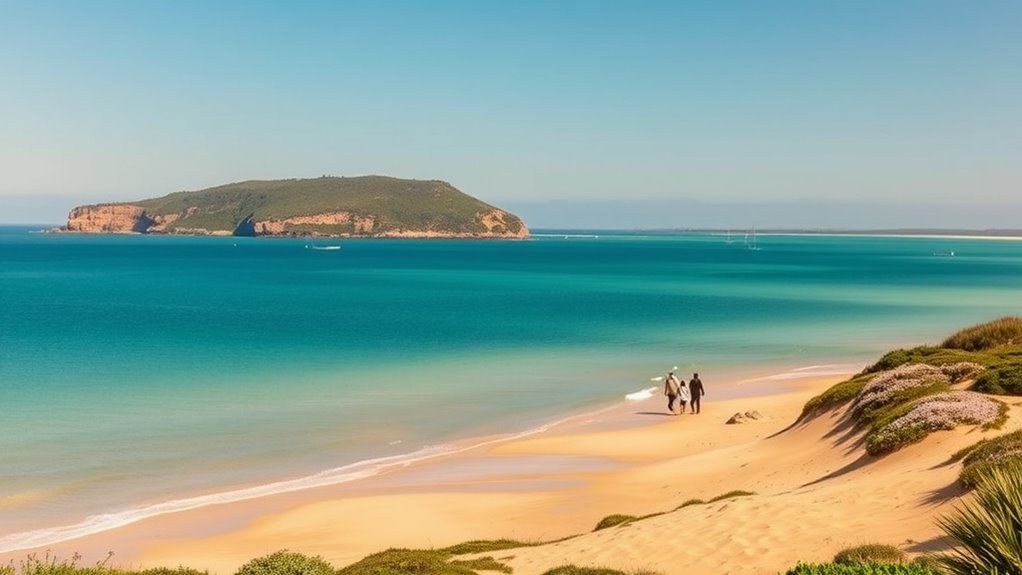
March, April, October, and November offer the best overall balance for a Merimbula holiday. These shoulder months fall outside the main summer rush, although school holidays and special events can still make accommodation busy.
If swimming is your priority, choose March or early April. The ocean retains warmth from summer, and daytime temperatures remain comfortable for beach activities.
October and November are better for whale watching, wildflowers, photography, and coastal walks. However, the sea is usually cooler than it is in autumn.
For families wanting long beach days and summer activities, January and February are attractive. Expect higher demand for beachfront accommodation and more competition for parking.
You can enjoy Merimbula’s community atmosphere throughout the year. The Merimbula Seaside Market runs on the third Sunday of each month at Ford Park, generally from 8am to 12:30pm.
It features local produce, food stalls, clothing, crafts, and handmade goods. Nearby Main Beach and the Ford Park playground make it easy to combine shopping with a relaxed family outing.
Weather & Water Temperatures by Season
Merimbula has mild coastal weather, but temperatures change noticeably throughout the year. Summer offers the warmest days, autumn retains relatively warm seawater, and winter brings chilly mornings.
The Australian Bureau of Meteorology records climate averages at Merimbula Airport AWS, station 069147.
Its records show an average daytime high of 24.9°C in January, compared with 16.7°C in July. Average overnight lows range from 15.6°C in January to 4.4°C in July.
The following table combines Bureau of Meteorology daytime averages with approximate monthly sea-temperature averages published by Weather Atlas.
| Season | Avg Air Temp | Avg Sea Temp |
|---|---|---|
| Summer (Dec–Feb) | 23.4–24.9°C | 19.9–22.2°C |
| Autumn (Mar–May) | 19.3–23.7°C | 19.1–21.7°C |
| Winter (Jun–Aug) | 16.7–17.5°C | 16.4–17.7°C |
| Spring (Sep–Nov) | 19.6–21.8°C | 16.8–19.0°C |
Temperature note: Air temperatures are ranges of average monthly daytime highs within each season, not daily minimum-to-maximum ranges. Sea temperatures are approximate historical monthly averages and may differ from actual conditions on your visit.
February is typically among the warmest months for ocean swimming. March and April can remain comfortable, especially on sunny days. Spring water is often cooler despite pleasant air temperatures.
Rain can occur in every season. Merimbula Airport records approximately 772mm of average annual rainfall, with March having the highest monthly average in the Bureau’s published data at 92.5mm.
Wind, swell, and tides affect beach comfort as much as temperature. A sunny day does not always mean calm water, particularly at exposed surf beaches.
Merimbula in Summer (Dec–Feb): Crowds, Highlights, Downsides
Summer is the busiest season in Merimbula, especially during the Christmas and January school holidays. It’s the best period for families who want beach days, swimming, surfing, and a lively holiday atmosphere.
Daytime temperatures average 23.4°C in December, 24.9°C in January, and 24.8°C in February. Ocean temperatures are also near their annual peak.
Peak Beach Crowds
Main Beach, Bar Beach, and Short Point attract holidaymakers throughout summer. Parking areas near popular swimming spots can fill quickly during school holidays and sunny weekends.
According to the NSW Government school holiday calendar, the eastern division’s 2026–27 summer holidays run from December 18, 2026, to January 27, 2027.
This is a key period for accommodation demand. Beachfront holiday parks, apartments, and family-sized rentals may require particularly early bookings.
For a quieter beach visit, arrive in the morning or plan a late-afternoon walk. You can also explore longer sections of Main Beach away from its busiest access points.
Summer is also the main lifeguard season.
For the 2026–27 season, Bega Valley Shire Council lists daily lifeguard patrols at Main Beach, Short Point Beach, and Bar Beach from December 18, 2026, to February 2, 2027, between 9am and 5pm.
Other surf lifesaving patrol arrangements may operate outside these council lifeguard dates.
Long Sunny Days
Summer brings extended daylight, giving you more time for swimming, surfing, fishing, and coastal photography. Early morning and late afternoon are especially pleasant for outdoor activities.
Popular summer experiences include:
- Main Beach: Enjoy a long sandy coastline for swimming, surfing, walking, and photography.
- Bar Beach: Visit a sheltered beach beside the entrance to Merimbula Lake, with snorkelling and paddleboarding opportunities.
- Ford Park: Use the playground, picnic areas, and barbecue facilities close to Main Beach.
- Merimbula Lake: Try kayaking, fishing, or a relaxed waterfront walk.
- Outdoor dining: Enjoy local seafood, cafés, and evening meals in town.
Heat spikes, strong sunshine, busy cafés, and crowded car parks are the main drawbacks. Bring drinking water, sunscreen, and shade for longer outdoor visits.
Warning: Swim between the red and yellow flags at patrolled beaches. Bar Beach may appear calm, but strong tidal currents can develop in the lake entrance channel. Keep children close and never assume sheltered water is automatically safe.
Merimbula in Autumn (Mar–May): Calmer Beaches & Whale-Watching Windows
Autumn is one of the most rewarding seasons for visiting Merimbula. March and April offer a good combination of warm seawater, comfortable afternoons, and fewer summer holiday crowds.
March is especially appealing if you want to swim without the busiest summer atmosphere. May is cooler and better suited to walking, sightseeing, and exploring nearby towns.
Calmer Beach Conditions
Autumn beaches generally have fewer visitors, but the surf is not necessarily gentler. Swell and wind vary throughout the season, so choose swimming spots according to actual conditions.
For relaxed beach activities, consider:
- March: Swimming, surfing, paddleboarding, and warm-weather beach walks.
- April: Kayaking, fishing, cycling, photography, and coastal sightseeing.
- May: Bushwalking, birdwatching, galleries, scenic drives, and quiet shoreline walks.
Bar Beach can be a pleasant option when conditions allow. Its sheltered setting offers protection from some winds, although currents in the channel still require care.
Fewer visitors also make it easier to enjoy the town’s cafés and waterfront without the constant activity of the summer holiday period.
The Eat Merimbula Festival is scheduled for March 7, 2027, from 10am to 2pm on the Fishpen foreshore of Merimbula Lake.
Entry is listed as free, although food and drinks are purchased separately. The event celebrates regional seafood, local produce, chefs, and food businesses.
Festival weekends can increase local accommodation demand, even outside summer.
Peak Whale-Watching Windows
Autumn marks the beginning of the whale migration season, but March to May is not the main whale-watching peak around Merimbula.
According to NSW National Parks and Wildlife Service, whales generally migrate north along the NSW coast from May to July. They return south from approximately September to November.
May can bring early whale sightings, particularly from exposed headlands. However, September through November is usually the stronger period for dedicated whale-watching trips on the Sapphire Coast.
For land-based viewing, Short Point Headland offers open ocean views. Bring binoculars and watch for distant blows, fins, and tail movements.
Boat trips depend on the operator’s seasonal schedule and sea conditions. Dedicated whale-watching cruises are more widely associated with the spring migration.
Merimbula in Winter (Jun–Aug): Low Crowds, Wildlife & Trade-Offs
Winter is the quietest time for a typical Merimbula beach holiday. From June to August, you’ll find cooler weather, shorter days, and plenty of opportunities for peaceful outdoor exploration.
Average daytime highs remain around 17°C, while overnight temperatures can fall close to 4–6°C. Pack warm layers for morning walks, evenings, and exposed lookouts.
The main benefits of a winter visit include:
- Quiet beaches: Enjoy long shoreline walks and coastal photography without summer crowds.
- Wildlife: Watch for northbound migrating whales in early winter, as well as local seabirds and marine life.
- Outdoor activities: Explore walking tracks, coastal heath, and sheltered lakeside areas.
- Accommodation: Look for off-peak rates outside school holidays and major events.
- Local culture: Visit galleries, cafés, community markets, and live music events.
Winter is not ideal for casual ocean swimming. Cooler seawater and occasional rough conditions make wetsuits useful for people planning longer water activities.
One major winter event is the Merimbula Jazz Festival, scheduled for June 11–14, 2027.
The festival brings jazz performances, workshops, and musicians to venues around town. It can create a lively weekend and increase accommodation demand during an otherwise quiet season.
For a free activity, the Merimbula Boardwalk offers views across the lake, oyster farms, mangroves, and native bushland.
The Merimbula Boardwalk is approximately 3.4 kilometres return, with a typical leisurely walking time of around 1.5 hours. Access can change during repair or upgrade work.
Winter also brings some practical limitations. Certain marine tours may run less frequently, and colder conditions make long beach sessions less comfortable.
If you enjoy solitude, wildlife, photography, and a slower pace, these trade-offs may be worthwhile.
Merimbula in Spring (Sep–Nov): Wildflowers, Water Temps, Peak Activities
Spring is the best time to visit Merimbula for whale watching and native wildflowers. September through November brings longer days, warming weather, and more opportunities for outdoor exploration.
Average daytime highs rise from 19.6°C in September to 21.8°C in November. However, the ocean remains relatively cool compared with summer and early autumn.
Spring is especially rewarding for these activities:
- Whale watching: Look for humpback whales travelling south, often accompanied by calves.
- Wildflower walks: Explore coastal heathland where banksias, orchids, and other native plants bloom.
- Birdwatching: Visit lakeside habitats, coastal reserves, and wooded walking tracks.
- Photography: Capture ocean views, headlands, wildlife, and colourful native vegetation.
- Water sports: Try kayaking, fishing, paddleboarding, or surf lessons when conditions suit your ability.
October and November are particularly attractive for whale watching along the Sapphire Coast. Short Point Headland is a popular local viewing location.
The annual Eden Whale Festival also celebrates the spring migration in nearby Eden. Its 2026 edition ran from October 16–18, 2026, with markets, entertainment, educational displays, and whale-related activities.
Spring is generally less crowded than midsummer, but the September–October school holiday period and whale-watching events can draw additional visitors.
For a relaxed trip, late October or November is appealing. You can combine coastal walks, wildlife watching, local food, and outdoor sightseeing without depending on summer swimming conditions.
Merimbula Accommodation & Dining Prices by Season
Accommodation prices in Merimbula generally follow holiday demand rather than temperature alone. Summer school holidays are usually the busiest period, while winter weekdays can offer better availability.
The price difference depends on the property, booking date, length of stay, and whether a festival or public holiday falls during your visit.
Here’s how seasonal demand typically affects your options:
- Summer: Expect the strongest demand for beachfront apartments, family holiday rentals, and caravan parks, especially around Christmas and January.
- Autumn: March and April can offer more flexibility outside Easter, school holidays, and special events.
- Winter: Quieter weekdays may bring lodging discounts, although festival weekends can be busier.
- Spring: October and November often provide a useful balance between availability, pleasant weather, and holiday activity.
Dining costs do not always change as sharply as accommodation prices. However, individual cafés and restaurants may offer seasonal menus, specials, or different operating hours.
Seafood is a major part of the local food scene, with oysters from Merimbula Lake and other regional produce featured in restaurants and markets.
For flexible meal planning, consider self-contained accommodation, local markets, or picnics at public parks and beach reserves.
Before booking, compare the total cost of accommodation, including cleaning charges, parking, cancellation rules, and minimum-stay requirements.
These details can matter more than a small difference in the advertised nightly rate.
Best Time by Trip Type (Family, Water Sports, Wildlife, Budget)
The ideal season depends on what you want to do. Summer is the strongest choice for family swimming holidays, while autumn offers warm water with fewer visitors.
Spring is particularly appealing for wildlife photography, and winter suits travellers who prefer quiet walks and flexible sightseeing.
| Trip Type | Best Months | Why Visit Then? |
|---|---|---|
| Family beach holiday | December–February | Warm weather, swimming, patrolled beaches, and summer activities. |
| Swimming and water sports | January–April | Warmer ocean temperatures and pleasant coastal conditions. |
| Whale watching | September–November | Southern whale migration and excellent headland viewing opportunities. |
| Coastal hiking and photography | March–May, September–November | Comfortable daytime weather, fewer crowds, and seasonal scenery. |
| Budget travel | May–August | Lower typical demand outside school holidays and festivals. |
Families with young children may prefer summer when supervised swimming opportunities are more widely available.
Couples looking for quiet beaches, cafés, and comfortable weather may enjoy March, April, or November.
For wildlife enthusiasts, spring is the standout season. You can combine whale watching with wildflower walks and birdwatching around the lake.
Adventure travellers have opportunities throughout the year. Choose sheltered waterways for kayaking and paddleboarding, while using suitable surf beaches for surfing according to conditions.
If you’re travelling primarily to save money, focus on dates outside the major holiday periods rather than choosing a season alone.
Save Money & Avoid Crowds: Booking Windows, Transport, and Free Options
The easiest way to reduce the cost of a Merimbula trip is to avoid peak holiday dates. Midweek stays, flexible accommodation, and free outdoor activities can make a noticeable difference.
School holidays deserve particular attention because they affect demand throughout the year.
For upcoming NSW public school holidays, the published dates include:
- Summer 2026–27: December 18, 2026, to January 27, 2027, for the eastern division.
- Autumn 2027: April 12–23.
- Winter 2027: July 5–16.
- Spring 2027: September 27 to October 8.
These dates are especially useful when comparing accommodation rates. Prices and availability may also rise around Easter, long weekends, and major local events.
Consider the following practical strategies:
- Travel midweek: Compare Sunday-to-Thursday stays with weekend prices.
- Book flexible accommodation: Choose reasonable cancellation conditions if your plans may change.
- Use free attractions: Walk Main Beach, visit Ford Park, enjoy Short Point lookout, and explore public coastal paths.
- Save on meals: Buy picnic supplies at local shops or markets and use public picnic areas.
- Plan your transport: Stay near the town centre if you want to walk to restaurants, shops, and nearby attractions.
Merimbula has local and regional bus services, but coverage is more limited than in a major city.
Transport for NSW Route 890 connects Bega, Merimbula, Pambula, and Eden, with variations in stops and departure times.
Driving or hiring a car gives you greater flexibility for visiting remote beaches, national parks, and neighbouring towns. A car is less essential if you mainly want to stay around central Merimbula.
Pro Tip: If you want warm water without peak summer demand, compare March accommodation dates first. For spring wildlife trips, compare late October and November dates outside school holidays and major events.
Frequently Asked Questions
Do I Need a Car to Explore Merimbula Properly?
You don’t strictly need a car to explore central Merimbula. Some beaches, restaurants, shops, and waterfront attractions are within walking distance of town accommodation. However, hiring a car makes it much easier to explore remote beaches, national parks, nearby villages, and coastal viewpoints beyond the local bus network.
Are There Accessible Beaches and Facilities for Mobility-Impaired Visitors?
Yes, Merimbula has accessible public facilities and walking areas, although access varies between beaches. Ford Park has an accessible playground, and sections of the Merimbula Boardwalk suit wheelchair users. Beach access improvements have also been made at Short Point. Do not assume that beach matting or beach wheelchairs are available at every location.
What Wildlife Encounters Are Safe for Children?
Children can safely enjoy wildlife watching from suitable viewing areas with adult supervision. Birdwatching around Merimbula Lake, watching dolphins from shore, and guided whale-watching tours are popular options. Keep a respectful distance from seals, wallabies, and other wild animals. Never encourage children to touch or feed wildlife.
Can I Bring My Dog to Beaches or National Parks?
You can bring dogs to designated dog-friendly areas around Merimbula, but not to most NSW national parks. Short Point Headland and a designated section of Main Beach have off-leash areas. Other beaches and public spaces have seasonal or permanent restrictions. Follow local signs and the Bega Valley Shire Council rules.
Are There Local Medical Services or Pharmacies Nearby?
Yes, Merimbula has medical clinics and pharmacies for routine care and supplies. South East Regional Hospital at 4 Virginia Drive, Bega, provides 24-hour emergency care. For a life-threatening emergency in Australia, call 000. For non-emergency health advice, Healthdirect is available around the clock on 1800 022 222.
Conclusion
For the best balance of weather, swimming, crowds, and value, plan your Merimbula holiday for March or April. Choose October or November if whales, wildflowers, and coastal walks matter more than warm seawater.
Summer is ideal for a lively family beach holiday, while winter rewards visitors seeking solitude and relaxed sightseeing. Match your dates to your preferred activities, avoid the busiest holiday periods where possible, and you’ll get more from your Sapphire Coast escape.
Sources
- Australian Bureau of Meteorology, Merimbula Airport AWS: Official monthly air temperatures and rainfall averages.
- Weather Atlas, Merimbula Climate: Historical monthly sea-temperature reference averages.
- Sapphire Coast Tourism, Markets: Merimbula Seaside Market location and monthly schedule.
- NSW Government, School Holidays: Official 2026 and 2027 school holiday dates.
- Bega Valley Shire Council, Beaches and Lifeguard Services: Summer lifeguard locations, patrol dates, and hours.
- NSW Government, Eat Festival: March 2027 festival date, location, hours, and entry information.
- NSW National Parks, Whale Facts: Northbound and southbound whale migration seasons.
- Sapphire Coast Tourism, Merimbula Jazz Festival: Festival program and June 2027 dates.
- Visit NSW, Merimbula Boardwalk: Walking distance, accessibility, and visitor information.
- Visit Merimbula, Eden Whale Festival: October 2026 festival dates and activities.
- Visit NSW, Merimbula Bar Beach: Sheltered swimming area, beach facilities, and tidal-current hazards.
- Bega Valley Shire Council, Dog Walking Areas: Designated off-leash areas and restrictions.
- Transport for NSW, Route 890: Regional bus connections serving Merimbula.
- NSW Government, South East Regional Hospital: Hospital address, 24-hour emergency services, and contact information.