Ann Arbor, Michigan, is a year-round destination, but the experience changes a lot with the season and the University of Michigan calendar. Weather matters, but so do football games, student move-in, commencement, the Ann Arbor Art Fair, and other major events. Choosing the right dates can mean better weather, easier restaurant reservations, lighter traffic, and a much more predictable travel budget.
Quick Answer
For most visitors, the best time to visit Ann Arbor is from late May through mid-June, when days are warm, campus crowds have eased, and major fall football traffic has not started. September and October are also excellent for mild weather and fall color, but check the University of Michigan football schedule before booking because home-game weekends can be extremely busy.
Key Takeaways
- Best overall balance: Late May through mid-June offers comfortable weather with fewer university-related crowds.
- Best for fall scenery: Late September through October can be beautiful, but football weekends can sharply increase traffic, hotel demand, and restaurant waits.
- Big July crowd alert: The Ann Arbor Art Fair can bring an enormous surge of visitors into downtown.
- Quietest period: Parts of January, February, and early March are generally calmer, but cold temperatures, snow, and ice are tradeoffs.
- Best money-saving strategy: Compare live hotel rates and avoid major U-M events rather than relying only on the month or season.
1. Best Time to Visit Ann Arbor: Weather by Season
Ann Arbor has four distinct seasons. Temperatures can change quickly during spring and fall, while winters regularly bring freezing conditions and snow. For long-term planning, the most useful benchmark is NOAA’s current 1991–2020 U.S. Climate Normals. Actual weather on your travel dates can still be warmer, colder, wetter, or snowier than the averages.
Spring: A Gradual Thaw (March–May)
Spring in Ann Arbor is a transition season. March can still feel like winter, while May can feel almost summery. Temperature swings are common, so layers are more useful than relying on one heavy or lightweight outfit.
- March: Typical daytime highs are around the mid-40s Fahrenheit, while nights can still drop below freezing. Late snow is possible. Bring a warm jacket, closed shoes, and layers.
- April: Average daytime highs rise toward the upper 50s. Cool mornings, rain, wind, and occasional cold snaps are still possible. Daylight Saving Time begins in March, so evenings become noticeably brighter.
- May: Average highs move into the low 70s. Trees and gardens are active, outdoor dining becomes more comfortable, and lighter clothing works on many afternoons. Keep a light waterproof layer available for rain.
Late May can be one of the strongest periods for a leisure visit, especially after major commencement activity has passed and before the busiest summer events.
Summer: Warmth and Sunshine (June–August)
Summer is warm, green, and active. Long daylight hours make it easy to combine campus walks, parks, markets, outdoor dining, and evening events.
- June: Typical highs are around 80°F. Humidity becomes more noticeable, but many days are comfortable for walking and outdoor attractions. Pack breathable clothing, sunscreen, sunglasses, and water.
- July: This is normally the hottest month, with average highs in the low-to-mid 80s. Heat waves can push temperatures higher. Downtown can also become extremely busy during the Ann Arbor Art Fair.
- August: Warm and humid conditions usually continue, with average highs around the low 80s. Later in the month, U-M student move-in can bring additional traffic and parking pressure around campus.
Warning: Do not assume July is an ordinary summer travel month. The Ann Arbor Art Fair occupies a large part of downtown and can dramatically change traffic, parking, hotel availability, and crowd levels.
Fall: A Picturesque Transition (September–November)
Fall is one of Ann Arbor’s most attractive seasons. Temperatures become more comfortable, leaves change color, and the University of Michigan campus is active again. The tradeoff is football traffic.
- September: Average highs are around the mid-70s. Early September can still feel summery, while mornings become cooler later in the month. T-shirts, long sleeves, and a light jacket are a useful combination.
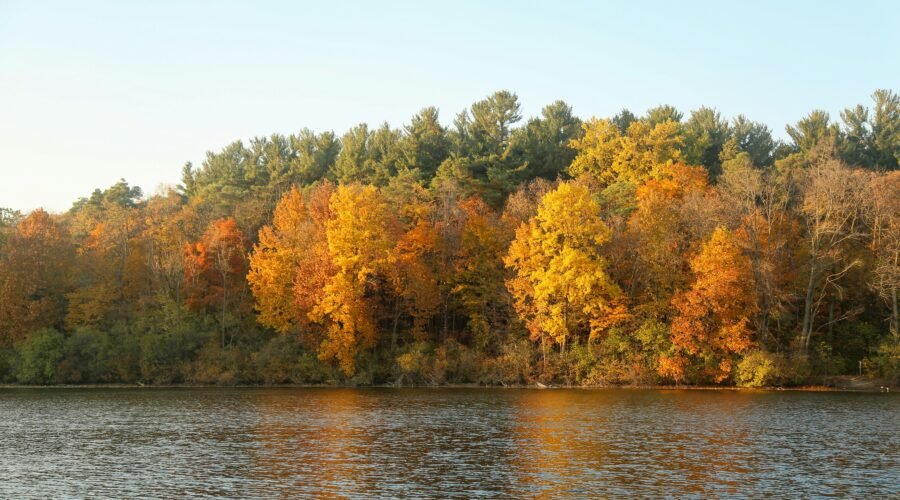
- October: Average highs fall into the low 60s. This is a strong month for fall color at places such as Nichols Arboretum and Matthaei Botanical Gardens, although the exact foliage peak changes with weather conditions each year. Bring a warmer jacket and comfortable walking shoes.
- November: Typical highs fall into the upper 40s. Freezing nights become more common, daylight is shorter, and late-fall rain or early snow is possible. A heavier coat, hat, and gloves can be useful.
September and October can be excellent times to visit, but they should not automatically be treated as low-crowd months. A University of Michigan home football game can transform the city for an entire weekend.
Winter: Cold and Snowy (December–February)
Winter in Ann Arbor is genuinely cold. January and February normally have daytime highs in the low-to-mid 30s, and nighttime temperatures frequently fall well below freezing. December is usually somewhat milder but still wintery.
- December: Expect cold weather, occasional snow, holiday activity, and university events including winter commencement in some years.
- January: This is one of the coldest periods. Waterproof footwear, thermal layers, a winter coat, hat, and gloves are practical.
- February: Cold and snow can continue, although tourist crowds are usually lighter than during warmer months and major university-event weekends.
Snow and refreezing can create slick sidewalks and roads, so allow extra travel time during winter weather.
You can also browse Lele Tours for additional travel-planning content.
Month-by-Month Ann Arbor Travel Snapshot
| Month | Typical Feel | Crowd Potential | Travel Note |
| January | Cold and snowy | Generally low | Good for quieter indoor-focused trips; prepare for ice and snow. |
| February | Cold and wintry | Generally low | Often easier for reservations than peak-event periods. |
| March | Cool and changeable | Low to medium | Late snow and cold nights remain possible. |
| April | Mild but unpredictable | Medium | Useful shoulder-season option before commencement. |
| May | Comfortably mild to warm | High around commencement; lower afterward | Late May is one of the best all-around windows. |
| June | Warm and green | Medium | Excellent weather for outdoor sightseeing and festivals. |
| July | Hot and humid | Medium to extremely high | The Art Fair creates one of the year’s largest crowd surges. |
| August | Warm and humid | Medium to high late in month | Student move-in affects traffic and campus parking. |
| September | Mild and pleasant | Medium to very high | Excellent weather, but check the home-football schedule. |
| October | Cool and crisp | Low to very high | Strong fall-color month; football weekends are much busier. |
| November | Cold and increasingly wintry | Low to very high | Home football games can still produce major visitor surges. |
| December | Cold with possible snow | Event-dependent | Winter commencement and holidays can temporarily increase demand. |
2. Timing Your Visit: Beating the Crowds in Ann Arbor
Ann Arbor is a university city, so its crowd pattern does not follow a simple summer-high, winter-low tourism calendar. The University of Michigan academic schedule, football games, student move-in, commencement, and major city events can matter more than the season itself.
Peak Periods: When to Expect the Busiest Times
These are the periods when hotels, restaurants, roads, sidewalks, and parking can face the most pressure.
- University of Michigan academic year: Campus is most active from late August through the fall term and again during the winter term. The exact dates change annually, so check the university calendar before booking.
- Football game days: A Michigan home game can bring an enormous influx of fans. Hotels may sell out early, restaurant reservations become harder to find, and roads around Michigan Stadium and downtown become congested. Check the official Michigan football schedule before choosing a September, October, or November weekend.
- Move-in: Late August is particularly busy around residence halls. For example, general undergraduate move-in in 2026 ran August 26–30.
- Spring commencement: Graduation ceremonies bring students’ families and guests into the city. Hotels and restaurants around campus can become heavily booked.
- Parents and alumni events: Homecoming and other university weekends can also increase visitor numbers.
- Ann Arbor Art Fair: The annual July event occupies roughly 30 downtown blocks and is one of the city’s biggest visitor draws. The official Ann Arbor Art Fair should always be checked before booking a July trip.
The Ann Arbor Art Fair can draw close to half a million attendees over its three-day July run, making event dates much more important than a simple “summer versus fall” crowd label.
Summer outside the Art Fair remains popular because of warm weather, outdoor activities, festivals, and longer days. Student numbers are lower than during the main academic year, but downtown is far from empty.
Shoulder Periods: The Sweet Spot for Fewer Crowds
The best shoulder periods combine comfortable weather with fewer major university events.
- Late May to mid-June: This is often the strongest all-around choice. Spring commencement has passed, many students have left campus, and summer weather is arriving.
- September on non-game dates: September weather can be excellent, but do not assume every weekend is quiet. Home football dates can be among the busiest weekends of the year.
- October on non-game weekdays or weekends: Fall color and cool temperatures make October appealing. Check football and university calendars first.
- April outside major campus events: April can work well if you accept variable weather and want to visit before commencement demand arrives.
Pro Tip: Before paying for a hotel, check three calendars: the U-M football schedule, university move-in/commencement dates, and the Ann Arbor Art Fair. Avoiding one major event can matter more to your budget than changing your trip by an entire month.
Off-Season: Lowest Crowds and a Quieter Vibe
If your main goal is fewer visitors and you do not mind cold weather, winter offers a quieter experience.
- Late December to early January: Parts of the university winter break can be calm after major holiday or commencement activity has passed. Restaurants and attractions may use holiday schedules, so check operating hours.
- February to early March: These weeks commonly have lighter leisure-travel demand. Restaurant reservations and central sightseeing can feel easier, but winter weather remains a major factor.
Winter is not automatically the cheapest period on every date. Hotel rates are dynamic, so always compare the actual dates you plan to visit.
3. The Cost of Visiting Ann Arbor: Budgeting Your Trip

Ann Arbor is not usually a rock-bottom-budget destination, especially around downtown and the University of Michigan. However, many of its parks, campus areas, museums, and public spaces cost little or nothing. Your hotel dates are usually the biggest factor in the final trip price.
Accommodation: Where to Rest Your Head
Accommodation prices change substantially by date, location, demand, room type, and how early you book.
- Hotels: Ann Arbor has national chains, independent properties, boutique hotels, and extended-stay options.
- Downtown and university area: You normally pay a location premium for being able to walk to campus, restaurants, and entertainment. Older planning ranges such as $150–$300+ per night can illustrate the general price category, but they should not be treated as current quotes.
- Further out: Properties several miles from downtown can sometimes cost less. Historical planning ranges such as $100–$200 per night may be useful only as a rough reference; check live rates for your exact dates.
- Special events: Football weekends, commencement, move-in, the Art Fair, and other major events can cause large price increases and sellouts. Booking early is especially important when your dates overlap a major event.
- University housing and guest accommodations: University-affiliated or event-specific guest options may occasionally be available, but they are limited and should not be assumed to operate like regular hotels. Verify current availability directly before relying on them.
- Short-term rentals: Airbnb, Vrbo, and other rental platforms can work well for groups or longer stays. Prices vary widely by size, location, licensing, cleaning fees, service fees, and event demand. Compare the final checkout total rather than only the advertised nightly rate.
Dining: From Budget Meals to Special-Occasion Restaurants
Ann Arbor’s food scene covers a wide range of budgets. The following bands are best treated as planning guides rather than fixed menu prices, and you should allow extra room for tax, drinks, and tips.
- Budget-friendly planning band — roughly $15–$30 per person: Pizza, sandwiches, student-focused restaurants, casual counters, food trucks, and many international restaurants can fit this range.
- Mid-range planning band — roughly $30–$60 per person: Bistros, gastropubs, sit-down restaurants, and breweries with full food menus commonly fall into this broader category once drinks or appetizers are included.
- Higher-end meals — often $60+ per person: Upscale downtown dining and special-occasion restaurants can easily move above this level depending on drinks and menu choices.
Activities and Entertainment: What to Do Without Breaking the Bank
Many of Ann Arbor’s strongest visitor attractions are free or low-cost.
- Walking the University of Michigan campus: Exploring the architecture, Diag, libraries, and surrounding streets costs nothing.
- Nichols Arboretum and Matthaei Botanical Gardens: Both currently list free admission, although parking at Matthaei is paid. Check the official parking and admission information before visiting.
- Kerrytown: Walking through the district and browsing shops costs nothing unless you make purchases.
- Ann Arbor Farmers Market: Browsing is free, while food and products are individually priced.
- University of Michigan Museum of Art: UMMA currently states that admission is free and tickets are not required for general admission.
- University of Michigan Museum of Natural History: General admission for individuals and families is currently free, although donations and separately priced programs may exist.
- Concerts and performances: Student performances, independent venues, and larger touring productions cover a wide range of ticket prices.
- University sporting events: Prices vary by sport, opponent, seat, and sales channel. Football can become expensive on high-demand dates, but it is not accurate to assume every ticket costs several hundred dollars.
- Specialized experiences: Food tours, premium performances, and special events can add significantly to a daily budget.
Transportation: Getting Around on a Budget
Central Ann Arbor is relatively walkable and bikeable, which can keep transportation spending low.
- Walking: Free and often the easiest choice for downtown and central campus.
- Biking: Useful for covering more distance, although rental costs vary by provider.
- TheRide: Ann Arbor’s city bus system currently charges $1.50 for a standard single ride and $3 for a day pass. Check the official TheRide fare page before your trip because fares can change.
- U-M Blue Buses: University campus buses are open and free to the general public, with no ID or fare required on regular public routes.
- Ride-sharing: Uber and Lyft are widely used, but surge pricing can make repeated rides expensive during games and other large events.
- Driving: A car is useful for destinations outside the central area, but parking costs should be added to your budget.
As of the July 2026 rate change, downtown public parking structures generally cost $1.80 per hour, while standard public lots and metered spaces are $2.60 per hour. Special-event rates can differ, so check the official Ann Arbor DDA parking rates before driving downtown.
Simple Ways to Spend Less
- Compare hotel prices on several sets of dates before booking.
- Avoid home-football, commencement, move-in, and Art Fair dates unless those events are the reason for your visit.
- Stay near the places you plan to visit so you can walk instead of relying on repeated rideshares.
- Use TheRide or free U-M campus buses when the route works for you.
- Mix free attractions with one or two paid experiences rather than filling every day with ticketed activities.
- If you drive downtown, compare structures with street meters and always check event pricing.
4. Ann Arbor’s Culinary Scene: A Taste of the Town
Ann Arbor has a diverse food scene shaped by its university population, long-established local businesses, international community, and access to Michigan-grown ingredients. You can move from inexpensive student-oriented meals to polished special-occasion dining without leaving the central part of the city.
From Campus Classics to Gourmet Dining
The dining landscape covers a wide range of tastes and budgets.
- Downtown dining: Downtown Ann Arbor has a dense collection of restaurants, cafes, bakeries, bars, and casual counters. Many are within walking distance of one another, making it easy to compare menus before deciding where to eat.
- University influence: The University of Michigan brings students, faculty, researchers, and visitors from around the world. That helps support restaurants serving Thai, Indian, Vietnamese, Middle Eastern, Mexican, Korean, Chinese, Japanese, Mediterranean, and other cuisines.
- Farm-to-table and seasonal ingredients: Michigan produce is especially visible during the warmer months. Some restaurants change dishes with the season or emphasize locally sourced ingredients.
Must-Try Eating Styles and Neighborhood Stops
- Pizza: Ann Arbor has everything from quick slices to sit-down artisan pies. Pizza remains an easy choice for families, groups, and budget-conscious travelers.
- Diners and comfort food: Breakfasts, burgers, sandwiches, hash, and other classic American dishes are easy to find.
- Breweries and gastropubs: The area’s craft-beverage culture supports many places serving burgers, sandwiches, appetizers, and more ambitious pub-style meals alongside drinks.
- International food: The city’s international population makes global cuisine one of the most rewarding parts of eating in Ann Arbor.
- Sweet treats: Ice cream shops, bakeries, cafes, pastries, and desserts make an easy addition to a downtown walk, especially during warmer weather.
Note: Restaurant availability can change sharply on football Saturdays, commencement weekends, and during the Art Fair. For a specific restaurant you do not want to miss, check its current reservation policy before your trip.
For information about how content on this site is reviewed and maintained, see the Lele Tours editorial policy.
5. Getting Around Ann Arbor: Your Transportation Options
Navigating Ann Arbor is straightforward if most of your plans are downtown or around central campus. Walking is often the simplest option, while public transit becomes useful for longer distances, North Campus, and destinations outside the immediate downtown core.
On Foot and by Bike: The Most Direct Routes
For many visitors staying downtown, walking gives you the easiest access to restaurants, campus buildings, museums, shops, and public spaces without having to search for parking.
- Downtown and central campus: These areas are highly walkable. Shops, libraries, restaurants, museums, and many university buildings sit close together.
- Bike-friendly routes: Ann Arbor has bike lanes and other cycling infrastructure on many streets. Cycling can cover more ground than walking while avoiding some parking problems.
- Bike rentals: Rental and shared-mobility options may be available through local businesses or apps. Providers and prices can change, so check availability when you arrive.
TheRide: Ann Arbor’s Public Bus System
TheRide is the Ann Arbor Area Transportation Authority’s public bus system. It connects Ann Arbor, Ypsilanti, residential neighborhoods, downtown, campus areas, commercial districts, and other destinations.
- Network: Fixed-route buses cover much of the Ann Arbor-Ypsilanti area.
- Planning: Check current schedules and real-time information before leaving, especially at night, on weekends, or during service changes.
- Visitor fare: The standard fixed-route fare is currently $1.50 for a single ride and $3 for a day pass.
- Transfers: TheRide currently provides free transfers valid for 90 minutes on eligible fixed-route trips.
- Discounts: Special reduced fares exist for qualifying riders, while many U-M students and employees have separate MCard transportation benefits.
U-M Blue Buses: A Free Campus Option
The University of Michigan operates its own campus transit system. Regular U-M buses are open to the general public and require no fare or ID, making them useful when your trip involves Central Campus, North Campus, the Medical Campus, or other university areas.
Routes and schedules can change by academic term, so check current U-M transit information before depending on a particular bus.
Ride-Sharing Services: Door-to-Door Convenience
Uber and Lyft are commonly available in Ann Arbor and can be convenient when you are carrying bags, traveling late, dealing with poor weather, or visiting a destination that is awkward to reach by bus.
- Convenience: Door-to-door travel removes the need to find parking.
- Availability: Drivers are often easiest to find around central Ann Arbor, although wait times vary.
- Event demand: Football games, festivals, commencement, and nightlife periods can increase wait times and trigger higher fares.
- Budget impact: Several rides per day can quickly cost more than public transit.
Personal Vehicles and Parking
A car can be useful if you plan to explore beyond central Ann Arbor, visit surrounding towns, or make several stops outside the main transit corridors.
- Downtown parking: Public garages, surface lots, and metered street spaces are available. Structures are often easier than circling downtown in search of an open meter.
- Current rates: Standard downtown structures are currently $1.80 per hour, while regular public lots and meters are $2.60 per hour. Special-event prices may be higher.
- Campus parking: Many U-M lots require permits or have restricted hours. Visitors should use clearly designated visitor facilities and read posted restrictions.
- Traffic: Rush hour can slow travel, while football games, move-in, commencement, and large festivals can cause major congestion.
- Consider alternatives: If your hotel is walkable or you can use transit, leaving the car parked can save time and reduce parking costs.
For information on how this website handles visitor information and privacy, see the Lele Tours privacy policy.
6. Ann Arbor’s Unique Vibe: More Than Just a College Town
The University of Michigan is central to Ann Arbor’s identity, but the city also has established neighborhoods, independent businesses, parks, cultural organizations, technology companies, restaurants, and community traditions that operate well beyond campus life.
A Blend of Academia and Everyday Life
- Intellectual culture: University lectures, museums, bookstores, research programs, and public events contribute to the city’s academic character.
- Student energy: Students bring activity to restaurants, nightlife, arts events, sporting events, and neighborhoods around campus.
- Established community: Long-term residents and locally owned businesses give Ann Arbor an identity that remains visible even when much of the student population leaves for summer.
Culture and Arts: Beyond the Lecture Halls
Arts and culture are a major part of the visitor experience.
- Museums and galleries: UMMA provides a major art collection in the center of campus, while smaller galleries and arts spaces add variety around the city.
- Performing arts: University venues, independent organizations, live music spaces, and seasonal festivals create a busy cultural calendar.
- Independent businesses: Kerrytown and other central districts contain locally owned shops, bookstores, cafes, markets, and restaurants.
- Outdoor spaces: Nichols Arboretum and Matthaei Botanical Gardens provide trails, plants, seasonal color, and a quieter counterpoint to downtown and campus.
A Hub of Research, Innovation, and Entrepreneurship
Ann Arbor is also a research and technology center. University research supports activity in engineering, health care, computing, life sciences, mobility, and other fields, while startups and established companies add to the local economy.
- Research and development: The University of Michigan is a major research institution, and its work influences organizations throughout the region.
- Entrepreneurial activity: Startups, university spinouts, and technology businesses contribute to the city’s professional community.
- Civic and environmental initiatives: Local policies, nonprofit organizations, university projects, and community programs give visitors another view of Ann Arbor beyond restaurants, sports, and campus attractions.
Taking time to explore both the university and the surrounding neighborhoods gives you a fuller picture of Ann Arbor. The city works best when you treat it as both a college town and an established Michigan community.
Frequently Asked Questions
What is the best time to visit Ann Arbor, Michigan for favorable weather?
Late May through June and September into early October usually offer some of the most comfortable sightseeing weather. Late May and June are warmer, while early fall offers cooler temperatures and changing leaves. For fall trips, always check the University of Michigan home-football schedule before booking.
When is the peak tourist season in Ann Arbor, Michigan?
Ann Arbor does not have one simple peak season. Summer is popular, but the July Art Fair can create an enormous visitor surge, while University of Michigan football weekends in September, October, and November can be just as important for hotel demand, restaurant crowds, traffic, and parking.
What is the off-peak season in Ann Arbor?
Parts of January, February, and early March are generally among the quieter leisure-travel periods. The tradeoff is winter weather, including freezing temperatures, snow, and possible icy roads and sidewalks. Specific university events can still create temporary demand.
When is the best time to visit Ann Arbor to avoid crowds?
Late May after commencement, early-to-mid June, and selected spring or fall weekdays can provide a good balance. In September, October, and November, avoid home-football weekends if low crowds are your priority. In July, check the Art Fair dates before booking.
When is the most affordable time to visit Ann Arbor?
Winter dates outside holidays and major university events often have less leisure-travel demand, but there is no month that guarantees the lowest hotel rate. Compare live prices and avoid football, commencement, move-in, and Art Fair dates for the best chance of finding lower accommodation costs.
Is Ann Arbor crowded during Michigan football weekends?
Yes. Home football Saturdays are some of the most important dates to check before planning a fall visit. Visitor numbers, restaurant demand, rideshare prices, parking pressure, and traffic can all increase, and hotel rooms may sell well in advance.
Should I avoid Ann Arbor during the Art Fair?
Avoid the Art Fair dates if your main goal is a quiet downtown visit. If art, street activity, food vendors, and a festival atmosphere are part of the reason you are traveling, it can instead be one of the most exciting times to visit. Book lodging early and plan your transportation before arriving.
Sources
- NOAA National Centers for Environmental Information — U.S. Climate Normals — seasonal temperature and climate benchmarks.
- University of Michigan Housing Calendar — academic-year and student move-in timing.
- University of Michigan Athletics Football Schedule — current home-game dates that affect fall crowds and travel demand.
- Ann Arbor Art Fair — official dates, scale, and event information.
- TheRide Fares — current Ann Arbor public-transit fares and passes.
- Ann Arbor Downtown Development Authority Parking Rates — current downtown structure, lot, and meter pricing.