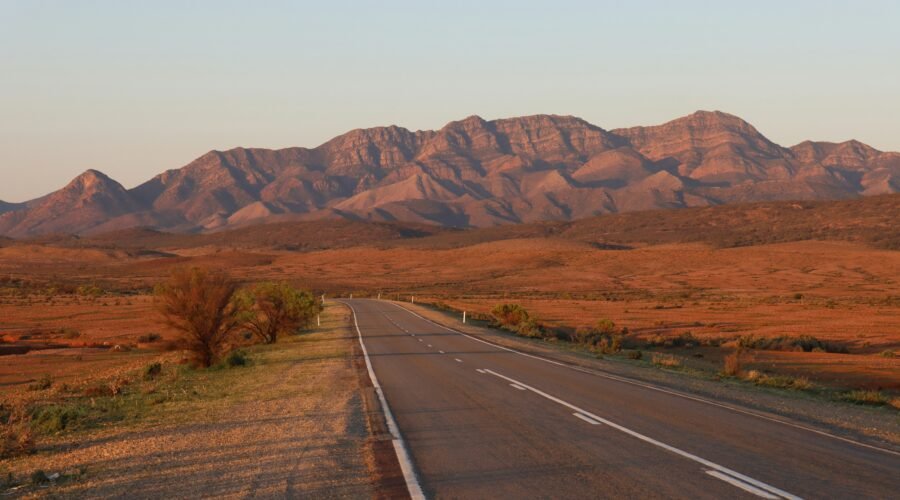
Deciding on the best time to visit the Flinders Ranges depends on whether your priority is comfortable bushwalking, vibrant wildflower displays, stargazing, or budget-friendly solitude. Spanning ancient rugged peaks and deep red gorges in South Australia, this semi-arid outback region experiences dramatic seasonal shifts ranging from frosty winter nights to scorching summer days.
Quick Answer
The best time to visit the Flinders Ranges is from April to October (autumn, winter, and spring). During these cooler months, daytime temperatures hover between 15°C and 28°C (59°F to 82°F), making conditions ideal for hiking, 4WD exploration, and wildlife spotting, while avoiding severe summer heat and park trail closures.
Key Takeaways
- Spring (September–November): Peak season for colorful wildflowers, lush post-rain scenery, and pleasant daytime walking conditions.
- Autumn (March–May): Mild days, crisp evenings, and golden light offer prime conditions for photography and long-distance trails.
- Winter (June–August): Cold nights and crisp, sunny days provide ideal conditions for strenuous hikes and world-class stargazing.
- Summer (December–February): Off-peak and budget-friendly, but extreme temperatures (frequently over 38°C / 100°F) trigger mandatory hiking trail closures across national parks.
Spring: Wildflowers and Mild Hiking Days
Spring in the Flinders Ranges, lasting from September to November, is widely regarded as the premier season for visitors. As the cold outback winter gives way to warmer days, the region comes alive with active wildlife and comfortable temperatures that make outdoor exploration easy.
The Weather Picture: Pleasant and Predictable
Spring delivers mild to warm daytime temperatures, typically averaging between 20°C and 28°C (68°F to 82°F). Nights remain refreshingly cool, usually hovering between 10°C and 15°C (50°F to 59°F). While rainfall is generally low across the semi-arid plains, occasional spring showers help settle the red dust and sustain the regional flora.
Why Spring is So Appealing
The primary draw card of spring is the potential for magnificent wildflower blooms across Ikara-Flinders Ranges National Park. When winter yields steady rainfall, hillsides and creek beds explode into vibrant carpets of yellow everlastings, purple native peas, and the iconic red Sturt’s desert pea. Mild conditions also make it comfortable to conquer panoramic viewpoints like St Mary Peak and Rawnsley Bluff.
Pro Tip: Wildflower blooms depend heavily on the timing and volume of winter rains. Check park updates with local visitor centers in August to confirm if a bumper bloom is expected for September and October.
Crowd Levels and Costs in Spring
Because weather conditions are near-perfect, spring is one of the busiest times of year. Tourist numbers peak during the September–October South Australian school holidays and long weekends. Accommodation around Wilpena Pound and surrounding stations books out months in advance, and rates for lodging and scenic flights reflect peak-season demand.
Autumn: Golden Hues and Comfortable Exploration
Autumn (March through May) is an exceptional window for outdoor enthusiasts. As the oppressive summer heat dissipates, the outback landscape settles into steady, mild weather that is well-suited for extended road trips, camping, and walking.
The Weather Snapshot: A Gentle Cooling
Temperatures transition steadily throughout autumn. March often retains residual summer warmth, with daytime highs around 28°C to 32°C (82°F to 90°F). By May, daytime averages drop to a crisp 20°C to 24°C (68°F to 75°F). Nighttime temperatures cool down significantly to roughly 8°C to 12°C (46°F to 54°F), requiring warm layers around the campfire.
What Makes Autumn Shine
Autumn is favored for its stable atmospheric conditions and clear skies. The low sun angle casts deep golden tones over the ancient sandstone peaks of the ABC and Heysen Ranges, creating prime conditions for landscape photography. The official South Australian bushwalking season also opens in autumn as fire danger risks subside.
Crowd Dynamics and Cost Considerations
Outside of the Easter holidays and April school breaks, autumn experiences moderate visitor traffic. Accommodation is generally easier to secure than in spring, and tour operators offer standard seasonal rates without the heavy congestion seen during peak flower events.
Winter: Crisp Air and Starry Nights

Winter in the Flinders Ranges, running from June to August, provides a completely different outback experience. Marked by bright sunny days and chilly nights, it is the season of choice for serious hikers, campers, and astronomers.
Winter Weather: Chilly but Often Sunny
Daytime conditions are remarkably pleasant, with maximum temperatures generally ranging from 15°C to 19°C (59°F to 66°F). However, clear outback skies mean radiant heat escapes quickly at sundown. Nighttime temperatures frequently plummet to between 0°C and 5°C (32°F to 41°F), with widespread morning frosts across valleys and gorges.
The Unique Charm of a Flinders Winter
Cool daytime temperatures make tackling demanding, exposed trails—such as the Mount Remarkable summit or Wilpena Pound interior loops—far more physically manageable. Furthermore, crisp, dry winter air paired with minimal light pollution produces world-class stargazing conditions, displaying the galactic core of the Milky Way in striking clarity.
Winter Crowds and Budget-Friendly Options
Winter attracts steady numbers of bushwalkers and 4WD tourers, but crowds outside holiday weekends remain manageable. Unpowered campsites and caravan parks offer economical rates, though self-contained eco-villas and glamping options with heating remain in high demand.
Summer: The Heat is On, But So Are the Deals

From December through February, the Flinders Ranges experiences intense outback summer conditions. High temperatures make this the least popular time for traditional outdoor recreation, though it caters to budget-focused road trippers.
Summer Weather: Expect the Heat
Summer daytime temperatures routinely exceed 35°C (95°F) and regularly spike above 40°C to 45°C (104°F to 113°F) during heatwaves according to regional observations from the Australian Bureau of Meteorology. Evenings offer little immediate relief, often staying above 20°C (68°F).
Warning: In Ikara-Flinders Ranges National Park, walking trails are closed on Total Fire Ban days and whenever forecast temperatures reach 35°C or higher for visitor safety. Strenuous outdoor hiking is strongly discouraged during summer.
Why Consider Summer Anyway?
While hiking is restricted, summer allows visitors to experience the stark grandeur of the outback from the comfort of air-conditioned 4WD vehicles. Lookouts, scenic gorges like Brachina and Bunyeroo, and historical heritage sites are nearly deserted, providing an immersive sense of isolation.
Summer Crowds and Cost Savings
Summer is the true low season across the region. Accommodation providers, station stays, and tour outfits frequently offer their steepest discounts of the year. If you are prepared to adapt to the heat by scheduling scenic drives early in the morning, summer offers substantial cost savings.
Peak vs. Shoulder vs. Off-Peak: A Quick Guide
| Month | Weather & Temperatures | Crowd Levels | Relative Costs |
|---|---|---|---|
| January | Extreme heat (35°C–42°C+), high UV, low rain | Low (Off-Peak) | Low (Discounts available) |
| April | Mild days (22°C–26°C), clear skies, cool nights | Moderate to High (Peak/Easter) | Moderate to High |
| July | Crisp days (15°C–18°C), frosty nights (0°C–5°C) | Moderate (Shoulder/Holidays) | Moderate |
| October | Warm days (24°C–28°C), wildflower season | High (Peak Season) | High |
Understanding regional seasonality helps align your travel itinerary with optimal conditions:
Peak Season: Autumn and Spring (April–May & September–October)
- When: Mid-autumn and mid-spring.
- What to Expect: The most comfortable weather for walking trails, blooming flora, active native wildlife, and full tour availability.
- Crowds: High demand at popular hubs like Wilpena Pound and Blinman; advance bookings are essential.
- Costs: Accommodation and flights operate at standard to peak rates.
Shoulder Season: Winter (June–August)
- When: The mid-year winter months.
- What to Expect: Brisk, sunny days ideal for challenging ascents, followed by sub-zero night temperatures and pristine night skies.
- Crowds: Steady traffic during July school holidays, but generally quiet across wilderness tracks.
- Costs: Balanced pricing with value across camping and off-grid stays.
Off-Peak Season: Summer (December–February)
- When: Late November through February.
- What to Expect: Harsh daytime heat, high fire danger, and mandatory safety closures on walking trails.
- Crowds: Very low tourist numbers across all major landmarks.
- Costs: Lowest accommodation rates and seasonal promotions.
Frequently Asked Questions
What is the best month to visit the Flinders Ranges?
September and October are widely considered the best single months to visit. During these months, you can enjoy daytime temperatures around 22°C to 26°C (71°F–79°F), vibrant wildflower blooms across the valleys, and optimal conditions for hiking.
What is the weather like in the Flinders Ranges throughout the year?
The Flinders Ranges has a semi-arid climate. Summers (December–February) are very hot, often exceeding 40°C (104°F). Winters (June–August) feature mild, sunny days between 15°C and 19°C (59°F–66°F) and cold nights dropping below freezing (0°C/32°F). Autumn and spring offer mild, stable days between 20°C and 28°C (68°F–82°F).
When is the busiest time of year in the Flinders Ranges?
The peak visitor seasons occur during the South Australian autumn school holidays (April) and the spring wildflower window (September to October). Long weekends and the Easter holiday period see the highest accommodation occupancy.
When is the off-peak season in the Flinders Ranges?
The off-peak season is the summer period from December to February. Because daytime temperatures can be dangerously high and many park trails close for fire safety, visitor numbers and lodging prices are at their lowest.
How do travel costs vary across the year?
Accommodation, 4WD hire, and guided tour prices peak during spring (September–October) and the Easter holiday period. In contrast, winter offers moderate rates, while summer brings the largest discounts and promotional packages from regional station stays and resorts.
Sources
- National Parks and Wildlife Service South Australia — Official park guidelines, fire safety, and trail management
- South Australian Tourism Commission — Regional seasonal travel insights and visitor information
- Australian Bureau of Meteorology (BOM) — Climate statistics and seasonal weather averages for the Flinders Ranges