Thinking about a trip to Kanchanaburi? For most visitors, November through February is the easiest period for outdoor sightseeing because conditions are comparatively drier and more comfortable than during the hottest or wettest months. It is still warm, though: daytime temperatures in Kanchanaburi city commonly reach the low-to-mid 30s°C, so sun protection and plenty of water matter year-round.
Quick Answer
For most travelers, November through February is the easiest time to visit Kanchanaburi because rainfall is lower and conditions are more comfortable for sightseeing. March and April are the hottest months, while May through October is greener and wetter. September and October are usually the wettest months in Kanchanaburi city, so flexible plans help.
Key Takeaways
- Best overall weather: November through February is comparatively dry and comfortable, although afternoons are still warm.
- Hottest period: March and April bring average daytime maximums around 37–38°C in Kanchanaburi city.
- Green season: Rain increases sharply in May, with wetter conditions continuing through October.
- Wettest months: September and October receive the highest average rainfall at the Kanchanaburi city weather station.
- Costs: Accommodation and airfare can rise during popular travel periods and holidays, but there is no reliable province-wide percentage difference.
Kanchanaburi Weather by Season
Kanchanaburi has a tropical climate with a comparatively dry part of the year, an intense hot period, and a wetter monsoon-influenced period. The boundaries are gradual rather than exact, and conditions vary across this large province.
Note: The figures below use the Thai Meteorological Department’s 1991–2020 climate normals for the Kanchanaburi city station. Mountainous and western parts of the province, including areas toward Thong Pha Phum, can be cooler and considerably wetter, so conditions at a national park may differ from conditions in town.
The Cool and Drier Season (November – February)
This is generally the most comfortable period for sightseeing. Skies tend to be less cloudy, rainfall is much lower than during the wettest months, and humidity is lower than in September and October.
- Temperature: Average daily maximums at the Kanchanaburi city station range from about 31.7°C in December to 35.3°C in February. Average minimums are roughly 20–22°C.
- Humidity: Monthly mean relative humidity is about 63–72%. That is comparatively more comfortable than the wettest part of the year, but it is not especially dry by temperate-climate standards.
- Rainfall: December and January are especially dry on average. November can still receive occasional rain as the wetter season ends.
- Activities: This period suits historical sightseeing, cycling, river trips, temple visits, and longer days outdoors. Trails are also generally easier to manage than during sustained wet weather.
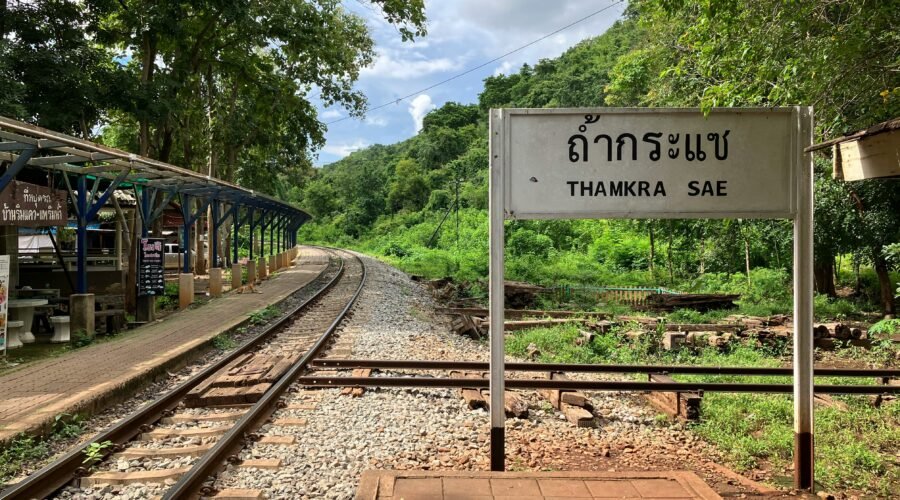
Places such as the Bridge over the River Kwai, the railway route, Wat Tham Suea, and Erawan National Park are easier to explore when heat and rain are less disruptive. However, popular sites can also be busier during this period.
The Hot Season (March – April, with May as a Transition)
March and April are the hottest part of the year. May remains hot but rainfall rises sharply, so it is better treated as a transition into the green season rather than as a reliably dry month.
- Temperature: Kanchanaburi city’s average daily maximum is about 37.0°C in March and 38.0°C in April. Very hot individual days can be hotter.
- Rainfall: March is relatively dry. April becomes more unsettled, and May averages substantially more rain and rainy days.
- Activity suitability: Schedule outdoor sightseeing early in the morning or later in the afternoon. Midday is better for shaded attractions, museums, cafés, your accommodation, or other low-exertion activities.
- Water activities: Swimming or riverside stays can feel especially appealing in hot weather, but waterfall flow varies and should never be assumed to be ideal.
Pro Tip: If you travel in March or April, do your most exposed sightseeing before late morning. Carry drinking water, a hat, sun protection, and light breathable clothing rather than trying to fit a full day of outdoor attractions into the hottest hours.
Songkran, the Thai New Year period in mid-April, is another consideration. Celebrations can be fun, but holiday travel can also increase demand for transport and accommodation. Local event programs vary from year to year.
The Rainy or Green Season (May – October)
The landscape becomes greener as rainfall increases. This can be an attractive period if you prefer fewer international tourists, lush scenery, and more flexible accommodation choices, but you should plan around changing weather rather than expecting a fixed daily rain pattern.
- Temperature: Average daily maximum temperatures in Kanchanaburi city generally remain in the low-to-mid 30s°C.
- Humidity: Humidity rises, particularly toward September and October.
- Rainfall: September and October are the wettest months at the Kanchanaburi city station, averaging about 219 mm and 206 mm of rain respectively in the 1991–2020 climate normals.
- Waterfalls: Water flow can be stronger after rain, making waterfalls visually impressive, but high water can also create slippery paths, stronger currents, and temporary access restrictions.
- Outdoor activities: Trekking, cycling, and river activities remain possible on suitable days, but footwear, rain protection, and a flexible schedule become more important.
Warning: Never assume a waterfall, trail, or national-park area is safe simply because it is open during the normal tourist season. Heavy rain, high water, wildfire, and air-quality problems can cause temporary restrictions. Erawan National Park, for example, temporarily closed in April 2026 during wildfire and PM2.5 conditions before reopening after conditions improved. Check current Department of National Parks notices shortly before your visit.
If you are also comparing how weather, crowds, and costs affect another destination, this existing guide to Fort Lauderdale weather, crowds, and costs uses a similar trip-planning approach. Kanchanaburi has a very different tropical climate, so use the local climate information above when planning this journey.
Month-by-Month Weather at a Glance
| Month | Avg. Max | Avg. Rainfall | Planning Note |
|---|---|---|---|
| January | 33.0°C | 7.6 mm | Very dry; excellent for outdoor sightseeing |
| February | 35.3°C | 18.3 mm | Dry overall, but noticeably hotter |
| March | 37.0°C | 39.4 mm | Very hot; schedule activities early |
| April | 38.0°C | 66.4 mm | Hottest period; Songkran can increase holiday demand |
| May | 36.3°C | 139.4 mm | Hot transition into wetter weather |
| June | 34.8°C | 98.9 mm | Green and humid; flexible plans help |
| July | 33.9°C | 106.0 mm | Wet-season conditions; check trails |
| August | 33.8°C | 100.6 mm | Humid with frequent rainy days |
| September | 33.7°C | 219.0 mm | Wettest month on average at the city station |
| October | 32.4°C | 206.3 mm | Still very wet; conditions often improve later |
| November | 32.1°C | 44.6 mm | Much drier; popular travel period begins |
| December | 31.7°C | 7.2 mm | One of the driest and most comfortable months |
Crowds and Atmosphere Throughout the Year
Visitor levels change with the weather, Thai holidays, weekends, festivals, and school breaks. There is no official month-by-month crowd scale, so think of the categories below as useful planning patterns rather than guarantees.
Peak Travel Period (November – February)
This period generally attracts stronger tourism demand because the weather is easier for outdoor sightseeing.
- Visitor levels: Expect popular attractions such as the Bridge over the River Kwai, the railway route, and Erawan National Park to feel busier, particularly on weekends and around year-end holidays.
- Atmosphere: Restaurants, guesthouses, riverside properties, and tour businesses tend to be active.
- Planning ahead: Reserve accommodation earlier if you need a specific riverside stay, room type, or holiday date. Rail services and popular excursions can also be busier on weekends and public holidays.
Shoulder and Transition Months (March, June, October)
These months can offer fewer visitors than the core dry-season period, but their weather is very different from one another.
- March: Usually less comfortable than December or January because temperatures climb sharply, although some travelers may appreciate the change in demand.
- June: Green and wetter. It can be quieter, but it should not be treated as a classic dry-weather shoulder month.
- October: Still one of Kanchanaburi city’s wettest months on average. Late October may begin to feel more transitional, but do not book on the assumption that rain has finished.
- Atmosphere: Generally more relaxed than the busiest dry-season weekends.
- Planning ahead: You often have more flexibility, but Thai holidays and major events can still create short demand spikes.
Quieter Periods (Especially May and July – September)
These months can appeal to travelers who prioritize greener scenery, greater flexibility, and potentially better accommodation availability over predictable dry weather.
- Visitor levels: International leisure demand is often softer than during the main dry-season period, although weekends and domestic holidays can still be busy.
- Atmosphere: Attractions can feel calmer, especially on weekdays.
- Planning ahead: Last-minute accommodation can be easier to find, but weather-sensitive tours may alter schedules.
- April exception: Do not automatically treat April as a low-crowd month. Songkran and holiday travel can increase demand even though the weather is extremely hot.
Cost Considerations for Your Kanchanaburi Trip

Your budget can change depending on season, weekends, Thai holidays, major events, how early you book, and the type of accommodation you choose. Avoid relying on fixed percentage savings because prices are dynamic.
Accommodation Costs
- November – February: Popular riverside resorts and highly rated guesthouses may charge more or sell out earlier when demand is strong.
- March and transition periods: Availability can improve outside holiday dates, although pricing varies considerably by property.
- Wetter months: Some hotels and tour businesses may offer promotions when demand is softer. Compare your exact dates instead of assuming every property discounts rooms.
- Weekends: Kanchanaburi is accessible from Bangkok, so weekend demand can matter even during months normally described as quieter.
Flight and Transportation Costs
- International flights: Most international travelers enter through Bangkok. Airfare is dynamic and can rise around Christmas, New Year, Songkran, school holidays, and other busy travel periods. Compare fares early if your dates are fixed.
- Bangkok to Kanchanaburi: Road and rail are the main approaches. The Tourism Authority of Thailand identifies Kanchanaburi as accessible by both road and rail.
- Holiday demand: Bus, minivan, and train seats may be harder to secure during popular weekends or public holidays even when base fares have not changed much.
Activity and Tour Costs
- National parks: Entrance fees are set under Department of National Parks rules rather than normal hotel-style seasonal pricing. Check the current official fee before visiting because regulations can change.
- Private tours: Prices vary by operator, group size, vehicle, route, and inclusions. Peak demand may reduce last-minute availability.
- Package deals: Operators sometimes promote packages during quieter periods, but discounts are not guaranteed.
- Guides: A good private guide may have less availability on popular dates, so reserve ahead if a specialist historical or nature guide is important to your trip.
Food and Drink Costs
- Local dining: Street stalls, markets, cafés, and local restaurants are available throughout the year, and their prices do not follow a simple tourism-season formula.
- Tourist areas: Riverside and attraction-focused restaurants can cost more than local neighborhood options, but that difference depends more on the establishment than on a fixed seasonal percentage.
Kanchanaburi’s Seasonal Highlights and Considerations

Each part of the year suits a different travel style. The weather should guide when you schedule activities rather than deciding whether Kanchanaburi is worth visiting at all.
Cooler and Drier Months (November – February)
- Highlights: Easier conditions for historical sites, countryside cycling, temples, railway sightseeing, and walks in national parks.
- Erawan National Park: Drier paths can make walking easier, although waterfall flow naturally varies with recent rainfall.
- River Kwai and railway sites: Lower rainfall makes outdoor historical sightseeing more comfortable.
- Considerations: Higher demand, busier weekends, and less last-minute choice at sought-after accommodation.
Hot Months (March – April) and May Transition
- Highlights: Pool time, riverside stays, shaded attractions, and water-based activities become especially appealing.
- Songkran: Mid-April can be lively and memorable, but expect holiday traffic and possible transport or accommodation pressure.
- Considerations: Heat can make long daytime walks exhausting. Schedule exposed activities early and avoid overloading your itinerary.
- May: Rain becomes much more frequent, so May should not be planned as if it were simply an extension of March’s dry heat.
Rainy and Green Months (May – October)
- Highlights: Lush vegetation, greener countryside, and potentially stronger waterfall flow after rain.
- Atmosphere: Many weekdays can feel calmer than peak dry-season dates.
- Considerations: Mud, slippery paths, high water, thunderstorms, and schedule changes become more likely.
- September and October: These are particularly wet months at the Kanchanaburi city station, so build extra flexibility into nature-focused itineraries.
- River activities: Conditions depend on current water and weather, so follow local operator and official safety advice rather than assuming every excursion runs normally.
The River Kwai Bridge Week is an important annual event associated with Kanchanaburi’s history and tourism calendar. It has been held around late November and December in recent years, but the exact dates change. Check the current Kanchanaburi provincial announcement before arranging a trip specifically around the event.
For clarity, the site’s existing terms and conditions page covers website-use information; it is not a destination guide for Thailand.
Making Your Decision: A Quick Recap
| Period | Weather | Typical Crowd Pattern | Cost Pattern |
|---|---|---|---|
| November – February | Drier and comparatively comfortable | Usually higher | Popular stays may cost more |
| March – April | Very hot | Variable; Songkran can be busy | Variable by holiday and property |
| May – August | Hot, humid, increasingly green | Often quieter | Promotions may be easier to find |
| September – October | Wettest period in the city normals | Often lower outside holidays | Often flexible, but not guaranteed cheaper |
- For the best all-around weather: Choose December or January if your priority is lower rainfall and easier outdoor sightseeing.
- For the broader dry-season experience: November through February remains the strongest overall window, but expect more travelers.
- For greener scenery and potentially quieter travel: Consider May through August if you can work around rain.
- For waterfalls: Wetter months can bring stronger flow, but never trade safety for scenery. Check current park conditions first.
- For heat-tolerant travelers: March can work if you plan outdoor activities around the cooler parts of the day.
- For maximum flexibility and potentially better accommodation availability: Look at wetter-season weekdays rather than assuming a specific month always has the lowest prices.
- For a transition period: Late October into November can become more appealing as rainfall declines, but October itself remains wet on long-term averages.
Ultimately, Kanchanaburi is a worthwhile destination throughout the year. The best time for you depends on whether you value lower rainfall, greener scenery, fewer visitors, festival atmosphere, or flexible accommodation. Pack for tropical heat in every season, check current weather and national-park notices before nature trips, and give yourself extra flexibility during the wetter months.
Frequently Asked Questions
What is the best time to visit Kanchanaburi, Thailand?
November through February is generally the best period for most visitors because rainfall is lower and outdoor sightseeing is easier. December and January are especially dry on long-term averages. The trade-off is stronger tourism demand and potentially higher accommodation prices.
What is the weather like in Kanchanaburi throughout the year?
Kanchanaburi is warm throughout the year. November through February is comparatively drier, March and April are extremely hot, and rainfall increases sharply in May. The greener and wetter period continues through October, with September and October the wettest months at the Kanchanaburi city weather station.
When are crowds highest in Kanchanaburi?
Tourism demand is generally stronger during the drier November–February period, particularly on weekends and around year-end holidays. Songkran in mid-April can also create a temporary holiday-travel surge.
When is River Kwai Bridge Week held?
River Kwai Bridge Week has been held around late November and December in recent years, but its exact dates change from year to year. Check the latest announcement from Kanchanaburi provincial authorities before booking a trip specifically for the event.
How does the cost of visiting Kanchanaburi change through the year?
Popular hotels and riverside properties can cost more when demand is high, while wetter or quieter periods may bring better availability and occasional promotions. There is no reliable province-wide percentage discount, so compare your exact dates, especially for weekends and holidays.
Is Kanchanaburi worth visiting during the rainy season?
Yes, if you are comfortable with flexible plans. The countryside is greener, waterfalls may carry more water, and some attractions can feel quieter. However, rain can make trails muddy or slippery, and high water or other safety conditions can lead to temporary restrictions.
What are the hottest months in Kanchanaburi?
March and April are the core hot months. Thai Meteorological Department climate normals show average daily maximum temperatures of about 37.0°C in March and 38.0°C in April at the Kanchanaburi city station.
Sources
- Thai Meteorological Department — Climatological Data of Thailand, 1991–2020 — temperature, humidity, rainfall, and rainy-day climate normals for Kanchanaburi and Thong Pha Phum.
- Tourism Authority of Thailand — Kanchanaburi — official destination information, attractions, and transportation overview.
- Department of National Parks — National Park Entrance Fee Schedule — official park-fee framework including Kanchanaburi national parks.
- Department of National Parks — Erawan National Park Temporary Closure, April 2026 — example of changing park access because of wildfire and air-quality conditions.
- Kanchanaburi Provincial Office — River Kwai Bridge Week — official event information demonstrating that annual dates should be verified.
- Tourism Authority of Thailand — Songkran 2026 — official information supporting mid-April festival and holiday-planning considerations.