So, you’re thinking about heading to Pangnirtung, Nunavut! The next question is when to go. This small Inuit community on Baffin Island offers very different experiences throughout the year, from summer hiking and dramatic fiord scenery to northern lights and spring travel across frozen landscapes. Choosing the right month can make a big difference to your trip.
For most visitors, July and August offer the mildest weather and the widest range of summer activities. However, spring can be a better choice for snow-based adventures, while the darker months offer opportunities to see the aurora borealis. Here’s how to choose the best time to visit Pangnirtung based on the experience you want.
Quick Answer
The best time to visit Pangnirtung, Nunavut, is July or August for milder weather, guided boat trips, hiking, and cultural experiences. March through early May suits properly equipped visitors interested in frozen-fiord travel. September through March offers dark nights for potential northern lights viewing, although weather and transport conditions vary considerably.
Key Takeaways
- Best overall time: July and August offer the mildest temperatures and the main summer tourism season.
- Best for summer park access: Mid-July through August and sometimes early September, depending on ice, weather, and route conditions.
- Best for spring snow adventures: March, April, and early May, while the fiords remain frozen and travel conditions permit.
- Best for northern lights: Dark, clear nights from autumn through early spring, with no guarantee of a sighting.
- Most important planning rule: Confirm seasonal access, book transportation and accommodation early, and complete all required park registration procedures.
Best Time to Visit Pangnirtung at a Glance
The right season depends on whether your priority is hiking, Arctic scenery, local culture, or winter activities. This comparison gives you a useful starting point.
Seasonal Travel Guide
| July–August | Mildest weather, summer hiking, boat transportation when conditions allow, and community sightseeing. |
| June | Long daylight, changing landscapes, and community visits. Sea-ice breakup can interrupt park access. |
| September | Autumn colours, community experiences, and possible early-season aurora viewing. Conditions can turn wintry quickly. |
| October–February | Dark skies and winter scenery. Extreme cold and difficult access limit outdoor activities. |
| March–Early May | Frozen-fiord travel, skiing, snowshoeing, and guided snowmobile activities when ice and weather conditions are suitable. |
These dates describe typical seasonal patterns, not guaranteed access. Parks Canada recommends checking conditions and possible closures before planning an excursion into Auyuittuq National Park.
Summer: The Sweet Spot for Exploration (July and August)
Summer is the most straightforward season for many first-time visitors. Temperatures are relatively mild, daylight lasts well into the evening, and more outdoor activities become possible.
It’s also the main season for visiting Auyuittuq National Park by boat with a local outfitter, once the fiords are sufficiently ice-free.
What the Weather Is Like
Expect cool Arctic weather rather than a conventional warm summer.
According to Environment and Climate Change Canada’s 1991–2020 climate normals, Pangnirtung has an average daily high of approximately 11.9°C (53°F) in July and 11.1°C (52°F) in August.
Typical nighttime lows are around 5°C (41°F), although individual days can be warmer or colder. Wind, rain, and sudden changes in weather can make conditions feel much colder, particularly on the water or in exposed mountain areas.
Daylight is one of summer’s biggest advantages. Pangnirtung experiences midnight sun around the June solstice, and July still has exceptionally long days.
You should also prepare for:
- Cold wind along the fiords.
- Rain and rapidly changing weather.
- Mosquitoes and other biting insects.
- Snow at higher elevations, even during summer.
A waterproof jacket, insulating layers, and reliable footwear are essential.
What to Do in Summer
Summer is a popular time for hiking, boat excursions, photography, and discovering the landscape surrounding Pangnirtung.
Auyuittuq National Park is one of the area’s major attractions. Its landscape includes dramatic mountains, glaciers, river valleys, and Akshayuk Pass.
Mount Thor is another well-known feature of the park. However, reaching remote parts of Auyuittuq is not the same as taking a casual sightseeing walk. Longer routes require suitable backcountry experience, equipment, and careful planning.
Depending on current schedules and conditions, visitors may also be able to join guided summer day trips that combine boat transportation and hiking.
The nearby fiords offer impressive scenery and opportunities to observe Arctic wildlife from a safe distance. Sightings are never guaranteed, and activities depend on the availability of local operators.
For a cultural experience, visit the Uqqurmiut Centre for Arts and Crafts. The centre is associated with Pangnirtung’s well-known Inuit printmaking, weaving, and other artistic traditions.
You can also explore the community, learn about local history, and ask about community events taking place during your visit.
Warning: Summer hiking in Auyuittuq involves serious river-crossing hazards. Parks Canada identifies late July through early August as a historically high-risk period for flooding. Never assume a crossing is safe because another group crossed it earlier. Follow current park guidance and be prepared to change your route or turn back.
Summer Crowds and Costs
July and August are the main summer visitor season, so demand for accommodation, guided activities, and transportation can be higher.
However, Pangnirtung is a small, remote community. Its visitor experience is very different from that of a large resort destination.
Flight and accommodation prices vary by date and availability. You should not assume that a particular summer week will always be more expensive than another.
Book your flights, lodging, and guided activities early, especially if you have limited flexibility.
For a better understanding of seasonal conditions, consult the official Parks Canada Auyuittuq weather and seasonal access guidance. It explains when boat and snowmobile transportation is normally possible and identifies important seasonal hazards.
Shoulder Seasons: Balanced Exploration (June and September)
June and September offer different perspectives on Pangnirtung. Both can be rewarding, but neither should be treated as a guaranteed cheaper or easier alternative to summer.
June is largely a transition toward summer, while September brings cooler conditions and the possibility of early snow.
June’s Transition
Early June can still feel wintry. Snow may remain on the ground, particularly at higher elevations, while the landscape gradually changes as temperatures rise.
The average daily high in June is approximately 7.1°C (45°F), based on Environment and Climate Change Canada’s 1991–2020 climate normals.
One of the most memorable features of June is the extraordinary daylight. Around the solstice, Pangnirtung experiences midnight sun.
However, June is also part of the sea-ice breakup period.
As the ice weakens and breaks apart, travel by snowmobile becomes unsuitable, while boat access may not yet be possible. Conditions differ between locations and from year to year.
That makes June more suitable for flexible community-based travel than for a tightly scheduled backcountry expedition that depends on boat transportation.
Note: Sea-ice breakup does not follow an exact calendar date. Before booking a park excursion in June or early July, confirm current access with Parks Canada and your local outfitter.
September’s Quiet Charm
September offers a different kind of beauty. The tundra can develop striking autumn colours, and the return of darker nights creates opportunities for northern lights viewing.
The average daily high is approximately 5.6°C (42°F), with an average low close to 1°C (34°F).
Temperatures can fall below freezing, and snow becomes increasingly possible as the month progresses.
Early September may still offer summer-style outdoor activities when conditions permit, including hiking and boat transportation.
However, visitors should not assume that all summer services continue throughout the month.
Some areas may also have seasonal access restrictions. Check the latest notices before planning travel into the park.
Shoulder Season Activities and Considerations
June and September are particularly appealing to travellers who enjoy photography, changing landscapes, and a quieter community experience.
In June, focus on the return of long daylight and the transition from winter to summer. In September, expect colourful tundra, crisp air, and the possibility of aurora viewing after dark.
For hiking, early September can be worthwhile, but conditions may deteriorate quickly. June backcountry access is more complicated because of snow, breakup, and changing river conditions.
Wildlife viewing opportunities may exist in either month, but animals should always be observed from a safe distance.
You may encounter fewer visitors than in the main summer period. However, smaller tour schedules and limited transportation can offset any apparent advantage in accommodation availability.
Compare actual prices and confirm which activities are operating before choosing your travel dates.
Arctic Winter: The Land of the Northern Lights (November–March)
If you dream of seeing the aurora borealis or experiencing the stillness of an Arctic winter, Pangnirtung offers a very different kind of trip.
Winter brings dramatic snowy scenery, short daylight hours, and demanding weather conditions. It requires much more preparation than a typical summer visit.
Winter Weather Realities
Be prepared for extreme cold.
The average daily high is approximately -21°C (-6°F) in January and -22°C (-7°F) in February. Temperatures can fall much lower, especially at night, and wind chill can make exposed conditions dangerous.
Winter temperatures also vary substantially between months. November and March are generally less cold than January and February, although severe weather is possible throughout the season.
Snow, blowing snow, strong winds, and poor visibility can disrupt travel.
Daylight is severely limited in midwinter. Pangnirtung has very short days around the December solstice, even though the community is close to the Arctic Circle.
For accurate sunrise and sunset times during your travel dates, consult the Pangnirtung daylight calendar.
Pack for the actual forecast and the outdoor activities you plan to undertake, not just the month’s average temperature.
Winter Activities: A Different Pace
The northern lights are a major reason to consider an Arctic winter visit.
Pangnirtung’s northern location and relatively limited artificial lighting can provide opportunities for aurora viewing when skies are dark and clear.
However, the aurora is a natural phenomenon. Visibility depends on solar activity, cloud cover, local weather, and available darkness.
No specific night or tour can guarantee a sighting.
Other possible winter activities include snowmobiling, skiing, and ice fishing, depending on local conditions, operator availability, and the necessary permissions.
Visitors should arrange these activities with qualified local operators rather than independently travelling onto unfamiliar sea ice.
Parks Canada advises against multi-day travel in Auyuittuq National Park from October through February because of darkness, cold, and difficult access. Guided day trips may be possible during suitable weather.
March begins the more established spring travel period, when longer daylight and frozen-fiord conditions can create additional opportunities for properly equipped visitors.
For those who prefer less demanding activities, winter is also an opportunity to experience local arts, community life, and the surrounding Arctic scenery.
Warning: Extreme cold, changing sea ice, wind, and poor visibility can create life-threatening conditions. Never treat frozen water as safe based on appearance alone. Follow local advice and use experienced guides for travel outside the community.
Winter Crowds and Costs
Winter generally attracts fewer conventional summer tourists, but that does not automatically make a trip inexpensive.
Flights, accommodation, equipment, and specialized guiding can represent significant expenses.
Some operators may offer fewer activities during the coldest months, and weather disruptions can affect transportation.
Compare the total cost of your preferred dates, including any specialized clothing or guided activities you need.
Build flexibility into your itinerary. A lower advertised fare may offer little practical value if an extremely tight schedule leaves you unable to accommodate a weather delay.
Spring: Nature’s Awakening (April and May)
Spring in Pangnirtung is a remarkable transitional period, but it differs from spring in southern Canada.
Rather than immediately bringing mild weather and open water, early spring can provide some of the most suitable seasonal conditions for snow-based Arctic travel.
The Thaw and Its Impact
April remains a cold month. Environment and Climate Change Canada’s climate normals show an average daily high of approximately -8.6°C (17°F).
In May, the average daily high rises to around 0.3°C (33°F), although actual conditions vary.
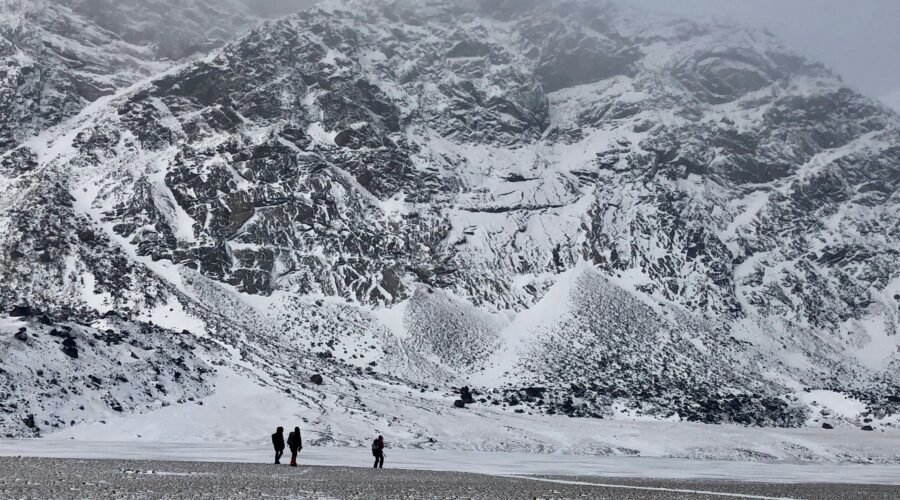
Parks Canada identifies March, April, and early May as the typical frozen-fiord travel season.
During suitable conditions, visitors may travel by snowmobile, skis, or snowshoes.
As spring progresses, river breakup and weakening ice can make travel more difficult. Parks Canada notes that river breakup often begins by early to mid-May.
This transition can interrupt established winter routes before summer boat transportation becomes practical.
Longer daylight is one of spring’s major advantages. It gives visitors more usable time for planned outdoor activities while winter scenery remains.
Spring Activities: Limited but Unique
Spring can be a rewarding season for guided snowmobile excursions, skiing, and snowshoeing.
Depending on current conditions and the availability of guided trips, visitors may also have opportunities to explore parts of Auyuittuq National Park while the fiords remain frozen.
These trips require proper cold-weather clothing, suitable equipment, and careful planning.
As the thaw develops, some routes may become unsafe or inaccessible.
Hiking during the transition can also be difficult because of snow, wet terrain, and changing river conditions.
Outside wilderness excursions, visitors can enjoy the surrounding scenery and explore local cultural attractions.
Community events may also take place during the season, although dates and availability should be confirmed rather than assumed.
Spring Crowds and Costs
Spring has its own tourism appeal, especially among people interested in Arctic snow travel and skiing.
Visitor numbers and demand can vary according to weather, scheduled activities, and transportation availability.
Do not assume that spring flights or accommodation will automatically be cheaper than summer options.
If you want to experience the frozen landscape, discuss your preferred dates with a local outfitter before booking.
For a broader overview of the destination and its cultural attractions, consult the official Parks Canada local attractions and tourism guide.
Important Considerations for Any Time of Year
Regardless of when you choose to visit Pangnirtung, there are a few things that remain constant and are crucial for a smooth trip.
The community is remote, transportation options are limited, and conditions can change rapidly. Planning ahead is especially important if your trip includes Auyuittuq National Park.
Travel Logistics and Accessibility
Getting to Pangnirtung isn’t like driving to a typical vacation destination.
Visitors generally reach the community by air, with scheduled flights connecting through Iqaluit, Nunavut’s capital.
Canadian North provides scheduled air service between Iqaluit and Pangnirtung. Check current schedules directly with the airline before arranging your trip.
There is no regular road connection from southern Canada to Pangnirtung.
Weather can significantly affect northern air travel, particularly when visibility and wind conditions deteriorate.
Parks Canada advises travellers to allow for potentially lengthy disruptions, including delays of several days.
If possible, build at least a few flexible days into your itinerary, especially before an important onward flight.
You should also confirm your local transportation arrangements before arriving. Access to Auyuittuq National Park commonly involves boat or snowmobile transportation with a local outfitter, depending on the season.
See the official Parks Canada travel directions for further information.
Park Registration and Current Conditions
If your plans include entering Auyuittuq National Park, contact Parks Canada before booking your excursion.
All park visitors must complete the required registration process before entering and de-register after leaving.
The process includes a mandatory orientation that covers hazards, regulations, route conditions, and emergency planning.
Parks Canada recommends arranging your orientation and registration session at least two weeks in advance when possible.
Allow approximately three hours for this process.
Before your trip, you should:
- Confirm the dates and route you intend to use.
- Check current park closures and restrictions.
- Arrange transportation with an appropriate local outfitter.
- Prepare your itinerary and emergency contact details.
- Discuss the equipment and communication devices needed for your trip.
- Complete your required orientation and registration.
After leaving the park, de-register with Parks Canada within the required timeframe. Its published instructions call for de-registration within 24 hours of exiting.
For the complete requirements, consult the official Auyuittuq National Park visitor guidelines.
Polar Bear and River Safety
Arctic wildlife is one of the region’s attractions, but visitors must understand that Auyuittuq is polar bear habitat.
Parks Canada advises that polar bears may be encountered anywhere in the park and at any time of year.
Do not approach wildlife, attempt close-up photographs, or leave food and waste where animals can reach them.
Read the official Parks Canada polar bear safety guidance before travelling into the backcountry.
Summer visitors must also understand the dangers of glacial rivers.
Water levels can rise quickly because of melting snow and ice, rainfall, and changing temperatures.
A crossing that appears manageable at one time may become dangerous later.
Never force a river crossing. Follow current park guidance and be prepared to wait, change your itinerary, or turn back.
For detailed information, read the official Auyuittuq river-crossing safety instructions.
Accommodation and Booking
Accommodation options in Pangnirtung are limited compared with larger destinations.
Visitors may find small hotels, lodges, guesthouses, or other locally arranged accommodation, depending on current availability.
Book well in advance, particularly when travelling during the main summer season or joining a scheduled expedition.
For winter and spring travel, confirm that the accommodation you intend to use is operating during your dates.
Because northern destinations have high transportation and operating costs, budgeting for Pangnirtung requires more than comparing room rates.
Your main expenses may include:
- Flights to and from Pangnirtung.
- Accommodation and meals.
- Local transportation and guided excursions.
- Applicable park fees.
- Specialized clothing or equipment.
- Additional costs associated with weather delays.
Check actual prices before choosing dates. Seasonal discounts and cheaper winter fares should never be assumed.
Pro Tip: Arrange accommodation and guided activities before purchasing non-refundable connecting flights. If you plan to enter Auyuittuq, confirm that your chosen dates also allow enough time for the required park orientation.
Packing Essentials: Arctic Style
Your packing list will depend on the season, but layered clothing is important throughout the year.
Even during July and August, weather can become cold and windy with little warning.
For summer travel, bring:
- Moisture-wicking base layers.
- An insulating fleece or lightweight down jacket.
- A waterproof and windproof outer shell.
- Sturdy footwear suitable for your planned activities.
- Warm socks, gloves, and a hat.
- Sunglasses and sunscreen.
- Insect repellent.
- A reusable water bottle and any personal essentials.
For winter and spring trips, specialized cold-weather equipment is essential.
This may include an extreme-cold-rated parka, insulated boots, thermal layers, a warm face covering, and suitable mittens.
Backcountry travellers may also need navigation tools, emergency communication equipment, camping supplies, and specialized equipment suited to their route.
Discuss these requirements with Parks Canada and your outfitter before departure.
Do not rely on ordinary city winter clothing for prolonged exposure in extreme Arctic conditions.
Local Culture and Etiquette
Pangnirtung is a vibrant Inuit community with a strong artistic and cultural identity.
Visiting respectfully can make your experience much richer than simply sightseeing.
The Uqqurmiut Centre for Arts and Crafts is a worthwhile stop for anyone interested in Inuit prints, weaving, and locally produced art.
The Angmarlik Interpretive Centre is another local visitor resource.
When exploring the community:
- Ask permission before photographing people.
- Respect private property and culturally significant places.
- Support local artists and businesses when possible.
- Follow the instructions of local guides.
- Learn about Inuit culture without treating the community as a tourist attraction.
- Leave natural and cultural objects undisturbed.
When travelling into Auyuittuq National Park, follow the park’s environmental rules and pack out your waste.
Be patient with changes to local schedules and activities. Weather and transportation conditions can affect daily life as well as tourism.
Frequently Asked Questions
1. What is the best time to visit Pangnirtung, Nunavut, for good weather?
July and August generally offer the mildest weather. Average daily highs are approximately 11–12°C (52–54°F). However, cold wind, rain, and rapid weather changes remain possible, so visitors should pack warm layers.
2. When is the best time to visit Pangnirtung to avoid crowds?
June and September may offer a quieter experience than the main summer months. Winter also tends to attract fewer conventional summer tourists. However, transportation and activity schedules may be more limited outside the main season.
3. What is the peak tourist season in Pangnirtung?
July and August are the main summer visitor months. The relatively mild weather and seasonal boat access make them popular for hiking, guided park visits, and cultural experiences.
4. When is the best time to visit Pangnirtung to save money?
There is no guaranteed cheapest month. Compare actual flight, accommodation, and guided activity prices for your preferred dates. Limited services and specialized winter equipment can make quieter seasons expensive.
5. What are the main summer activities in Pangnirtung?
Popular summer activities include guided hiking, boat excursions, photography, wildlife observation, and exploring local Inuit art and culture. Access to Auyuittuq National Park depends on current weather, water levels, and transportation conditions.
6. When can you see the northern lights in Pangnirtung?
Dark nights from autumn through early spring offer opportunities for northern lights viewing. Clear skies and suitable solar activity are important. Sightings cannot be guaranteed.
7. Can you visit Auyuittuq National Park in June?
The park is open year-round, but June commonly falls within the sea-ice breakup period. Boat and snowmobile access can be interrupted. Contact Parks Canada and a local outfitter to confirm conditions and available transportation.
8. Do you need to register before visiting Auyuittuq National Park?
Yes. Parks Canada requires visitors to complete registration and orientation before entering the park and to de-register afterward. Contact the park office in advance to arrange the process and confirm current requirements.
Sources
- Environment and Climate Change Canada — Canadian Climate Normals, 1991–2020 — historical temperature averages and seasonal climate information for Pangnirtung.
- Parks Canada — Auyuittuq Weather and Best Times to Visit — seasonal access, sea-ice breakup, and winter travel guidance.
- Parks Canada — Visitor Guidelines — registration, orientation, environmental requirements, and restrictions.
- Parks Canada — River Crossings — glacial river hazards and historical summer flooding.
- Parks Canada — Polar Bear Safety — wildlife risks and visitor precautions.
- Parks Canada — How to Get Here — flights, local transportation, park access, and travel-delay considerations.